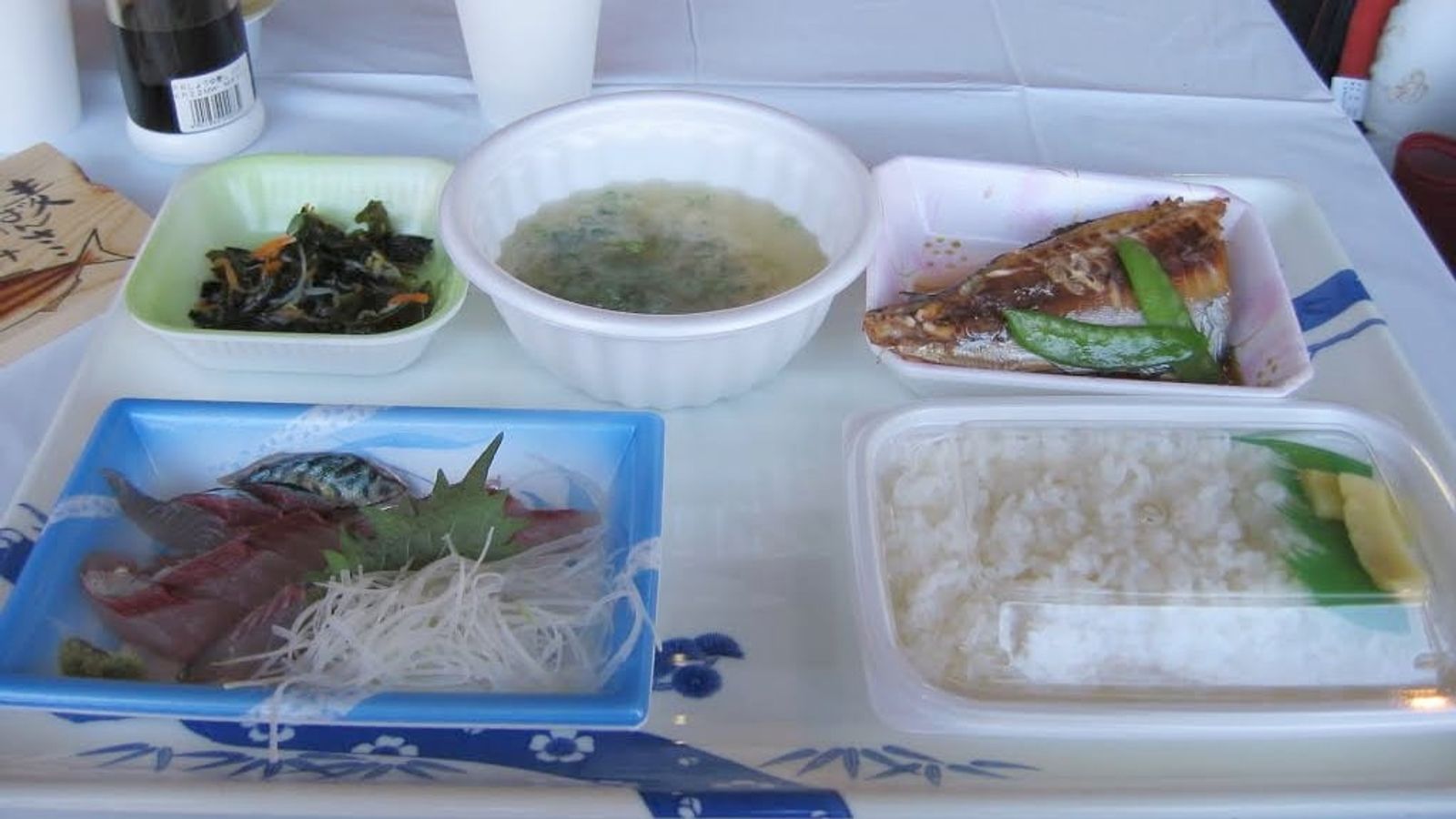
Horse mackerel and mackerel sashimi set meal at a Saganoseki local festival (2004) · Photo: Project Kei / CC BY-SA 4.0 (Wikimedia Commons)
 JapanBeppu
Seki-aji and Seki-saba: Why Oita's Brand-Name Mackerel and Horse Mackerel Cost So Much
Horse mackerel and mackerel caught one by one off Saganoseki, a short way south of Beppu, became the first seafood in Japan registered as a trademark in 1996. Here is what makes seki-aji and seki-saba different from ordinary fish and how to enjoy them.
What Seki-aji and Seki-saba Are
Seki-aji (horse mackerel) and seki-saba (mackerel) are names reserved for fish caught off Saganoseki, at the eastern tip of Oita City, and landed in a set way by members of the local fisheries cooperative. The 'Seki' comes from Saganoseki. According to Oita City's newsletter and the Japan Patent Office, the pair became the first seafood in Japan to be registered as a trademark, in 1996, and are often called the country's first brand fish. They were later registered as a regional collective trademark too, so fish not caught the approved way cannot use the name. Today Saganoseki is known nationwide as the home of seki-aji and seki-saba.
Shaped by the Current: The Hayasui Strait and Fish That Stay Put
The water between the Saganoseki Peninsula and Cape Sadamisaki in Ehime is the Hoyo Strait, known locally as the Hayasui Strait. Currents from the Pacific and the Seto Inland Sea collide here, so the tide runs fast and the food supply is rich. Fish grow plump, and the strong current is said to keep their flesh firm. Horse mackerel and mackerel normally roam the open sea in schools. Oita City's newsletter explains, however, that many seki-aji and seki-saba are 'resident' fish that stay on a single reef. Nobody is quite sure why, but one likely factor is that the water here is cooler than elsewhere in summer and warmer in winter, so its temperature changes little through the year.
Caught One at a Time, Bought by Eye, Handled by Hand
Seki-aji and seki-saba are not netted but caught by single-line fishing, ippon-zuri. Fishermen lower a rig called a sagari, hung with many lures, and wait for a bite guided only by the feel of the line across their fingers. Each fish is scooped up with a hand net so it is not damaged and placed in a live tank on board. The sale to the cooperative is unusual too. Experienced staff look at the fish in the boat's tank from above the water and judge their weight by eye, a practice called tsuragai. Skipping the scale stops the fish from thrashing, bruising or splitting their flesh. Freshly caught fish are excited, so they rest for a day in the cooperative's tanks; just before shipping, each one is killed by hand using the ikejime method and given an official mark proving it is the real thing.
Taste and How to Eat It: Mackerel as Sashimi
The flesh of seki-aji and seki-saba has a glossy shine and is rich with fat yet springy, giving it a deep flavour. Sashimi is the best way to taste it. Because mackerel spoils quickly, Japanese diners usually eat it cured in vinegar as shime-saba, but seki-saba is known as mackerel you can eat raw as sashimi. Depending on the restaurant it also comes as sushi and other dishes. As Oita City's newsletter notes, the flesh stays firm despite its fat, so try the first slice with only a touch of soy sauce to taste the fish itself. It costs far more than ordinary horse mackerel or mackerel, so sharing one plate among a group and comparing the two is a good idea.
Where to Eat It and Ordering Tips
The home ground is the Saganoseki area of Oita City, where restaurants serving seki-aji and seki-saba cluster around the fishing port. Many Japanese restaurants and izakaya in Beppu and central Oita also have them on the menu, making them an easy dinner treat on a hot-spring trip. When ordering, look for the names 関あじ and 関さば. Genuine fish leave the port with an official mark attached. Prices change with size and the day's catch, so menus often say 'market price' (jika); asking before you order avoids surprises. In Oita sashimi is also often served with kabosu, the local citrus, so if a wedge comes on the plate, add a few drops for a fresh, fragrant lift.