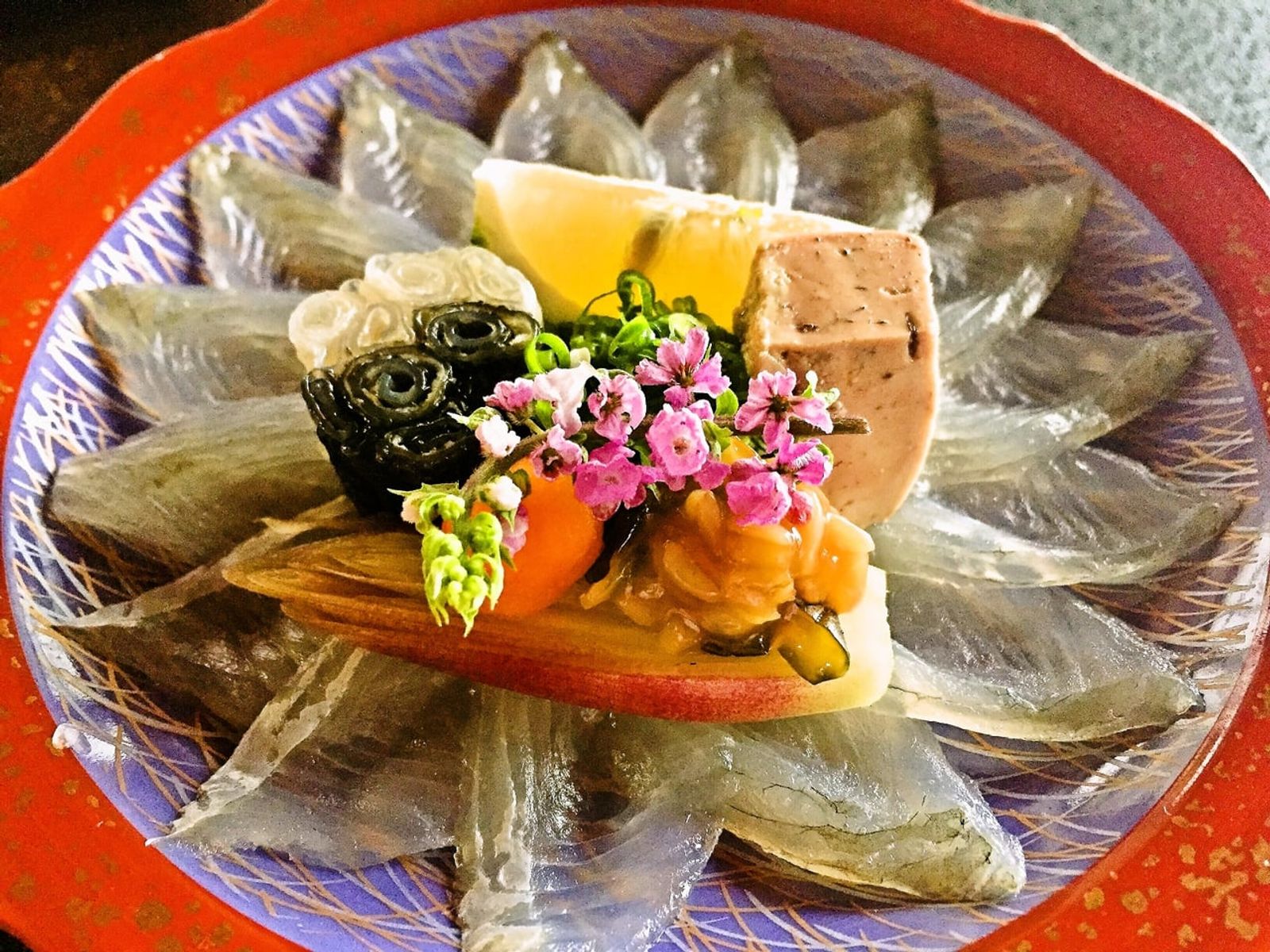
Shiroshita karei sashimi · Photo: Utan506 / CC BY-SA 4.0 (Wikimedia Commons)
 JapanBeppu
Shiroshita Karei: The 'Lord's Fish' From the Sea Below Hiji Castle, Next to Beppu
Off the castle ruins of Hiji, the town next to Beppu, fresh water wells up from the seabed, and the marbled flounder raised there is called shiroshita karei. Here is the story of the fish once sent to the shogun, when it is in season and how to eat it.
What Shiroshita Karei Is
Shiroshita karei is the brand name for marbled flounder (makogarei) caught off Hiji, a town in Hayami District, Oita. Hiji lies right next to Beppu to the northeast on the same Beppu Bay, so it is easy to visit during a Beppu trip. Marbled flounder is a common fish along Japan's coasts, but those from Hiji are noted for thick flesh, a small head and a rounded body, and their raw flesh is pure white and glossy. The official spelling writes karei in hiragana: 城下かれい.
The Secret of the Name: Fresh Water Under the Castle
Shiroshita means 'below the castle', and the fish takes its name from being caught in the sea beneath Hiji Castle. The castle was built in 1602 by the first lord of the domain, Kinoshita Nobutoshi, and the third lord is said to have given it the nickname Yokoku Castle, taken from the Chinese classic Huainanzi. Beneath this sea, below the castle's stone walls, fresh water wells up. According to the Oita Heritage guide, the springs rise about 30 metres offshore in water nearly 3 metres deep. The spring water dilutes the seawater, helping seaweed and plankton thrive; these draw small shrimp, which the flounder eat. The result is said to be fish with no muddy smell and a clean, refined taste.
The 'Lord's Fish' of the Edo Period
In the Edo period shiroshita karei is said to have been called tonosama-uo, the 'lord's fish', because commoners could not eat it and only samurai lords did. Another view holds that it was not banned for commoners but was simply rare and expensive, so accounts differ a little. It was also presented to the shogun's family. Usually dried fish were offered during the lords' regular journeys to Edo, and stories say that in leap years the fish were carried live all the way to Edo at great cost. In modern times the gourmet Kinoshita Kenjiro praised it in 1937 as one of Japan's great dishes, and the haiku poet Takahama Kyoshi wrote a verse in Hiji, 'In the sea, clear water wells up and raises fish'; a stone carved with it stands on the shore.
Season and How to Eat It: Sashimi With Plum Vinegar
Fishing for shiroshita karei starts every April, and the Shiroshita Karei Festival is held in May. April to September is said to be the time to eat it and May to July the very best, so think of spring into summer as the season. Sashimi is the favourite. The white flesh is translucent and springy, with a gentle sweetness and no fishy smell. Locally it may be dipped in a sauce made with ume plum vinegar, or eaten with kabosu and soy sauce. It is also enjoyed as arai (slices firmed in iced water), sushi, clear soup, tempura, karaage and simmered.
Where to Eat It and Travel Tips
The surest way to try shiroshita karei is to visit restaurants around the Hiji Castle ruins and along the shore in Hiji. Some Japanese restaurants in Beppu also put it on the menu in season. Standing by the castle ruins you can see the very sea where the flounder grow, which brings the name to life. Restaurants generally serve it from about April to July, but this varies, so it is wise to call ahead. The Shiroshita Karei Festival every May is very popular, and competition is fierce. During Golden Week crowds push prices up, so another option is to go outside that period and look for a lunch set.