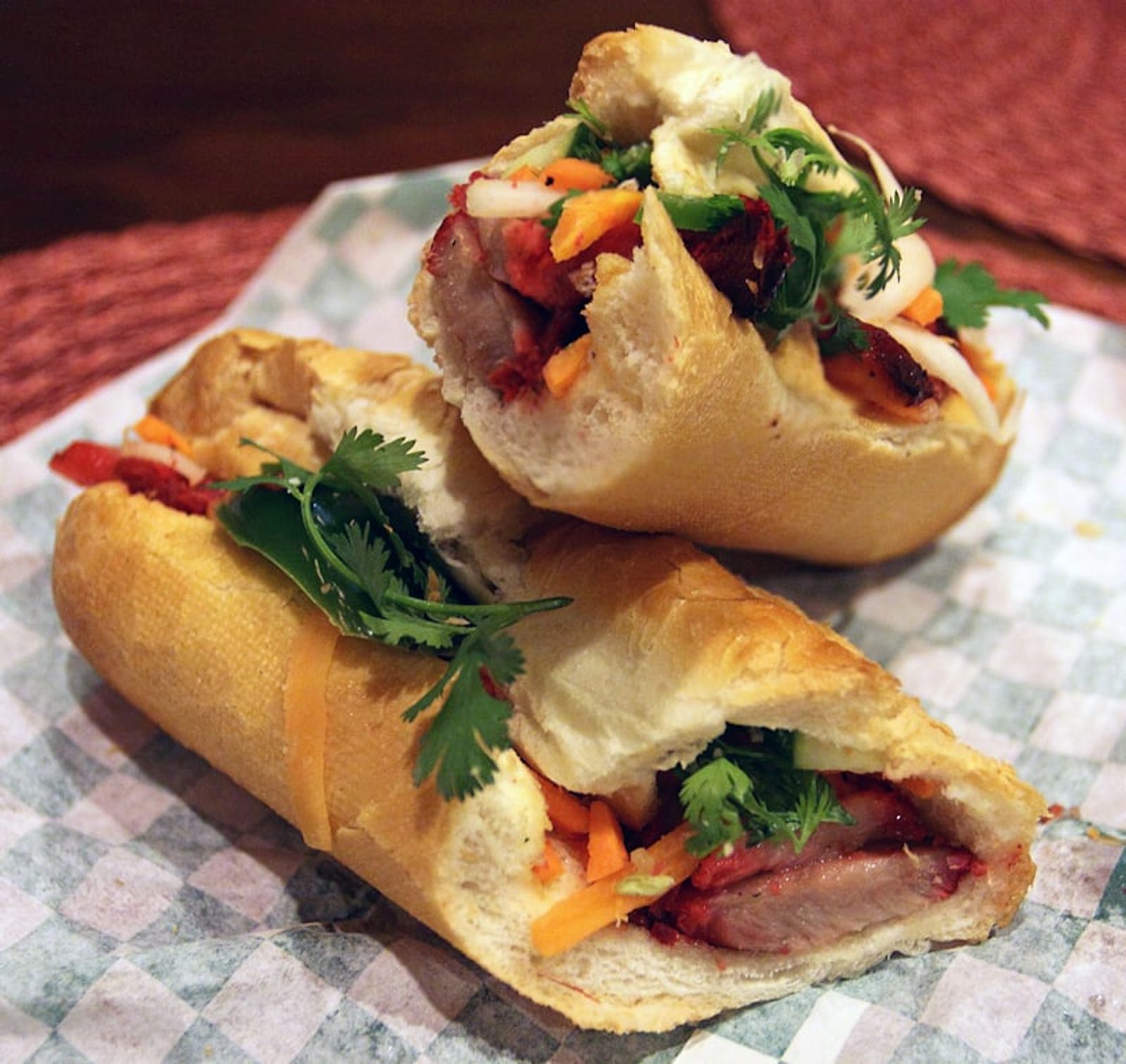
Bánh mì thịt nướng with grilled pork · Photo: nsaum75 / CC BY-SA 3.0 (Wikimedia Commons)
 Vietnam
The Story of Bánh Mì: How a French Baguette Became a Vietnamese Sandwich
Bánh mì is a French bread from the colonial era filled with Vietnamese cold cuts, pickles and coriander. Here is what the name means, how it took its modern form in Saigon, the classic fillings and how to buy one like a local.
A Bread That Arrived With the French
The baguette reached Vietnam in the mid-19th century, around the 1860s when France began colonising the south of the country. The French brought a whole bread culture with it, including pâté chaud, a meat-filled pastry. At first the baguette was food for the French and a small elite, often eaten for breakfast with butter and sugar. Northerners at first called it bánh tây, "Western bánh". When World War I disrupted wheat imports, bakers began mixing in cheap rice flour. Vietnamese baguettes today may be made with wheat alone or with some rice flour, and they are known for a thin, crackly crust and a white, airy crumb.
What the Name Means
Bánh mì is made of two words. Bánh covers a wide range of foods made from flour or dough, from rice cakes to pastries and bread, and mì means wheat. So bánh mì literally means "wheat bánh", in other words bread. In the north it is sometimes written bánh mỳ. You may hear that the name comes from the French pain de mie (sandwich loaf), but English Wikipedia describes this as a false etymology, since bánh has been a native Vietnamese word for rice cakes and pastries since at least the 13th century. Interestingly, in Vietnam bánh mì refers both to the bread itself and to the sandwich made with it. In March 2011 "banh mi" was added to the Oxford English Dictionary, a sign of how global the sandwich had become.
1950s Saigon: The Vietnamese Sandwich Is Born
Until the 1950s, baguette sandwiches stuck closely to French tastes, like jambon-beurre or bread spread with pâté. Change came after the 1954 partition. As migrants from the North settled in Saigon, a distinctly Vietnamese style of sandwich developed there, with Vietnamese cold cuts, pickled vegetables and herbs tucked into the baguette. English Wikipedia notes that a bakery opened by northern migrants in Saigon's District 3 in 1958 was among the first to sell bánh mì thịt, the meat-filled version. From there bánh mì spread across the South as a cheap meal you could eat on the go. Today Vietnamese people still mostly eat it for breakfast or as a snack.
What Goes Inside: Classic Fillings and Variations
The most basic filling is chả lụa (Vietnamese pork roll) and other cold cuts, liver pâté, mayonnaise, cucumber, đồ chua (sweet-and-sour pickled carrot and daikon), coriander and fresh chilli. Bánh mì thịt nguội, loaded with several cold cuts and pâté and often called the "special", is the most popular type. Beyond that the list goes on: thịt nướng with chargrilled pork, xíu mại with smashed pork meatballs in tomato sauce, trứng ốp la with fried eggs, chả cá with fish cake, chà bông with pork floss, and chay, a vegetarian version with tofu and the like.
Tips for Buying Bánh Mì in Vietnam
Bánh mì is usually sold from a cart with a glass display case or a small shop. Point at the meats and pickles you want and the vendor will split a roll and fill it on the spot. Many first warm the bread over charcoal or in a small oven so the crust is crisp before filling it. If you cannot handle heat, say "không cay" (not spicy) to skip the chilli, and "không ngò" to skip the coriander. The bread is crispest the moment the sandwich is made, so eat it straight away. Many stalls open early in the morning. Different regions have their own shapes of bread and fillings, so hunting for the local version wherever you travel is half the fun.