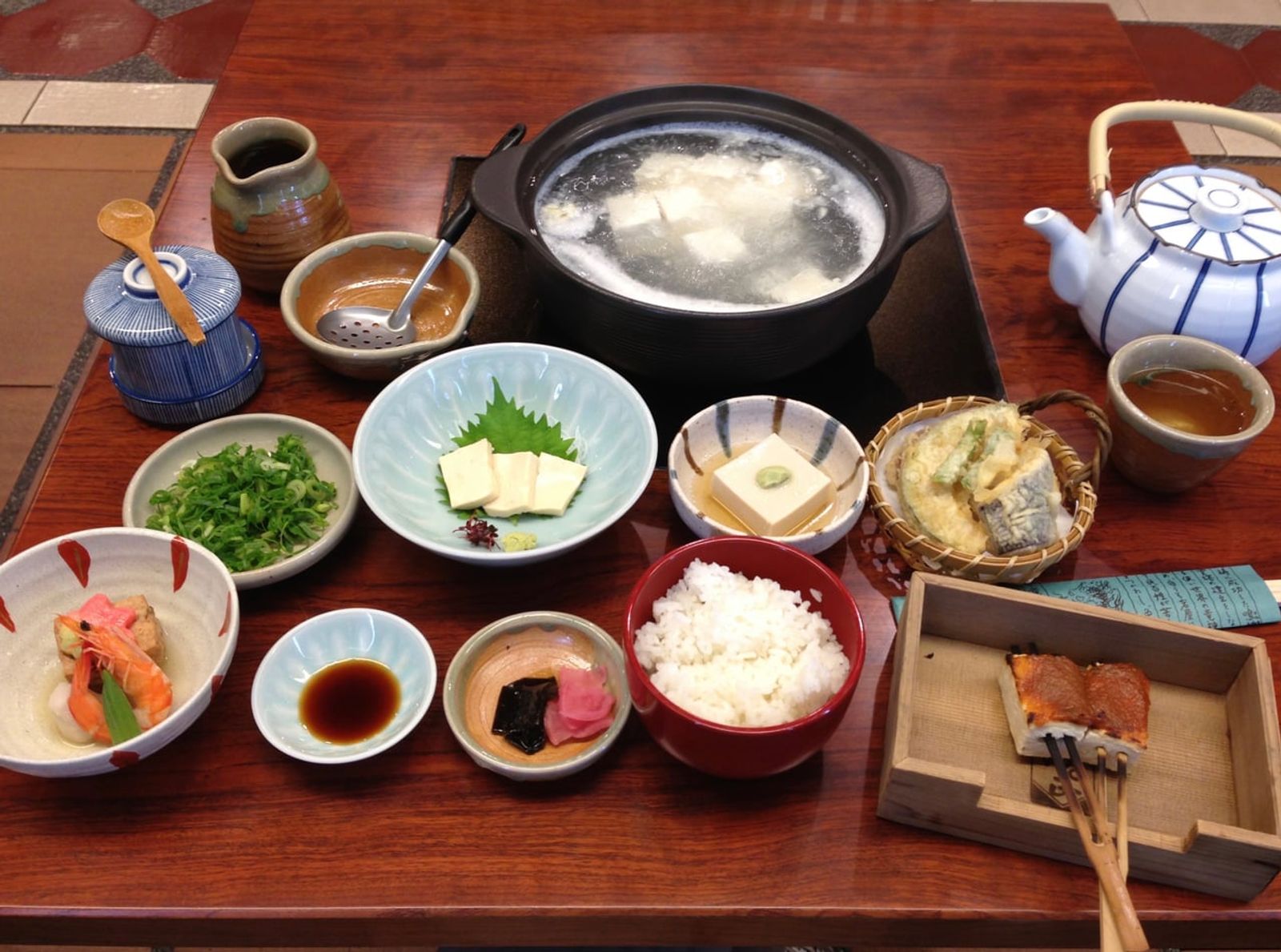
A yudofu set meal in Kyoto · Photo: ZhengZhou / CC BY-SA 4.0 (Wikimedia Commons)
 JapanKyoto
Kyoto Yudofu and Yuba: How to Enjoy the Tofu Dishes Born in Zen Temples
Yudofu is tofu gently warmed in kombu broth; yuba is the delicate skin lifted from heated soy milk. Both grew out of the meat-free kitchens of Kyoto's Zen temples. Here is where they come from, how to eat them and how to enjoy them around Nanzenji and Saga.
Tofu Instead of Meat: A Taste Shaped by Zen Temples
Kyoto is often called Japan's capital of tofu cooking, and Zen temples are the reason. For monks who ate no meat or fish, tofu and yuba made from soybeans were precious sources of protein, and many ways of preparing them were developed within shojin ryori, the vegetarian temple cuisine. Kyoto's plentiful, clean groundwater is also said to be behind the city's soft, smooth tofu. In the Edo period a cookbook called Tofu Hyakuchin, presenting one hundred tofu recipes, became a hit, and it already included yu-yakko, tofu warmed in hot kudzu water. Tofu cooking that began in temples gradually found its way onto ordinary family tables.
Yudofu: The Winter Pot Famous on the Nanzenji Approach
Yudofu is about as simple as cooking gets: kombu is laid in a pot, water and tofu are added, and the warmed tofu is lifted out and dipped in sauce. Because it is so plain, the quality of the tofu and the water shows through. It is so closely tied to the cold months that the word is used as a winter season word in Japanese poetry. Yudofu is said to have begun at Nanzenji, the head temple of a Zen school at the foot of the Higashiyama hills in eastern Kyoto. There is no record of exactly when or by whom, so its origins remain a matter of several theories. It is also said to have been a well-known specialty outside the temple gate as far back as the Edo period, and specialist restaurants still cluster along and around the approach today.
Yuba: A Single Sheet Lifted From Soy Milk
Yuba is the thin skin that forms on the surface of slowly heated soy milk, lifted off with a bamboo skewer. Tofu is set with a coagulant such as nigari, but yuba needs nothing except heat. It is generally believed that Zen monks who studied in China brought it back in the Kamakura period, after which it became a staple of temple cuisine. The earliest confirmed written mention is in the Rokuon Nichiroku diary in 1597. Japan's two famous yuba towns are Kyoto and Nikko in Tochigi. Kyoto makers slip the skewer under one edge and lift a single thin sheet, while Nikko makers lift from the middle so the sheet folds into a thicker double layer. Kyoto usually writes the name 湯葉 and Nikko 湯波.
How to Eat It: Never Boil, Lift It When It Wobbles
When the pot arrives, wait for the kombu to release its flavor. If the water boils hard, the tofu turns spongy and full of holes, so the trick is to warm it slowly over low heat. When the tofu starts to wobble gently in the pot, it is ready. The dipping sauce is usually soy sauce blended with sake, mirin and stock, or ponzu, served with sliced green onion, bonito flakes, yuzu peel and momiji-oroshi, grated daikon with red chili. Around Nanzenji some places skip ponzu and serve a sweet-savory soy broth with ginger, green onion and bonito instead. Freshly lifted nama yuba is best eaten like sashimi, dipped in soy sauce or wasabi soy, so the sweetness of the soybeans comes through.
Where to Eat: Around Nanzenji and in Saga-Arashiyama
The most popular place for yudofu is the area along the Nanzenji approach, about a ten-minute walk from Keage Station on the Tozai subway line, where many restaurants look out over gardens. Saga-Arashiyama in western Kyoto is also known for yudofu, and many travelers pair it with a walk through the bamboo grove near Tenryuji. Specialist restaurants usually serve set meals with yuba, sesame tofu and tempura alongside the yudofu, typically for around 3,000 to 5,000 yen. The most atmospheric seasons are the autumn leaves from mid-November to early December and the snowy months of January and February, but they are also the busiest, so go early. You can also buy dried or fresh yuba as a souvenir at shops around Nishiki Market.