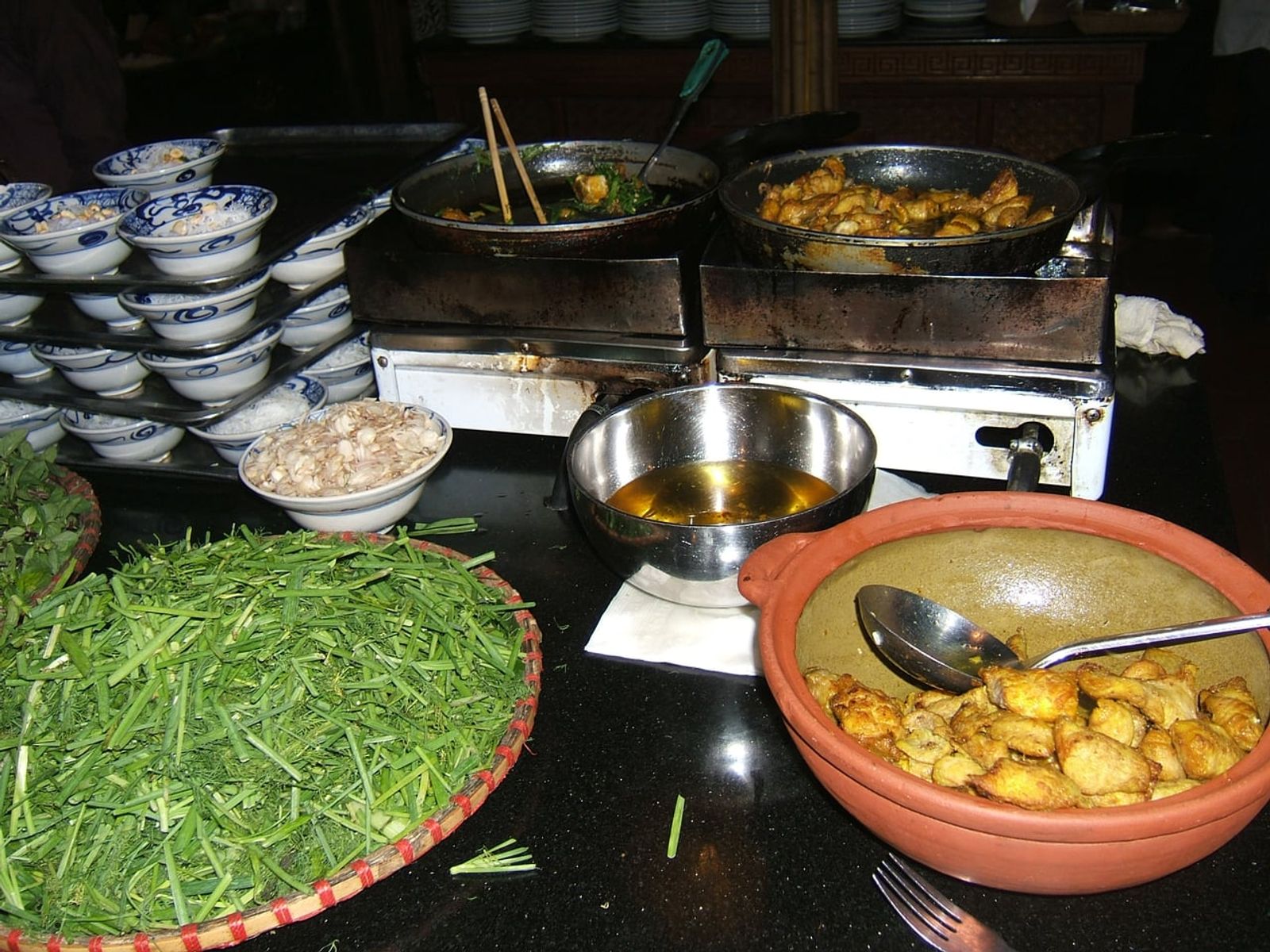
Chả cá ingredients (grilled fish, dill, spring onion) with tabletop burners · Photo: Viethavvh at vi.wikipedia / Public domain (Wikimedia Commons)
 VietnamHanoi
Hanoi Chả Cá: Turmeric Fish Finished With Dill in a Pan at Your Table
In Hanoi's Old Quarter there is a street named after a dish. Here is the story of chả cá, river fish marinated in turmeric and galangal, grilled over charcoal and finished at the table in a pan of hot oil with dill and spring onion, and how to eat it.
A Street Named After a Dish
Northwest of Hoàn Kiếm Lake in the Old Quarter lies phố Chả Cá, Chả Cá Street. It used to be Hàng Sơn Street, but in the late 19th century a family there became famous for the fish they served guests, people began calling the street after the dish, and in time the official name changed too. Vietnamese tourism material dates the beginning to the 1870s; other sources give 1871. Chả cá went on to become one of Hanoi's great dishes for entertaining, and today you can find it not only in the Old Quarter but all over the city. The Chả Cá Street area of the Old Quarter is still a natural starting point for travellers exploring Hanoi's food.
The Fish and the Marinade
The usual fish is cá lăng, a large freshwater catfish prized for having few bones and firm flesh and for being easy to fillet. Local media say wild cá lăng from the Red River is considered the best and is the most widely used. The fish is boned, cut into squares and marinated for at least two hours with turmeric, galangal, mẻ (fermented rice), mắm tôm (fermented shrimp paste) and pepper. The exact balance is a house secret. The pieces are then skewered, brushed with fat and grilled over charcoal, turned often until both sides are golden. The turmeric gives them their bright yellow colour.
Finished at the Table
What makes chả cá special is that the last step happens in front of you. A small brazier or burner and a pan of hot oil are set on the table, and the pre-grilled fish arrives on a plate. You add the fish to the pan, pile on handfuls of dill (thì là) and spring onion, and stir for a few minutes until the greens wilt. Dill is essential here. Local writers explain that its aroma cuts the muddy smell of river fish. Between the sizzle of the oil and the scent of dill, you can practically smell your way along Chả Cá Street. The fish flakes easily, so stir gently.
How to Build Your Bowl
Everyone assembles their own bowl. Start with cool rice noodles, add fish, dill and spring onion from the pan, and spoon over a little of the hot oil. Scatter roasted peanuts on top and add lime juice and chilli to taste. The traditional sauce is mắm tôm, fermented shrimp paste, mixed with lime juice, sugar, chilli and a splash of rice wine. It is very pungent, so add a small amount and taste first; if it is not for you, ask for fish sauce instead. Some people eat the fish on grilled rice crackers (bánh đa) instead of noodles. Local writers advise allowing plenty of time and enjoying each step slowly. Beer or rice wine is the usual drink.
When and Where to Eat It
Because you sit beside a brazier, Hanoians consider the cool and cold months, rather than the height of summer, to be chả cá season. Local writers add that winter herbs are more plentiful and fragrant. The Hanoi way is to take your time, waiting for the fish to cook over a drink. The most symbolic place is the Chả Cá Street area in the Old Quarter, and there are chả cá restaurants in many neighbourhoods across the city. One thing to know is what chả means. In Hanoi it means grilled meat or fish, but in central and southern Vietnam chả cá usually means a fish cake made from pounded fish that is fried or steamed. To avoid mixing it up with dishes such as Da Nang's bún chả cá, look for Hanoi-style chả cá.