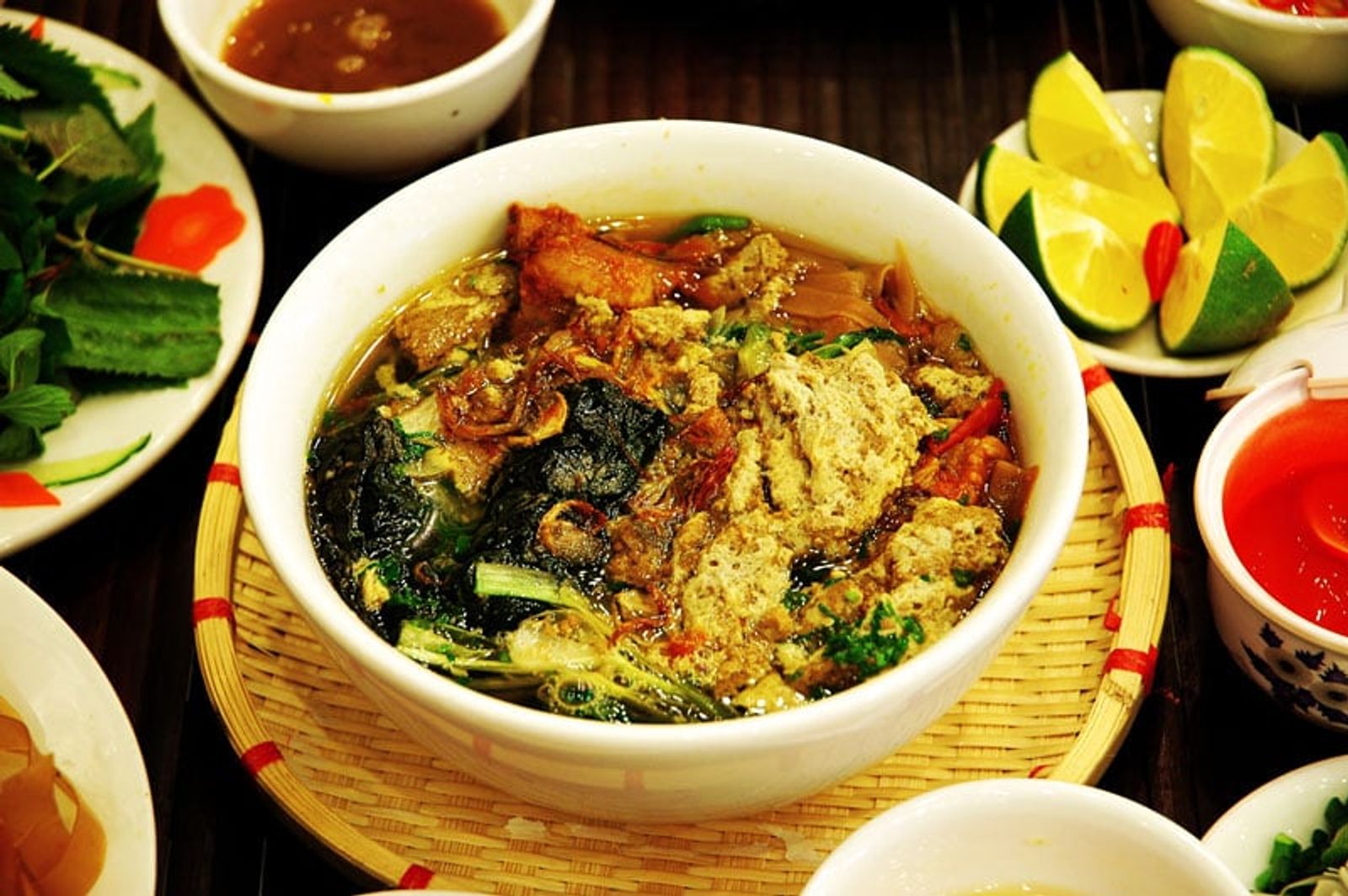
Bánh đa cua with greens and condiments · Photo: HoangTuanAnh / CC BY-SA 3.0 (Wikimedia Commons)
 VietnamHai Phong
Hai Phong Bánh Đa Cua: Red Rice Noodles in Field-Crab Broth, the Port City's Morning Bowl
Ask anyone from Hai Phong about the taste of home and bánh đa cua usually comes first. Here is what makes the port city's noodle soup special, from its wide reddish rice noodles and pounded field-crab broth to its greens and toppings, and how to eat it.
Hai Phong's Signature Noodle Soup
Bánh đa cua is Hai Phong's hometown dish of wide, reddish rice noodles called bánh đa served in a field-crab broth. Locals rank it alongside nem cua bể, the square-wrapped crab spring roll, as the food that best represents their city. Crab broth noodles exist elsewhere in the north, including Hanoi, but what sets the Hai Phong version apart is the noodle. It is wider than ordinary rice noodles, more fragrant with rice and chewier, and it comes in a deep brown or reddish colour. A local newspaper notes that you can find it at any hour from dawn to midnight, though people in Hai Phong most often eat it for breakfast or lunch.
Noodle Villages With 700 Years of History
According to Vietnamese press reports, three villages in Hai Phong, Lạng Côn, Hỗ and Dư Hàng Kênh, have made these noodles for about 700 years. Dư Hàng Kênh, now close to the city centre, is known as the main producer of both the red noodles and the rice paper used for spring rolls. The secret of what makes the noodles red reportedly varies from place to place and family to family, and published sources rarely spell it out. In Hai Phong, fresh noodles are blanched briefly in hot water before going into the broth, whereas elsewhere cooks usually soak dried noodles in cool water for a few minutes. It is one reason locals insist the dish tastes best at home.
A Broth From Pounded Field Crabs
The star of the broth is cua đồng, the small freshwater crab of rice paddies and canals. The crabs are pounded shell and all, mixed with water and strained, and the liquid becomes the broth, which is why it is slightly cloudy and gently sweet. Local writers single out the look of the bowl as part of its charm: red-brown noodles against a golden broth and colourful toppings. Many cooks build it on pork-bone stock and add dried shrimp, tomato, shrimp paste and fried shallots. Blenders are common now, but some families still swear that a mortar gives better flavour. Greens such as water spinach are often simmered in the broth as well.
Toppings and Greens
Besides noodles and crab broth, a bowl of bánh đa cua carries a range of toppings. The usual ones are chả lá lốt (pork wrapped in wild betel leaves and grilled), mọc (pork balls), chả cá (fish cake) and slices of pork hock or pork-ear sausage. Every shop has its own combination. The greens matter too: blanched water spinach (rau muống), water celery (rau cần) and rau rút, a floating legume known as water mimosa. Some cooks insist on water spinach from Đồ Sơn, near Hai Phong. Fried shallots go on last for aroma, and the bowl comes with fresh lettuce, shredded banana stem, Vietnamese balm (kinh giới) and bean sprouts on the side.
How to Eat It and Ordering Tips
The cook fills the bowl with noodles and toppings and ladles in boiling broth before it reaches you. Then you adjust the flavour with what is on the table: chilli sauce or pickled chilli, lime and kumquat, and shrimp paste. Taste the broth first and add a little at a time. Many people also order quẩy, fried dough sticks, to dunk in the broth. A recent local food-tour article put a bowl at around 50,000 dong. Extra toppings cost more, so check the combinations on the menu. Unlike Hanoi's similar-looking bún riêu, the Hai Phong bowl uses wide red noodles; keep that in mind and you will know you have the real local version.