Hai Phong Bánh Mì Cay
 VietnamHai Phong
Hai Phong Bánh Mì Cay: A Chopstick-Thin Baguette With Just Pâté and Chilli
Hai Phong's bánh mì is a thin stick of bread, about two fingers wide, filled only with homemade pâté and eaten with a punchy chilli sauce. Here is what makes this humble charcoal-toasted snack special, where it may have come from and how to eat it.
A Bánh Mì Barely Thicker Than a Chopstick
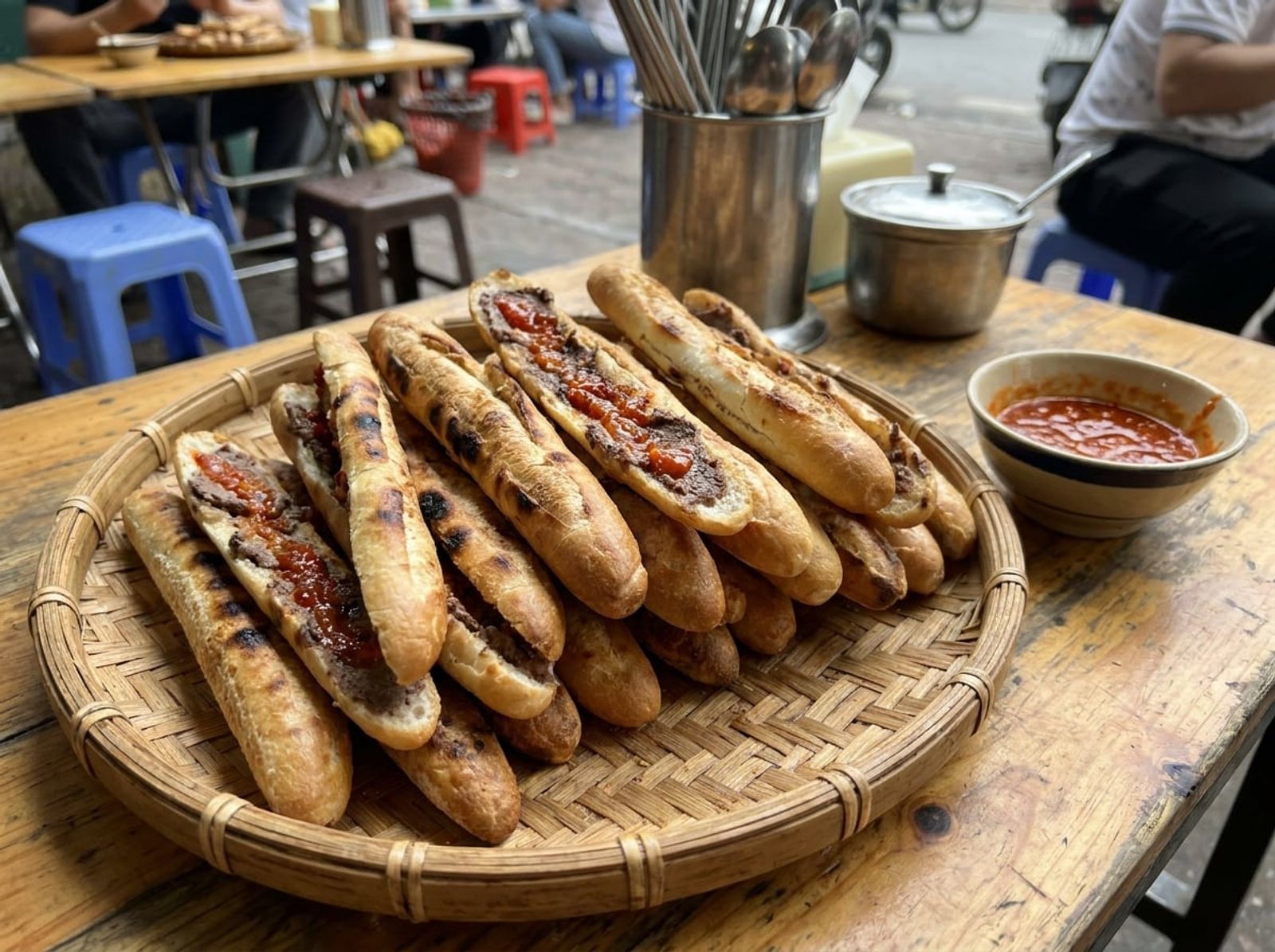
Bánh mì cay means "spicy bánh mì". Because it is long and thin like a stick it is also called bánh mì que, stick bánh mì, and it is so loved locally that it is often simply called Hai Phong bánh mì. Vietnamese Wikipedia describes it as about 20 cm long and only a little thicker than a chopstick, while a local newspaper says it is a couple of fingers wide. Unlike bánh mì elsewhere, which is stuffed with meat and vegetables, it holds nothing but pâté and is eaten with chilli sauce. Viet Nam News called it perhaps the humblest of all the country's bánh mì. One or two are never enough, so people usually buy several.
Toasted Over Charcoal
Its crunch comes from how it is toasted. According to local reports, the thin bread is brushed lightly with oil and baked over charcoal until the crust is hard and crisp. Because the loaf is so thin it heats through quickly, and the high ratio of crust means it crackles audibly when you bite. Local reports describe it served hot and crisp, spread with rich pâté. It is best hot and crisp, so many people eat it on the spot. A Vietnamese newspaper has listed this spicy stick bread, alongside seafood congee, as a snack that warms you up on winter nights in Hai Phong, and it is a favourite of uniformed students on their breaks.
The Homemade Pâté
With pâté as the only filling, the pâté is the measure of the shop. One local report describes the method: boiled, sliced pork skin is ground with lean pork and liver, then stir-fried with dried onion and garlic sautéed in oil and seasoned with salt, pepper and a little sugar. A layer of pork fat goes into the bottom of a mould, the mixture goes on top, and it is steamed for about five hours. Good pâté is said to be smooth, slightly pink and flecked with white fat, tasting of liver and garlic. Most sellers make their own, so every shop tastes a little different. Some also add pork floss (ruốc) or butter.
Chí Chương, Hai Phong's Chilli Sauce
The cay, or heat, in bánh mì cay comes from Hai Phong-style chilli sauce, known locally as chí chương. It is a thick sauce of chilli with tomato, garlic and salt, either squirted inside the bread or served on the side so you can dip as much as you like. One young local told a newspaper that however hot it gets, the more sauce, the better. Vietnamese media describe the sauce as a Hai Phong original. It is said that the name chí chương comes from the speech of the city's ethnic Chinese community, but there is no confirmed record of this. Locals serve the sauce with many dishes, not just bánh mì cay.
An Uncertain Origin, and How to Eat It
Sources disagree on when bánh mì cay began. A 2017 Vietnamese press report said a seller on Lê Lợi Street is believed to have created the recipe about twenty years earlier, while in a 2022 report another shop owner said her family had been selling it for nearly forty years, since her grandmother's day. Vietnamese Wikipedia places its birthplace in a lane off Hàng Kênh Street. No single inventor can be confirmed. Part of its charm is the price: 2,000 to 5,000 dong each in the 2017 report and around 3,000 dong in a recent one, with three to five making a meal. Visitors to Hai Phong commonly buy dozens to take home. Stalls cluster on Lê Lợi Street and around Hàng Kênh.