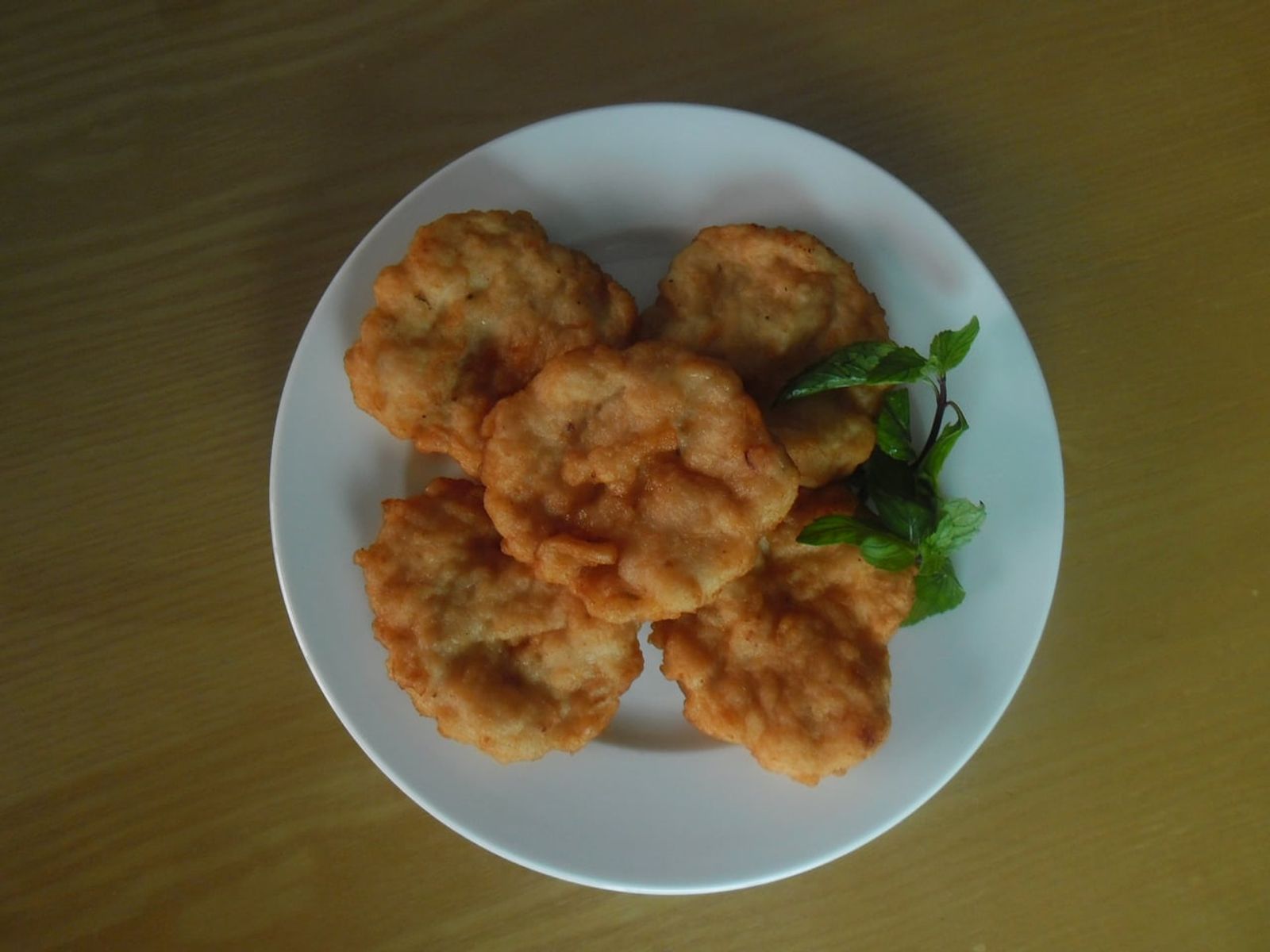
Hạ Long chả mực (fried squid cakes) · Photo: Hoangkid (Đặng Thái Hoàng) / CC BY-SA 4.0 (Wikimedia Commons)
 Vietnam
Hạ Long Chả Mực: Squid Cakes Pounded by Hand in a Stone Mortar
Chả mực, fried squid cake, is the food travellers most often take home from Hạ Long Bay. Here is why it is pounded by hand, which squid it uses, how the town of Hòn Gai became Hạ Long, and how to eat it with sticky rice or steamed rice rolls.
Hạ Long's Signature Squid Cake
Chả mực is squid meat pounded, seasoned, shaped into flat rounds and deep-fried. It is the signature specialty of Hạ Long in Quảng Ninh province: golden outside, springy inside and full of squid flavour. The website run by the Hạ Long Bay heritage management body presents it as Hạ Long's culinary brand and the taste of Quảng Ninh, and notes that a Vietnamese records organisation included it among the country's 50 most famous specialties. It is also a popular edible souvenir from Hạ Long.
Why Pound by Hand?
The defining feature of Hạ Long chả mực is that the squid is pounded by hand in a stone mortar rather than ground by machine. According to a 2018 Vietnamese newspaper report, it must not be worked too smooth; a few small lumps should remain, which gives a crisp, chewy texture once fried. Machine-ground paste turns out sleek like an ordinary fish cake, while hand-pounded chả mực keeps the grain of the squid. The pounded squid is seasoned with pepper and good fish sauce, shaped into thin rounds and fried until golden. The heritage management site also stresses hand-pounding as the key to its flavour. That is why hand-pounded cakes are considered the true Hạ Long style.
Which Squid?
Good chả mực starts with the squid. In 2018 Vietnamese media reported that makers buy thick-fleshed squid from boats returning from offshore, and described Hạ Long squid as buttery, chewy and aromatic, and less salty than squid from central or southern Vietnam. The Hạ Long Bay management site names summer as the season when cuttlefish (mực mai) and squid (mực ống) are at their best of the year, and stresses that the cakes are made with the freshest squid caught in the bay, so a summer visit gives you a good chance of tasting freshly made cakes.
From Hòn Gai to Hạ Long
Accounts differ on when chả mực began. The Hạ Long Bay management site says locals started making it in the early 20th century, when life was hard, though no one knows exactly when. A 2018 Vietnamese newspaper report, on the other hand, tells one family's story: in the 1940s a couple who sold fried squid at a restaurant in Hòn Gai invented squid cakes when business slowed, and perfected the recipe in 1946. The name has a story too. According to the same report, after Hòn Gai town became Hạ Long City in 1993, the dish came to be called chả mực Hạ Long. Travel guides still point visitors to markets such as Hạ Long I market on the Hòn Gai side to buy it.
With Sticky Rice or Steamed Rice Rolls
People in Hạ Long rarely eat chả mực on its own. The most common pairings are xôi chả mực, with sticky rice, and bánh cuốn chả mực, with thin steamed rice rolls, dipped in Quảng Ninh fish sauce or chilli sauce. In Hanoi bánh cuốn comes with cinnamon pork roll, but in Hạ Long the squid cake takes its place. Local media have featured a bánh cuốn chả mực stall that opens early in the morning and sells out by about 1 p.m. The cakes were once made entirely by hand, though some machinery is now used to keep up with demand. A 2018 report also noted that the cakes were traditionally offered to the ancestors before the family ate.