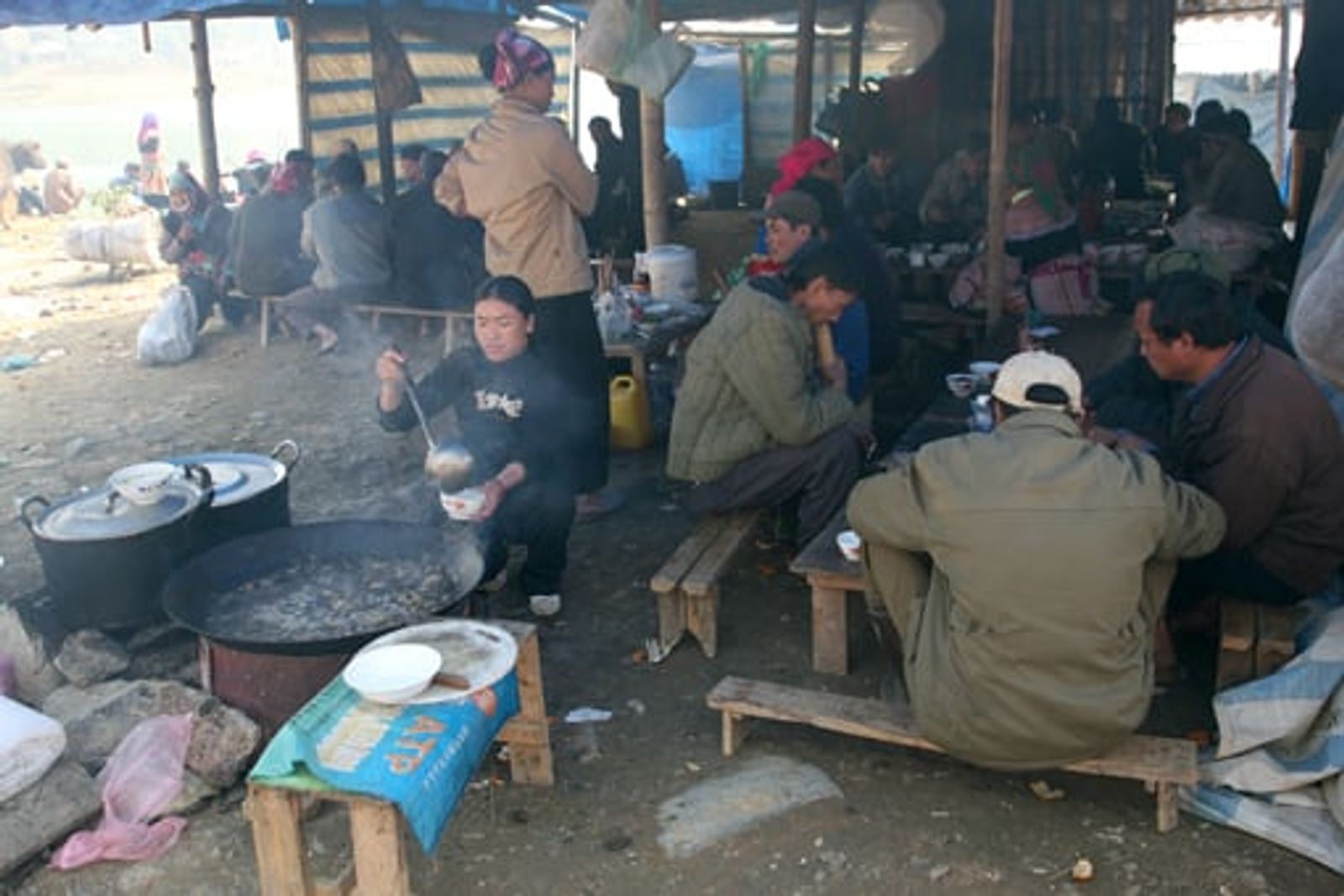
A thắng cố pot at Bắc Hà market · Photo: Maria Hsu / CC BY 2.0 (Wikimedia Commons)
 Vietnam
Thắng Cố: The Giant Market-Day Pot of the H'Mông Highlands Around Sa Pa
At the highland markets of Lào Cai, huge pans of horse meat and offal simmer over charcoal. Here is where the H'Mông dish thắng cố came from, what its name may mean, and how it is eaten on market day.
A Dish Born in the H'Mông Kitchen
Thắng cố is a traditional dish of the H'Mông people of Vietnam's northern mountains. Vietnamese Wikipedia says it originated in Yunnan, China, came south with the H'Mông, and later spread to the Kinh, Dao and Tày peoples. There is no precise record of when it began. A H'Mông cook from Bắc Hà in Lào Cai Province has said horse-meat thắng cố appeared "nearly 200 years ago, when the H'Mông, Tày and Nùng came to live in Bắc Hà," and local media generally repeat the "about 200 years" figure. In the Lào Cai highlands that include Sa Pa, the best-known thắng cố is said to come from Bắc Hà and Mường Khương, but you will find the same big pots at Sa Pa's highland markets and restaurants too.
Three Theories About the Name
Sources disagree on what the name thắng cố means. Vietnamese Wikipedia and local media offer three main theories. The first is that it is a Sino-H'Mông term meaning "bone broth" (canh xương). The second traces it to a Chinese word rendered in Vietnamese as "thang hoắc." The third says it is a corruption of the H'Mông "thoảng cố," meaning "a pot of water." Whichever is right, all three point to a broth cooked for a long time in a big pot. Thắng cố is not a dish where you pick one cut and grill it; meat, bones, blood and offal go into a single pot and simmer for hours, which is why local writers sometimes call it a "jumbled" (hỗn độn) dish.
A Whole Horse in One Pot: Cooking and Spices
Traditional thắng cố is made with horse. Not just the meat but every edible piece of offal goes in, along with bones and blood. Today many places also make it with beef, buffalo or pork to suit visitors. Vietnamese Wikipedia describes the traditional method like this: the meat is rubbed with salt, thảo quả (black cardamom), cinnamon, địa điền and roasted, crushed lime leaves, then stir-fried in a large old wok over charcoal using only the animal's own fat. Water is added and the pot simmers for hours while the cook keeps skimming the foam so the broth stays clear and sweet. Offal, blood and bones go in later and cook until tender. Local media say a dozen or so spices are used, star anise among them. They also note that many town restaurants have changed the spice mix, so the taste has drifted noticeably from the market version.
Food for Market Days and Gatherings
Thắng cố was traditionally food for days when people gathered rather than for everyday meals. Vietnamese Wikipedia lists festivals, forest-protection oath ceremonies, village and clan gatherings and market days (chợ phiên) as the occasions for cooking it. At highland markets the pans are big enough to feed dozens. The pot stays on the fire and diners ladle out portions as they go. People sit on flat ground or around plank tables and share from plastic basins and bowls. The accompaniments are fixed too. According to local media, it is eaten with mountain greens such as cải mèo, dipped in a fiery sauce made with Mường Khương chillies, and served with mèn mén (steamed cornmeal) or grilled corn bread. And there is always corn liquor from Bắc Hà or San Lùng.
Tips for Travellers
Market-style thắng cố can be a challenge the first time. Local media say frankly that the authentic version has a strong smell and a bitter edge that some newcomers find hard to eat. If that sounds daunting, there are two easy ways in. First, try it at a restaurant in Sa Pa town. Town versions often adjust the spices for Kinh palates and are milder than the market pot. Second, ask whether there is a beef (thắng cố bò) or buffalo (thắng cố trâu) version instead of horse; many places now make it with these meats to suit visitors. For the full atmosphere, plan around a market day. Bắc Hà is known for its Sunday market, so check the schedule in advance. And go easy on the corn liquor, which is strong, on days when you still have mountain roads to travel.