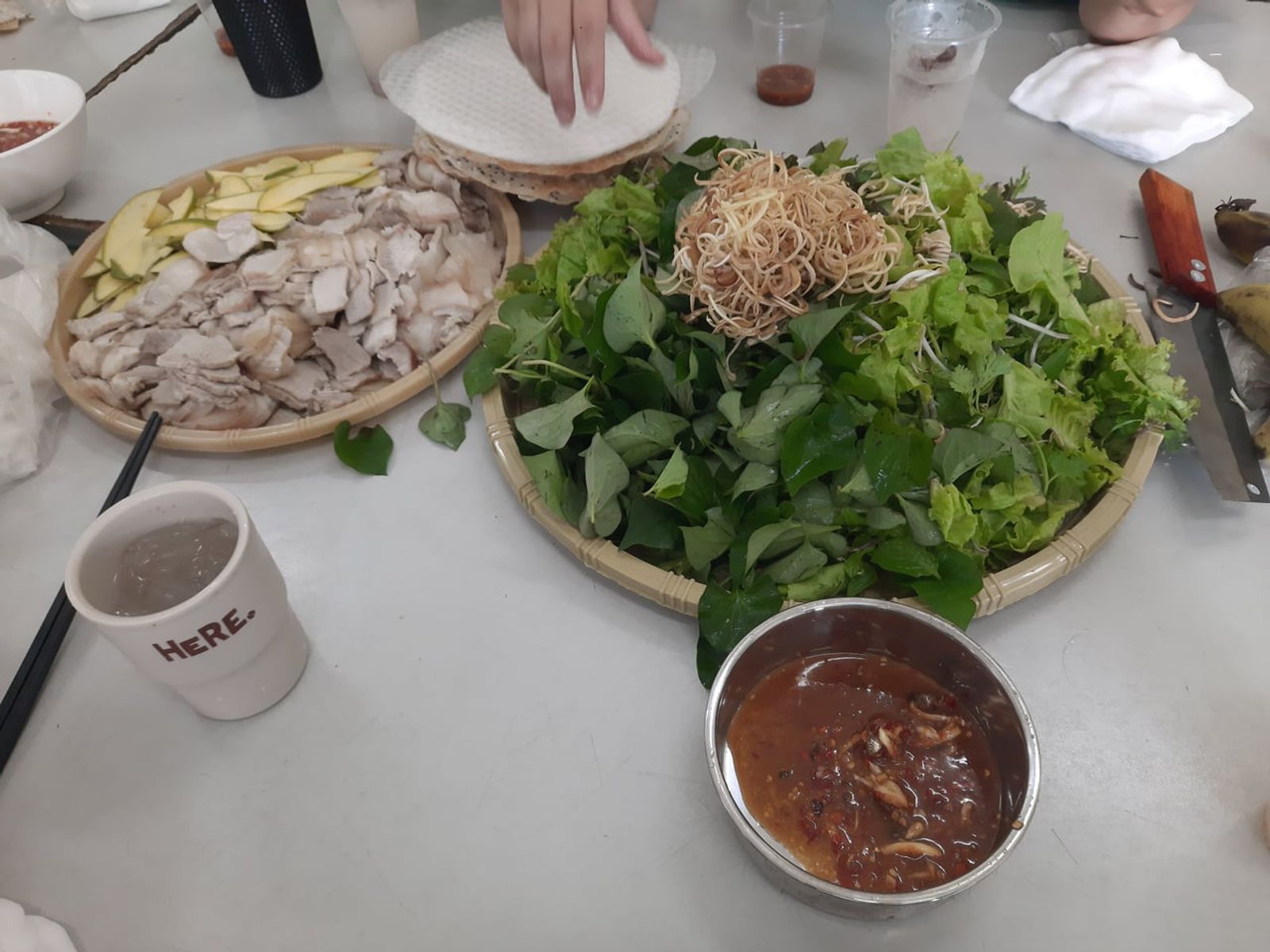
Boiled pork, fresh greens, rice paper and mắm nêm · Photo: Lê Huỳnh Bộ / CC BY-SA 4.0 (Wikimedia Commons)
 VietnamDa Nang
Bánh Tráng Cuốn Thịt Heo: How to Roll Da Nang's Pork Rice Paper Wraps Like a Local
Thinly sliced boiled pork, rolled in rice paper with a pile of fresh herbs and dipped in mắm nêm, a pungent anchovy sauce: this is Da Nang's favourite do-it-yourself meal. Here is what goes in, how to roll it and how to make friends with the sauce.
Da Nang's Signature Pork Roll
The name tells you everything: bánh tráng is rice paper, cuốn means to roll or wrap, and thịt heo is pork. Boiled pork and fresh greens go into a sheet of rice paper, and the roll is dipped in sauce: think of it as a central Vietnamese pork wrap. Vietnam's national tourism site describes it as a local delicacy that Da Nang developed from the region's tradition of rolled dishes, noting that it was once known mainly to people of Quảng Nam and Da Nang but is now famous nationwide. For visitors it is usually named, together with mì Quảng, as one of the two things you must eat in Da Nang. There is no clear record of who first made it or when, so its exact origin is unknown.
The Stars: Pork and Rau Sống
The pork is a cut with a good balance of lean meat and fat, lightly seasoned, boiled until tender and then sliced paper-thin. You want both richness and leanness so the rolls never get tiring. Some places also let you swap the boiled pork for roast pork with crackling skin. The pork's partner is rau sống, the platter of raw vegetables and herbs. Expect lettuce, cucumber, perilla, Thai basil, mint, coriander and thinly sliced banana blossom, each with a different aroma and crunch, plus a plate of rice vermicelli (bún). The mix changes with the season and the shop, so if you see a leaf you do not recognise, try it on its own and build your own favourite combination.
Túy Loan, the Rice Paper Village
When Da Nang people talk about this dish, they often bring up Túy Loan, a village roughly 15–20 km south-west of the city centre. Known as an old village with a history of more than 500 years, it has made rice paper for generations. According to Vietnamese press reports, Túy Loan rice paper is made from a local heirloom rice that is soaked the day before and ground, then mixed with sesame, sugar, fish sauce, salt, ginger and garlic. Each sheet is spread by hand and cooked twice, then dried over charcoal rather than in the sun, turned constantly so it does not burn, which makes it thicker than rice paper from elsewhere. Before Tết the kilns are lit from around 2 a.m., which tells you how much rice paper matters here.
How to Roll It and Dip It in Mắm Nêm
Vietnam's tourism board describes a simple method. Lay the rice paper flat on the table or cup it in your palm, then spread a thin layer of rice vermicelli first so it sticks to the paper. Add the pork and greens and roll it up tightly. Beginners tend to overfill and tear the paper, so go easy on the fillings. The dip is mắm nêm, a Quảng Nam sauce made from whole fermented anchovies. Unlike strained, clear nước mắm, it is closer to a thick paste, and it is seasoned with sugar, chilli, garlic, lemongrass and crushed pineapple. It is salty and strongly fishy, which can be a shock at first, but dip just one end of the roll and you will quickly find how well it cuts through the rich pork.
Where to Eat It and Ordering Tips
Specialist restaurants are easy to find all over Da Nang. Menus often shorten the name to "bánh tráng thịt heo". A typical order is a plate of pork with a basket of greens, rice paper and noodles, and you choose the amount of pork by the number of people. If mắm nêm is too much, it is fine to ask whether they have another sauce. With so many fillings on the table it is a dish best shared by two or three people. Beyond the city, Đại Lộc in the former Quảng Nam area is also known for pork and rice paper rolls, and Vietnamese media have featured it as the thing to eat when you go there. Rolling your own is fun, so it also works well for family trips with children.