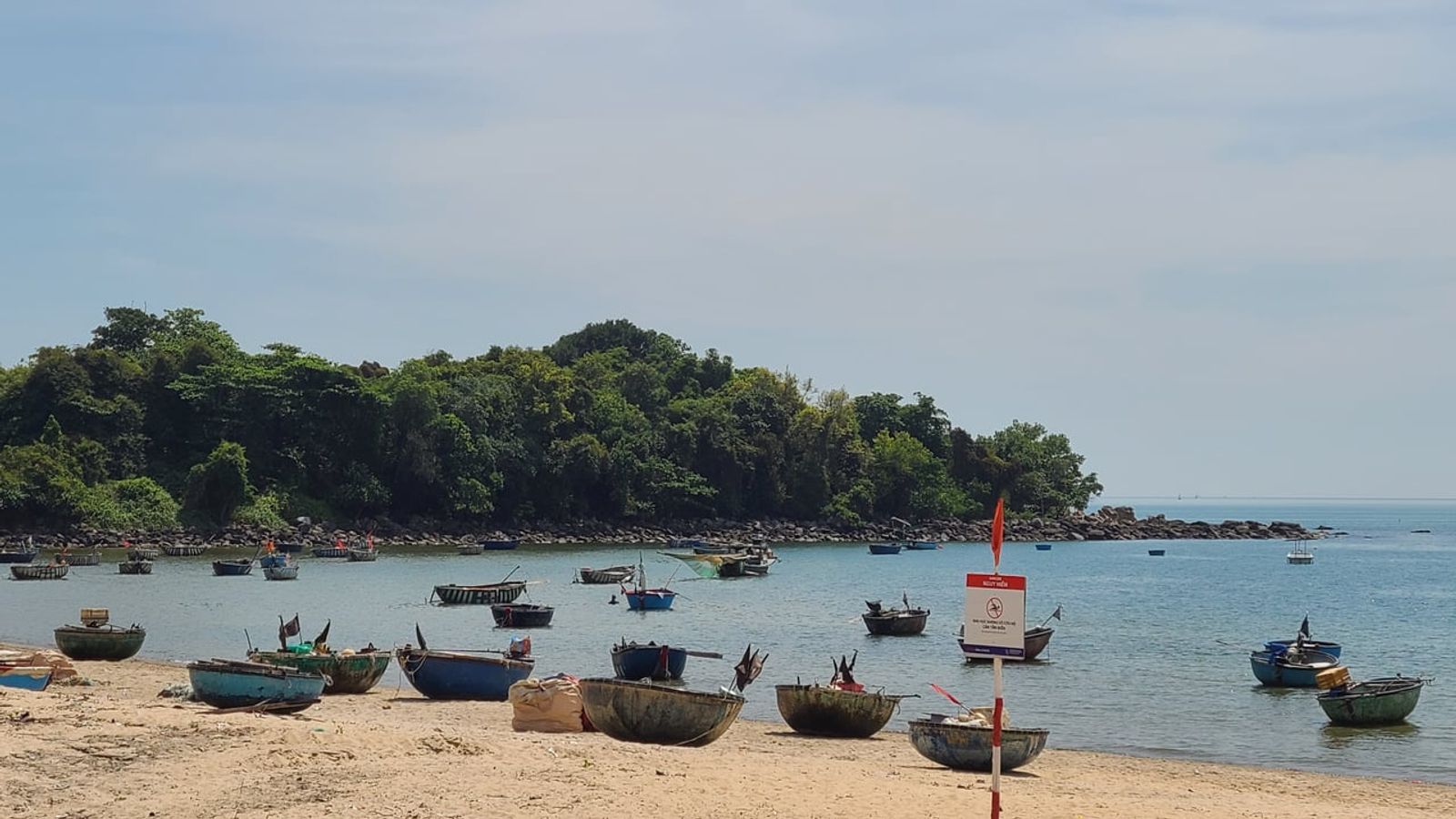
Basket boats at the Nam Ô fishing village, Da Nang · Photo: Bánhmỳchảo / CC0 (Wikimedia Commons)
 VietnamDa Nang
Gỏi Cá Nam Ô: The Raw Fish Salad of Da Nang's Fishing Village, and How to Enjoy It
In Nam Ô, a fishing village beneath the Hải Vân Pass, small fish landed at dawn are dressed raw and rolled in rice paper with wild forest greens. Here is the difference between the dry and wet styles, the sauce made from the fish itself, and tips for first-timers.
Nam Ô, the Fishing Village Below the Hải Vân Pass
Nam Ô is an old fishing village on the shore of Liên Chiểu, north-west of central Da Nang, near where the coast road starts climbing the Hải Vân Pass. The village is famous first of all for fish sauce: in 2019 Vietnam's Ministry of Culture, Sports and Tourism listed the Nam Ô fish sauce craft as national intangible cultural heritage. The village dish that cannot exist without that fish sauce is gỏi cá, raw fish dressed with seasonings and eaten as a wrap. Local fishermen say it dates back hundreds of years and has been handed down in every family's kitchen. For Da Nang people, "gỏi cá Nam Ô" is a name that carries the pride of a coastal community that loves raw fish.
Finger-Sized Fish Landed at Dawn
The fish most associated with gỏi cá Nam Ô is cá trích, often translated as herring but in fact a small, oily fish about the size of two fingers. Its mild flavour and easy texture make it the favourite. Other small fish such as cá mòi (a sardine type), cá cơm (anchovy) and cá tớp are also used. Freshness is everything. The fish are caught daily and brought ashore early in the morning, then the heads and tails are cut off, the bones removed and the flesh cut into small pieces right away. Because it is eaten raw, using that day's catch is the basic rule. For travellers too, choosing a place that uses that day's catch is the first step to both flavour and peace of mind.
Dry Gỏi and Wet Gỏi
Nam Ô makes gỏi cá in two ways from the same fish. For dry gỏi (gỏi khô), the fillets are briefly soaked in vinegar and lime so they partly "cook", pressed to squeeze out the liquid, marinated for about ten minutes with ginger, galangal, garlic and chilli, and finally coated in thính (toasted rice or corn powder) and toasted sesame. It is fluffy, dry and nutty. For wet gỏi (gỏi ướt), the minced fish is mixed with ginger, galangal and garlic and served sitting in a fish-sauce-based dressing, so it is moist and tangy. First-timers usually find the dry style easier, since it is less fishy and has a clearer texture; once you are comfortable, move on to the wet style soaked in dressing. Exact recipes vary from source to source.
A Sauce Made From the Fish, and Greens From the Hải Vân Forest
Many say the sauce is what makes gỏi cá Nam Ô. For the dry style, the juices released while preparing the fish are boiled with Nam Ô fish sauce, chilli and galangal until thick, and ground peanuts and sesame are sprinkled on just before serving. The wet style uses Nam Ô fish sauce mixed with lime juice, vinegar, sugar and crushed chilli and garlic. The other signature is the greens. Alongside everyday bean sprouts, lettuce and thin slices of green mango, Vietnamese media describe wild leaves gathered from the hills around the Hải Vân Pass as a hallmark of the village style. Young mango leaves, đinh lăng (Polyscias) shoots and other bitter, astringent leaves tame the fishiness of the raw fish. Sour star fruit and green banana are regular companions too.
How to Eat It, and Tips for First-Timers
You eat it much like Da Nang's other wraps. Lay out a sheet of rice paper (or thin bánh đa nem), add a few leaves, put the fish on top and roll it up; for the dry style, dip it in the separate sauce. The wet style can be wrapped the same way and dipped in its dressing, or, as some locals do, the fish, greens and mango can go into one bowl with the dressing poured over and be eaten straight away. Crumbled grilled rice crackers make a good side. Several restaurants serving gỏi cá line Nam Ô and the coast road nearby, and there are shops in central Da Nang with "gỏi cá Nam Ô" on the sign. Since the fish is raw, pick a place that looks clean and is busy enough to turn over its fish quickly, and skip it if you are pregnant or have a sensitive stomach.