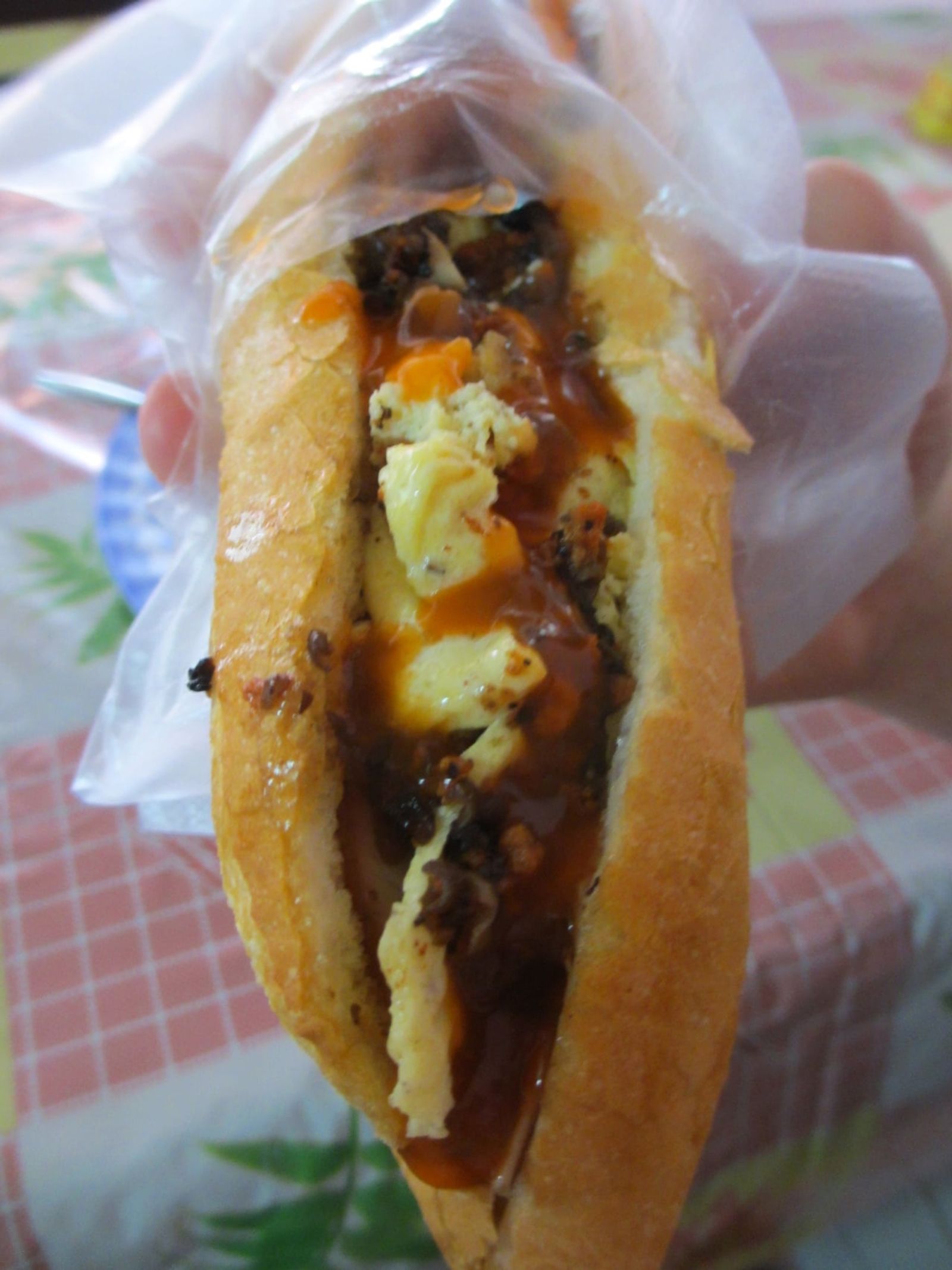
A bánh mì with egg and chilli sauce in Hội An · Photo: Mack Male / CC BY-SA 2.0 (Wikimedia Commons)
 VietnamHoi An
Hội An Bánh Mì: Why This Town's Sandwich Gets Its Own Name
Bánh mì is sold all over Vietnam, yet in Hội An it goes by its own name. Here is everything specific to the Hội An version: the thin, crackly bread, the house sauces each stall guards, how to pair it with cao lầu and cơm gà, and how to order in the old town.
Why "Hội An Bánh Mì" Has a Name of Its Own
Bánh mì is eaten everywhere in Vietnam, but Vietnam's tourism board singles out "Hội An bánh mì" as a must-try alongside cao lầu and chicken rice, describing it as having become a local legend in its own right. The Vietnam Airlines travel guide likewise treats it as the signature street food of the old town. What sets the Hội An version apart from bánh mì elsewhere comes down to three things: a small loaf with a thin, especially crackly crust; house-made sauces that each shop prepares itself; and a wide choice of fillings, even within a single stall. Walk through the old town and you will pass one bánh mì cart or tiny shop after another, so plenty of travellers try two or three in a day to compare.
Thin, Crackly Bread and a Different Sauce at Every Stall
Hội An bánh mì is said to be at its best with a small loaf, a thin crisp crust and an airy but not dense crumb. Some shops brush the bread with butter and toast it in the oven until golden. Many reheat the bread over charcoal or in an oven when you order, so the difference starts with the crackle as it is handed to you. The sauce is what really decides the flavour. Most bánh mì shops in Hội An make their own: a sweet, tangy and slightly spicy chilli sauce is the baseline, and depending on the shop you may get a family-recipe sauce or a creamy egg-based one. Since recipes are rarely shared, the same filling can taste completely different from one stall to the next.
What Goes Inside: Hội An-Style Fillings
According to Vietnam's tourism board, a basic Hội An bánh mì holds grilled meat, sausage or a fried egg, with pâté, fresh and pickled vegetables, butter and sweet chilli sauce. Real shops offer far more choice: liver pâté, marinated pork such as char siu (thịt xíu), roast pork, ham, chicken, tuna, fried eggs and even cheese, with each shop putting its own twist on the line-up. The safest order is thập cẩm, the "combination" with a bit of everything. Many places also sell a dedicated vegetarian bánh mì with mushrooms, mock meat, banana blossom salad and peanuts. Finally, coriander, cucumber and shredded papaya and carrot go in to cut the richness, and the freshness of these vegetables is an important part of what makes a Hội An bánh mì taste the way it does.
Plan a Hội An Food Day with Cao Lầu and Cơm Gà
Vietnam's tourism board lists bánh mì alongside cao lầu and cơm gà as dishes you should not miss in Hội An. All three can be found on foot within the old town, so they are easy to spread across a single day. Bánh mì, which you can eat on the move, works well for breakfast or an afternoon snack, while cao lầu and cơm gà, eaten sitting down, fit naturally into lunch and dinner. One bánh mì is a satisfying meal on its own, so if you want room for other dishes, sharing one with a companion is an option. After dark the old town fills with people strolling under the lanterns, so well-known bánh mì shops are more relaxed to visit in the morning. The bread is crispest right after it is warmed, so plan your walk so you can eat it as soon as you buy it.
How to Order in the Old Town
Bánh mì shops cluster in and around the old town, especially along main streets such as Trần Cao Vân, Hai Bà Trưng and Trần Phú and in the lanes near the Thu Bồn River. People eat it for breakfast, lunch or a snack, often taking it away in a paper bag and eating as they walk. Many places have no seats, or just a few low stools. Prices range from about 15,000 to 75,000 VND depending on the shop and fillings, with 20,000–40,000 VND the most common. For a first try, order "bánh mì thập cẩm" (the combination); vegetarians can look for "bánh mì chay". Popular stalls draw long queues, so going outside the breakfast rush and the lunch peak can save you a wait.