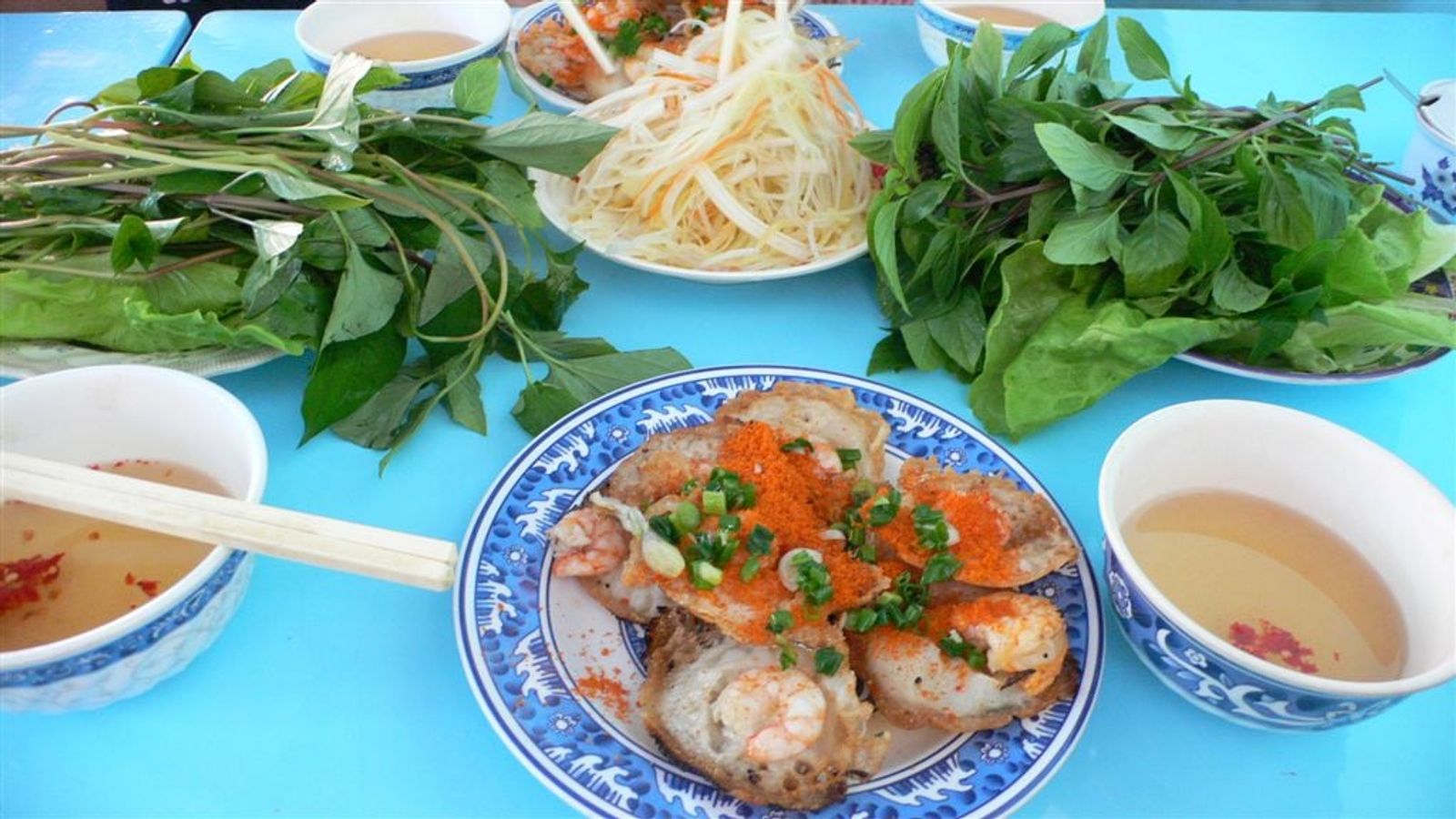
A bánh khọt breakfast in Vũng Tàu with greens, papaya and dipping sauce · Photo: terence from Singapore / CC BY 2.0 (Wikimedia Commons)
 VietnamVung Tau
Bánh Khọt: Vũng Tàu's Bite-Sized Shrimp Pancakes, From Mould to Dipping Sauce
Rice batter poured into small moulds, a single shrimp pressed on top and fried until crisp: bánh khọt is Vũng Tàu's signature street food. Here is where the name comes from, the secrets of the batter and mould, and the local way to eat it wrapped in greens and dipped in papaya fish sauce.
Vũng Tàu's Everyday Favourite
Vũng Tàu is a seaside city a little over 100 km south-east of Ho Chi Minh City and has long been the city's weekend getaway. It was the main city of the former Bà Rịa–Vũng Tàu province, and since the 2025 merger of provinces it has been part of Ho Chi Minh City. Vietnam's tourism authority calls bánh khọt the city's most famous street food. It is a bite-sized pancake of rice batter fried crisp in small round moulds, topped with shrimp and drizzled with scallion oil. Vietnamese Wikipedia goes so far as to call it Vũng Tàu's national dish. It is easy to describe as a mini bánh xèo, but it is much smaller and thicker, crisp outside and chewy inside.
Where the Name Comes From
Several stories explain the name bánh khọt. One says it comes from the khọt khọt sound of a spoon scraping the mould. Another says that in hard times people fried plain batter with no topping, called bánh khộp, and the name gradually became bánh khọt. As for origins, Vietnamese Wikipedia suggests bánh khọt may have developed from bánh căn of Lâm Đồng and Khánh Hòa, which travelled to Vũng Tàu and was adapted to local tastes. The article itself is flagged as lacking sufficient sources, though, so treat this as a story that is told rather than established fact. What is certain is that bánh khọt is widely eaten across southern Vietnam, including Vũng Tàu and the Mekong Delta, and that the Vũng Tàu style is the most famous.
The Secrets of the Batter and the Mould
Bánh khọt batter starts with soaked, ground rice, and some cooks blend in cooked rice or rice vermicelli (bún) to thicken it. The proportions are said to rely mostly on experience. Compared with bánh xèo, it uses more coconut milk, giving a richer, nuttier flavour. The mould is traditionally unglazed clay, though cast iron is common now. Each mould has about ten round wells. It goes over charcoal, each well gets a little pork fat, and the batter is poured in. A peeled shrimp is pressed into the centre of each, the lid goes on, and as it cooks the batter turns golden, the shrimp turns red, and the scattered scallions and chives turn green and stick to the surface. Cheaper stalls may skip the whole shrimp and top them with fluffy dried shrimp floss and scallions. A generous amount of oil, so the bottoms come out almost deep-fried, is the Vũng Tàu way.
How to Eat It, Vũng Tàu Style
Bánh khọt comes with a big basket of greens. Lay out a leaf of lettuce or mustard greens with some herbs, wrap one or two pancakes inside, dunk the bundle in sweet-sour fish sauce and eat it in one bite. The contrast of hot pancake and cool greens is a big part of the appeal. What marks the Vũng Tàu style is the dipping sauce. According to Vietnamese Wikipedia, fish sauce is mixed with warm water, garlic and lime juice, then shredded green papaya or lotus stems are added. As in the photo, a separate plate of green papaya strips often comes too, to add to the sauce and pick up with each bite. Mekong Delta bánh khọt, by contrast, is said to use less oil, taste more of coconut and be softer. It is also worth knowing that it is rarely eaten with fermented shrimp paste (mắm tôm).
When and Where to Eat It
In Vũng Tàu, bánh khọt is especially loved as breakfast. Some shops open early and close around lunchtime when the batter runs out, so morning or late morning is best. Bánh khọt shops cluster in the town centre and the lanes near the beach, and you can spot them by the rows of moulds and the charcoal smoke. You usually order by the plate, about one mould's worth of roughly ten, and the basket of greens and the sauce come with it. For two people, try one plate first and order more if you want. They are crispiest straight from the mould, so eat them as soon as they arrive; they go soft as they cool, so do not order too many at once. Some places top them with squid or scallops instead of shrimp, so it is worth checking the menu.