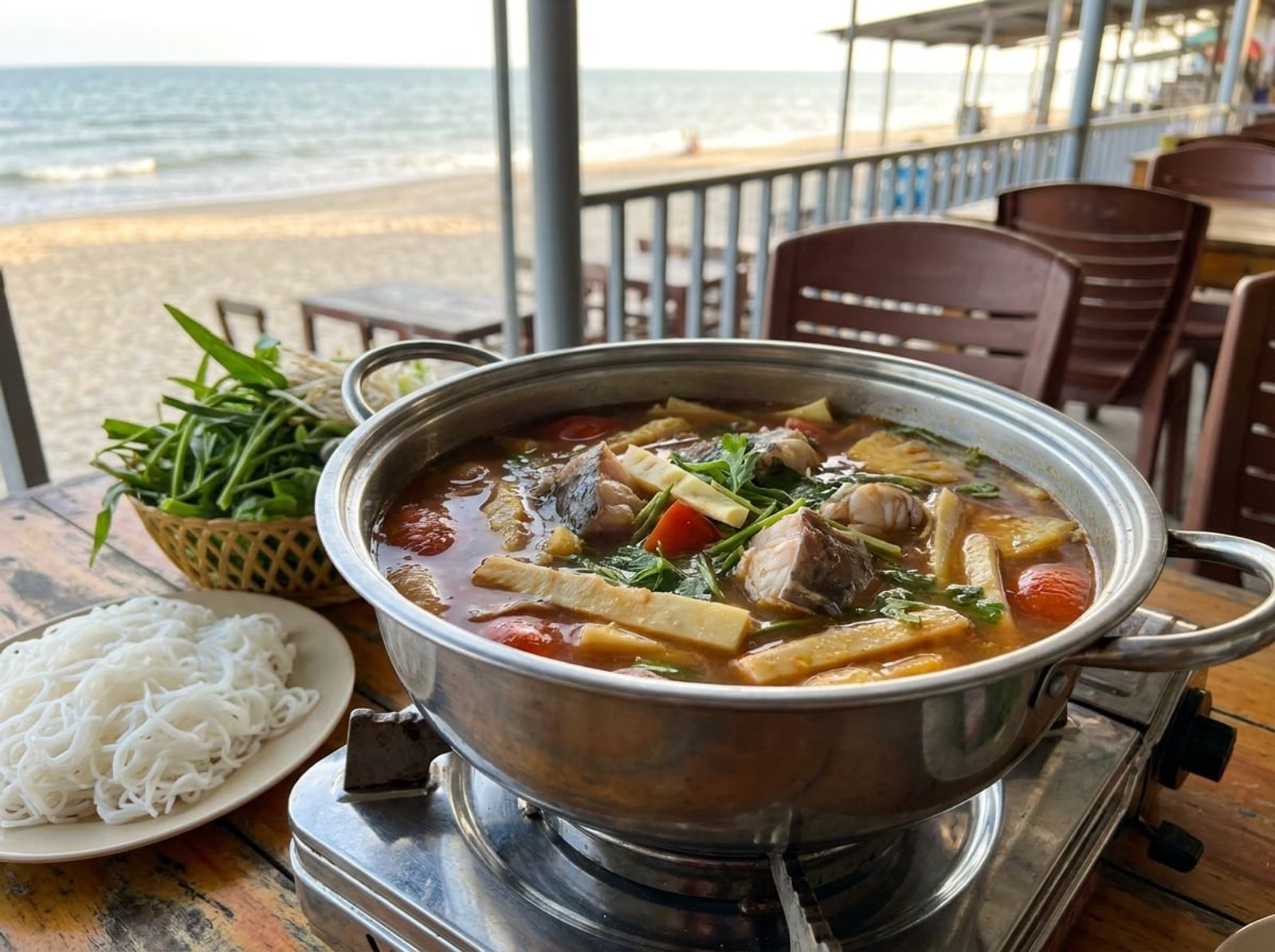
Lẩu Cá Đuối
 VietnamVung Tau
Lẩu Cá Đuối: Vũng Tàu's Sour Stingray Hotpot, Crunchy Cartilage and All
The classic dish to share at a Vũng Tàu seaside restaurant is stingray hotpot. Here is why stingray, with crunchy cartilage instead of hard bones, works so well, how the tangy broth of bamboo shoots, pineapple and tamarind is built, and how to eat it with greens and fresh noodles.
A City That Eats Stingray in Hotpot
In Korea, skate and ray bring to mind fermented hongeo or braised dishes, but in Vũng Tàu stingray (cá đuối) is eaten in a tangy hotpot. Vietnam's national tourism authority calls lẩu cá đuối a must-try for anyone who wants to taste Vũng Tàu's seafood in its purest form, and the state English-language daily Vietnam News has described it as one of the city's most popular seafood dishes. Vũng Tàu is a weekend seaside escape for Ho Chi Minh City residents, so restaurants serving fresh seafood are everywhere. Because a single pot sits in the middle of the table and diners add fish and vegetables as they go, it is mostly families and groups of friends who order it in the evening. If you worry about the smell of ray, Heritage, Vietnam Airlines' in-flight magazine, notes that the secret of this hotpot lies above all in the freshness of the fish.
Cartilage Instead of Bone
The reason stingray suits a hotpot lies in its anatomy. Like sharks, rays are cartilaginous fish, so instead of hard, needle-like bones they have cartilage with a pleasant crunch. Vietnam News describes the flesh as flaky and soft, with the fin sections firmer to the bite. That is why many people in Vũng Tàu happily chew the cartilage along with the meat. Preparation that tames the smell matters too. According to Heritage, the ray may be marinated with onion, ginger, fish sauce and pepper and lightly stir-fried before it goes into the pot. Methods vary from place to place, but restaurants bring the prepared fish out on a plate, so all you have to do is drop it into the boiling broth. If it is your first time, try both a thick piece of flesh and a fin piece with cartilage to compare the textures.
The Secret of the Sour Broth
The broth of stingray hotpot is built around sourness. Vietnam's tourism authority says Vũng Tàu's version is flavoured with tamarind (me), pineapple and aromatic herbs, while Vietnam News describes a broth seasoned with pineapple, sour bamboo shoots (măng chua) and fish sauce for a tangy, savoury taste. In other words, the souring agent varies a little from one kitchen to the next. The broth Heritage describes is simpler still: tomato, pineapple, lemongrass and a little chili, plus bamboo shoots stir-fried with onion and garlic. Either way, the tang of pineapple, bamboo shoots or tamarind cleans up the mild flesh and sea flavour of the ray, with a touch of heat behind it. If you are curious, ask when ordering what the restaurant uses to make its broth sour.
Greens, Noodles and How to Eat It
Stingray hotpot comes with plenty of vegetables. Vietnam's tourism authority names water spinach (rau muống) and bean sprouts as the classic sides, Vietnam News mentions taro stems (bạc hà) that soak up the broth, and Heritage adds thinly sliced banana flower (bắp chuối). Fresh rice noodles (bún) arrive too, so you ladle broth and fish over noodles in your bowl. Here is how to eat it. Once the broth boils, add the prepared stingray and lift it out as soon as the flesh turns white. It toughens if left too long, so add a little at a time. Vietnam News says the cooked ray goes into chili fish sauce (nước mắm ớt) to pick up a salty, spicy kick. Dip the vegetables briefly, as if blanching them, then put noodles in your bowl and top them with fish, vegetables and broth.
Ordering Tips
Stingray hotpot is ordered by the pot, and you normally pick a size to suit your group. A small pot works for two and a large one for four or more; tell the staff how many of you there are and they will suggest the right amount. Fish is often listed at market price, so check the quantity and price before ordering. Hotpot restaurants cluster in Vũng Tàu's seafood dining streets and along the coastal road. Some let you add extra seafood such as shrimp or squid, so look over the menu. The heat comes mainly from chili and can be adjusted, so if you are sensitive to spice, say so in advance. Planning a Vũng Tàu day around bánh khọt for breakfast, bánh canh ghẹ for lunch and stingray hotpot for dinner is a fine way to enjoy the city.