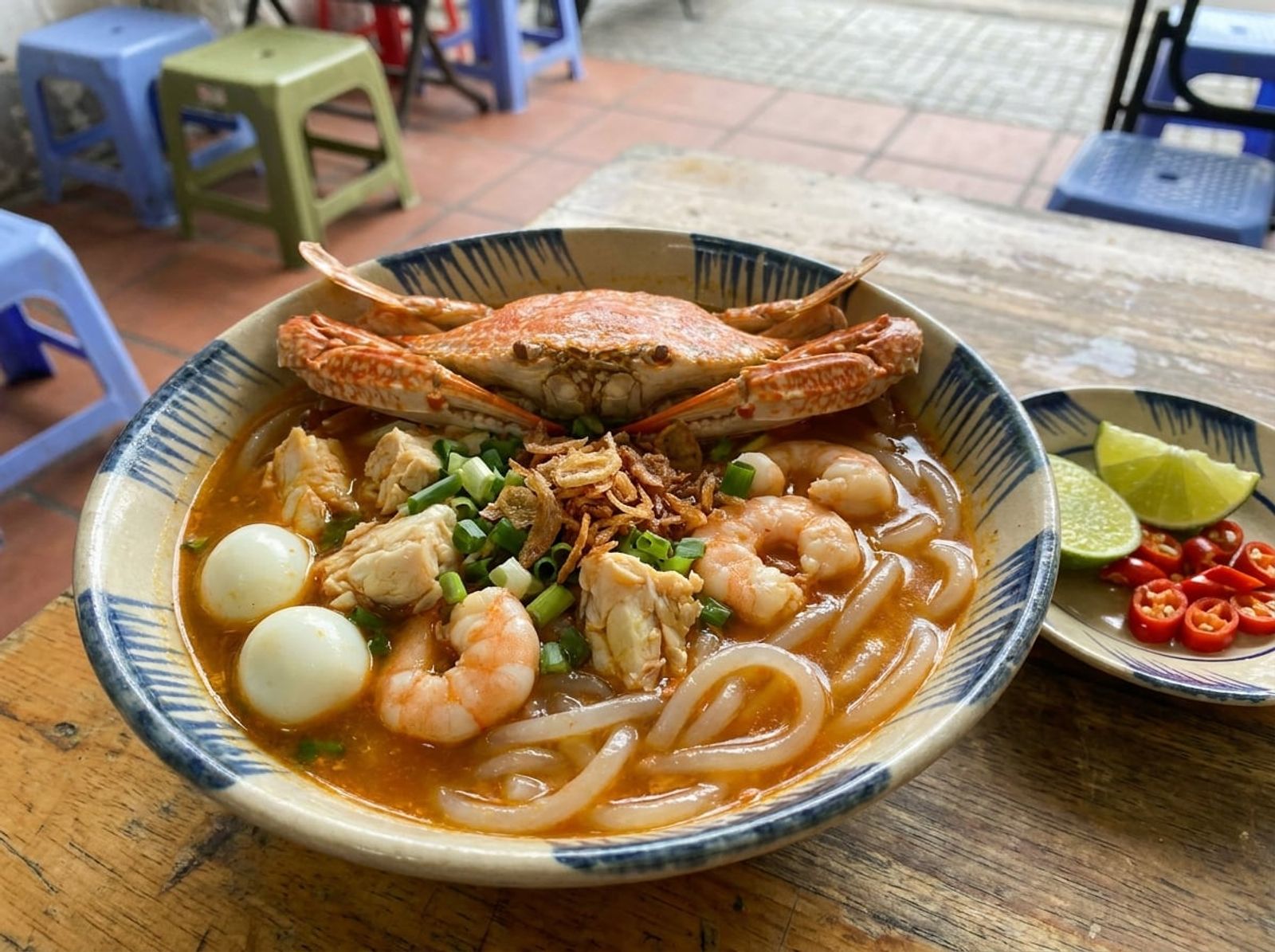
Bánh Canh Ghẹ
 VietnamVung Tau
Bánh Canh Ghẹ: Vũng Tàu's Thick, Chewy Noodles in Blue Crab Broth
Vietnam's tourism authority calls bánh canh ghẹ, thick noodles in a broth made from blue swimmer crab, a signature dish of Vũng Tàu. Here is how it differs from phở, what goes into the noodles, broth and toppings, and how to tackle the crab.
Vũng Tàu's Signature Noodle Soup
When Vietnam's tourism authority introduces Vũng Tàu's local food, the first dish it presents is bánh canh ghẹ. It calls the dish a signature of Vũng Tàu, highlighting how the crabs are cleaned, boiled and served with their shells cracked, and how the broth is built from crab shells, coconut milk and spices. Ghẹ is a sea crab similar to the blue swimmer crab, one of the catches landed off Vũng Tàu. As befits a seaside city, many local noodle soups use seafood broths, and bánh canh ghẹ is the flagship. It is known as a popular breakfast too, so plenty of noodle shops open early. If bánh khọt, another Vũng Tàu favourite, is a light snack, bánh canh ghẹ is a hearty bowl with whole crab on top.
How Bánh Canh Differs From Phở
Bánh canh is among the thickest and chewiest of Vietnam's noodles. Unlike phở, which is a flat, thin rice noodle, or bún, a thin round one, bánh canh is thick and round like udon, with a springy bite. The dough may be pure rice flour, mixed with tapioca starch (bột lọc or bột năng), or mostly starch, so the texture varies a little from shop to shop. Vietnam's tourism authority describes the noodles in Vũng Tàu's bánh canh ghẹ as thick and chewy, made from rice or tapioca, and local travel sources likewise mention rice flour or starch. The more starch, the more translucent and chewy the noodle, and a little starch releases into the soup, thickening it slightly, which is typical of bánh canh. So even with crab broth, it has a richer, silkier body than a clear bowl of phở.
A Broth Drawn From Crab Shells
The broth makes or breaks bánh canh ghẹ. Vietnam's tourism authority says it is simmered with crab shells, coconut milk and a blend of spices, while Heritage, Vietnam Airlines' in-flight magazine, describes a long simmer of bones, dried shrimp and crab for a rich, aromatic taste of the sea. Coconut milk makes the broth noticeably smoother and nuttier. Because the shells steep for so long, the broth carries a deep crab aroma, and the dried shrimp adds savouriness. Starch released from the bánh canh noodles thickens it slightly, so each spoonful clings pleasantly. Unlike a fiery Korean crab stew, this broth centres on sweet, intense crab flavour, which makes it easy to eat even for breakfast. If you want heat, add a little chili or chili sauce from the table.
What Goes on Top
As the name says, crab is the star of every bowl of bánh canh ghẹ. Vietnam's tourism authority describes whole crabs, boiled and cracked, whose firm, sweet meat mingles with the noodles. According to Heritage, some places add toppings such as mantis shrimp, fish cakes, squid and quail eggs, finishing the bowl with scallions, coriander and crispy fried shallots. Condiments vary by shop. Lime and chili usually come on the side, and some places are known to serve a chili salt for dipping the crab meat. The salty, sharp salt brings out the crab's sweetness, while a squeeze of lime freshens the broth. Some shops list whole-crab and crab-meat-only versions separately, so order whichever you prefer. More toppings mean a higher price, so check the menu first.
Tips for Tackling the Crab
A bowl topped with whole crab is delicious but a little fiddly. It is easiest to eat some of the noodles and broth first with chopsticks and spoon, then pick the crab up by hand, separate the legs from the body and pull out the meat. Hard parts sometimes need cracking by hand, so bring wet wipes. If you would rather not get your hands messy, order the crab-meat-only version from the start. Because it is also a breakfast favourite, some shops open early and close once the ingredients run out. Walking around downtown and near the beaches, you will have no trouble spotting noodle shops advertising bánh canh ghẹ. With crab in the bowl it costs more than an ordinary noodle soup, and the price depends on the size and number of crabs, so check when ordering.