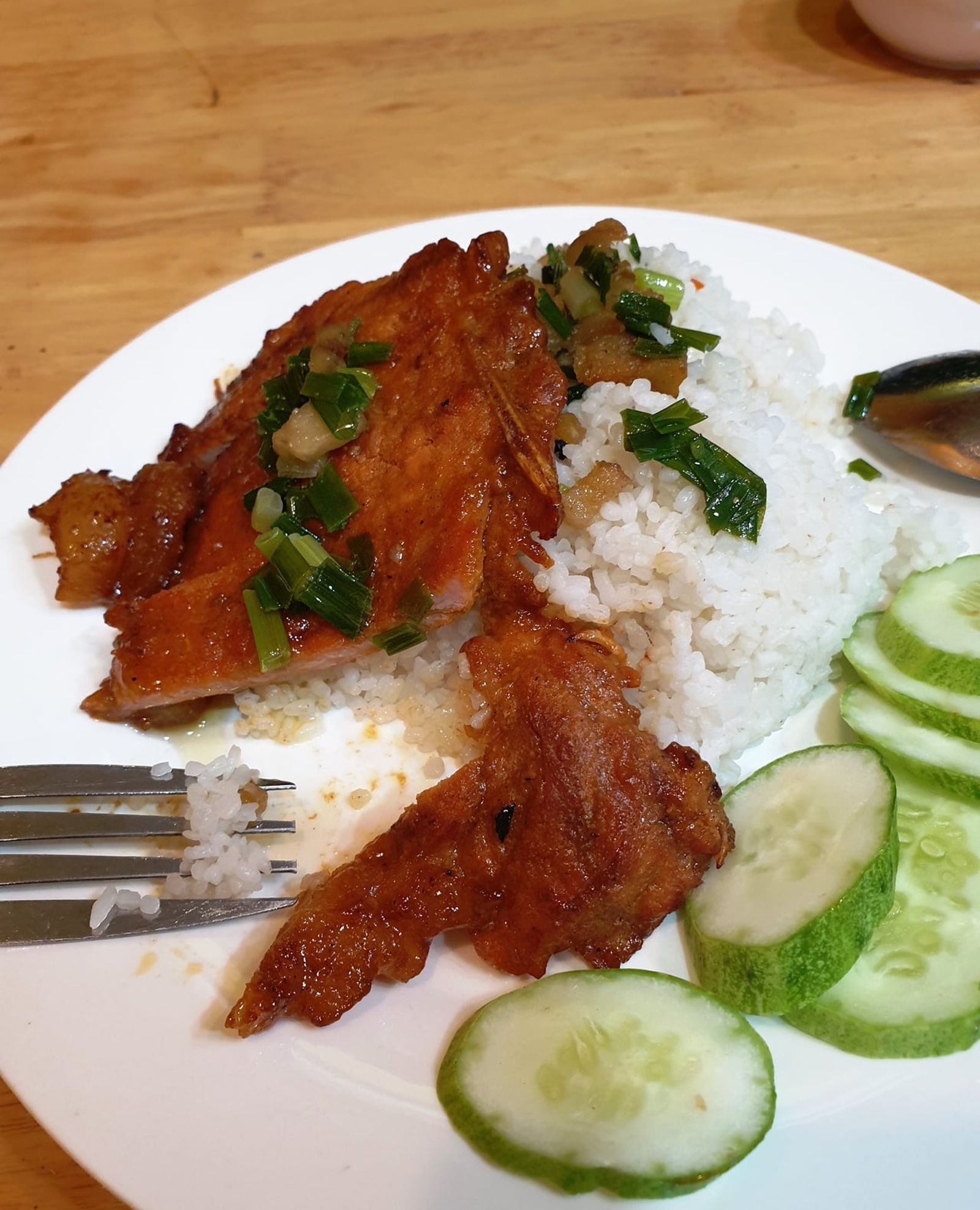
Saigon-style cơm tấm with grilled pork chop · Photo: Phương Huy / CC0 (Wikimedia Commons)
 VietnamHo Chi Minh City
Cơm Tấm: How a Plate of Broken Rice Became the Taste of Saigon
People say Saigon eats cơm tấm the way Hanoi eats phở. Here is how broken rice, once fed to pigs and chickens, met charcoal-grilled pork and became Ho Chi Minh City's signature plate, and how to enjoy it like a local.
What the Name Means
In cơm tấm, cơm means cooked rice and tấm means rice grains broken during milling. Broken rice was long treated as an inferior grade. It was cheap and was often fed to pigs and chickens. Yet those small fragments cook up differently from whole grains. They stay light and separate while soaking up seasoning, so when a sweet-salty sauce goes over the plate the flavor runs between every grain. Today most cooks buy broken rice on purpose, and Vietnamese press reports that some steam it with pandan leaves for a gentle aroma. You can find cơm tấm all over Vietnam, but the south, and Ho Chi Minh City (old Saigon) above all, is considered its home.
From Mekong Farmers' Food to a Saigon Plate
Cơm tấm is generally traced to poor farmers. In bad seasons, when there was not enough whole rice to sell, farmers cooked the unsellable broken grains for themselves. Elderly Saigon residents still remember it as a poor farmer's meal, according to Viet Nam News. The transformation happened in the city. Writer and southern culture researcher Sơn Nam described how, during urbanization in the first half of the 20th century, Saigon cooks adapted the dish for foreign customers by topping it with charcoal-grilled pork chops, shredded pork skin and steamed egg custard. It began to be served European-style on a plate, eaten with a spoon and fork. That is why many cơm tấm shops in Ho Chi Minh City still set out a fork before chopsticks.
What Goes on the Plate
The classic combination is cơm tấm sườn bì chả. The star, sườn, is a pork chop or rib marinated and grilled over charcoal, and every shop guards its own marinade. Bì is cooked pork skin and lean pork cut into thin strands and tossed with roasted rice powder, nutty and chewy. Chả is a steamed egg-and-minced-pork custard, and many places will swap it for a fried egg. Scallions softened in hot oil (mỡ hành) are spooned over the rice, and the plate comes with cucumber, tomato and pickled carrot and daikon. Last comes the essential mixed fish sauce (nước mắm pha), sweet, sour and salty. Grilled meat rolls and char siu are now common add-ons, so you usually pick your own combination from the menu.
How to Eat It Like a Local
Cơm tấm is usually eaten with a spoon and fork rather than chopsticks. Hold the pork chop down with the fork, cut a bite with the edge of the spoon, and scoop it up with a little rice, bì and chả. The key is how you use the sauce. The fish sauce served in a small bowl on the side is less a dip for the meat than something you spoon over the rice so it soaks in. Rather than pouring it all at once, add a little at a time until it tastes right. If you like heat, add fresh chili or chili sauce from the table. It was once strictly a breakfast dish, but now it is sold morning, noon and night, often until late. From tiny roadside stalls to air-conditioned restaurants, for Saigon people it is an everyday meal for any time and any place.
Ordering Tips and Where to Eat
You order by naming what goes on top. Cơm sườn gets you rice with a pork chop, and sườn bì chả gets you all three classics. Add a fried egg with trứng ốp la, and put thêm (more) in front of anything you want extra, as in thêm sườn. Many shops have photo menus, so pointing works fine. Prices vary a lot with the setting. A 2020 report put a plate at a clean, air-conditioned restaurant at about VND35,000 to 60,000, with roadside shops cheaper. Prices have risen since, so treat that only as a guide. Finding one is easy. In any Ho Chi Minh City neighborhood, follow the charcoal smoke and the smell of grilling pork near a market or along a main road, and you will usually find a cơm tấm stall. A place full of locals is rarely a miss.