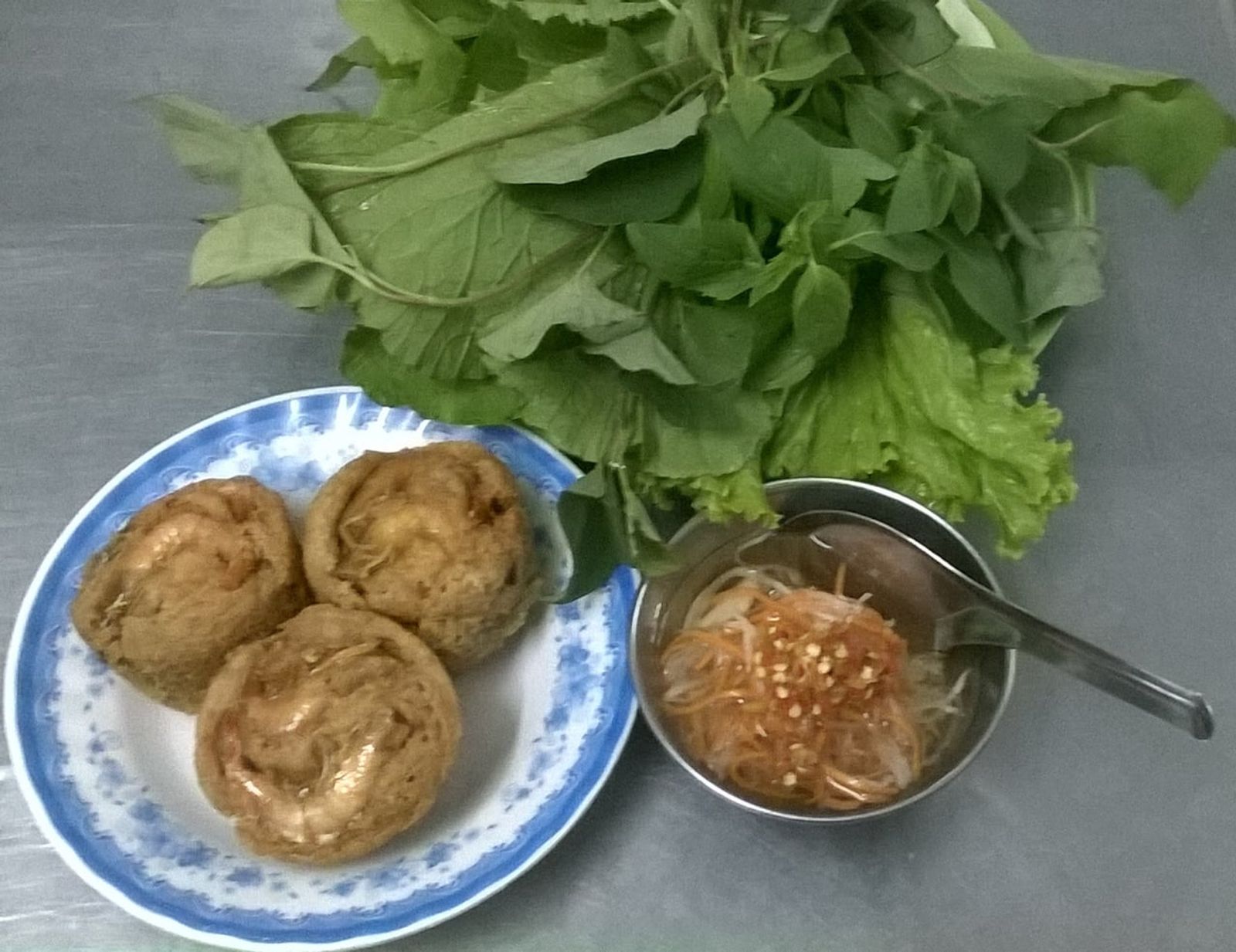
Cần Thơ bánh cống with fresh greens and dipping sauce · Photo: Vietcuongdao / CC BY-SA 4.0 (Wikimedia Commons)
 VietnamCan Tho
Bánh Cống: How a Khmer Shrimp Fritter Became a Cần Thơ Street Classic
Batter poured into a small ladle-shaped mould, topped with shrimp and deep-fried golden: bánh cống is one of Cần Thơ's signature street foods. Here is its origin in the Mekong Delta's Khmer community, how it is made and how locals wrap it in mustard greens.
A Fritter Shaped by Its Mould
Bánh cống is a rice-flour batter cake filled with mung beans and minced pork, topped with peeled shrimp and deep-fried. The outside turns golden and crisp while the inside stays soft and nutty. It is a little smaller than your palm and cylindrical, so it is easy to spot. That shape comes from the tool. Batter and filling go into a small cylindrical metal mould on a long handle, and the whole mould is lowered into bubbling oil. Vietnamese tourism guides explain that the name cống also comes from this cylindrical mould. Viet Nam News calls bánh cống one of Cần Thơ's culinary symbols and one of the most popular street foods with visitors today.
A Dish from the Khmer Krom Community
Bánh cống is generally traced to the Khmer Krom, the ethnic Khmer community long settled in the Mekong Delta. In Khmer it is called nom kapong. Sources differ on exactly where it began. English Wikipedia places its origin in Mỹ Xuyên in Sóc Trăng province, south of Cần Thơ, from where it spread across the delta. Viet Nam News, quoting Cần Thơ elder Phạm Lam Kiều, says it began in the early 20th century when the southern Khmer community started making it with locally available ingredients. Either way, it is a dish built from the delta's everyday ingredients: rice, mung beans and river shrimp.
How It Is Made: The Secret to the Crunch
Here is the Cần Thơ method described by Viet Nam News. Ordinary rice and sticky rice are soaked overnight in warm water and finely ground, then mixed with a little wheat flour so the batter fries up crisper. There are two basic fillings: steamed mashed mung beans, and minced pork stir-fried with spring onion, shallots, garlic, salt, sugar, fish sauce and pepper. A thin layer of batter goes into the mould, then the filling, then more batter, and finally a peeled shrimp with its tail left on, which is said to be for looks once fried. The filled mould is lowered into hot oil and fried until the outside is golden and crisp. A well-made bánh cống is crunchy outside and soft inside.
How Locals Eat It: Wrapped in Greens
Bánh cống is not just picked up and eaten. It is wrapped in greens and dipped. The plate usually comes piled with mustard greens (cải bẹ xanh), lettuce and herbs such as pungent fish mint (rau diếp cá) and basil. The method is simple. Spread a mustard green or lettuce leaf, break a bánh cống in half on it, add herbs, shredded mango and cucumber, and roll it up. Dip it in a sweet-sour sauce of lime juice or vinegar, sugar, minced garlic, salt and chili. Many places float shredded pickled daikon and carrot in the sauce. The bitter greens, rich fritter and tangy sauce balance so well that a few never feel too heavy. Bánh cống was originally served at big parties and festivals, and it still appears often at important family and community gatherings.
Where to Eat It in Cần Thơ
Viet Nam News points to An Bình and Xuân Khánh markets in central Cần Thơ, and to the long-standing shops around Lý Tự Trọng Street, as places to try bánh cống. The An Bình market area is also on the way to Cái Răng floating market, so it makes an easy stop after a dawn boat trip. Bánh cống is best straight out of the oil. A place that drops the moulds in when you order, rather than one with a pile fried in advance, makes a clear difference in crunch. Two or three make a light meal for one person, and with a group they are great to share as a snack. You can now find bánh cống elsewhere in the Mekong Delta and in Ho Chi Minh City, but the Cần Thơ plate, heaped with mustard greens and herbs, is best enjoyed right where it is made.