Bún Quậy
 VietnamPhu Quoc
Bún Quậy: Phú Quốc's Stirred Noodle Soup, Where You Mix Your Own Sauce
Rice noodles pressed fresh before your eyes, shrimp and fish paste, boiling broth and a vigorous stir: bún quậy was born on Phú Quốc. Here is how a shrimp noodle soup from central Vietnam became the island's specialty, and the unusual ritual of mixing your own dipping sauce.
A Name That Means "Stirred Noodles"
In bún quậy, bún means rice noodles and quậy means to stir. True to the name, boiling broth is poured over noodles and fish cake in a bowl, and the cook stirs it vigorously before serving. Vietnam's tourism site, vietnam.travel, presents bún quậy as Phú Quốc's specialty noodle and notes that although it is now sold elsewhere in Vietnam, it was born on the island. What makes bún quậy special is not only the taste but the process. You can watch the noodles being pressed from rice dough and the broth being poured and stirred right in front of you, and you mix your own dipping sauce. The tourism site calls it a fun food that is great with a group. It was originally the islanders' breakfast.
A Shrimp Noodle Soup Crosses to the Island
Bún quậy has its roots in central Vietnam. According to the tourism site, a noodle soup with ground shrimp paste came to Phú Quốc from central Vietnam in 1955. VietnamPlus, the news site of the national news agency, says it grew out of a shrimp noodle soup that fishermen from Bình Định province brought to the island, and was adapted over decades to local ingredients and tastes. It even had a different name at first. The tourism site says that until 1996 it was called bún tôm, shrimp noodles, on the island. Then a new recipe refined with island seafood and local seasonings took hold, its popularity soared and it became known by its current name. The tourism site says that between 1996 and 2012 one island restaurant made the dish famous across Vietnam.
Pressed, Poured and Stirred Before Your Eyes
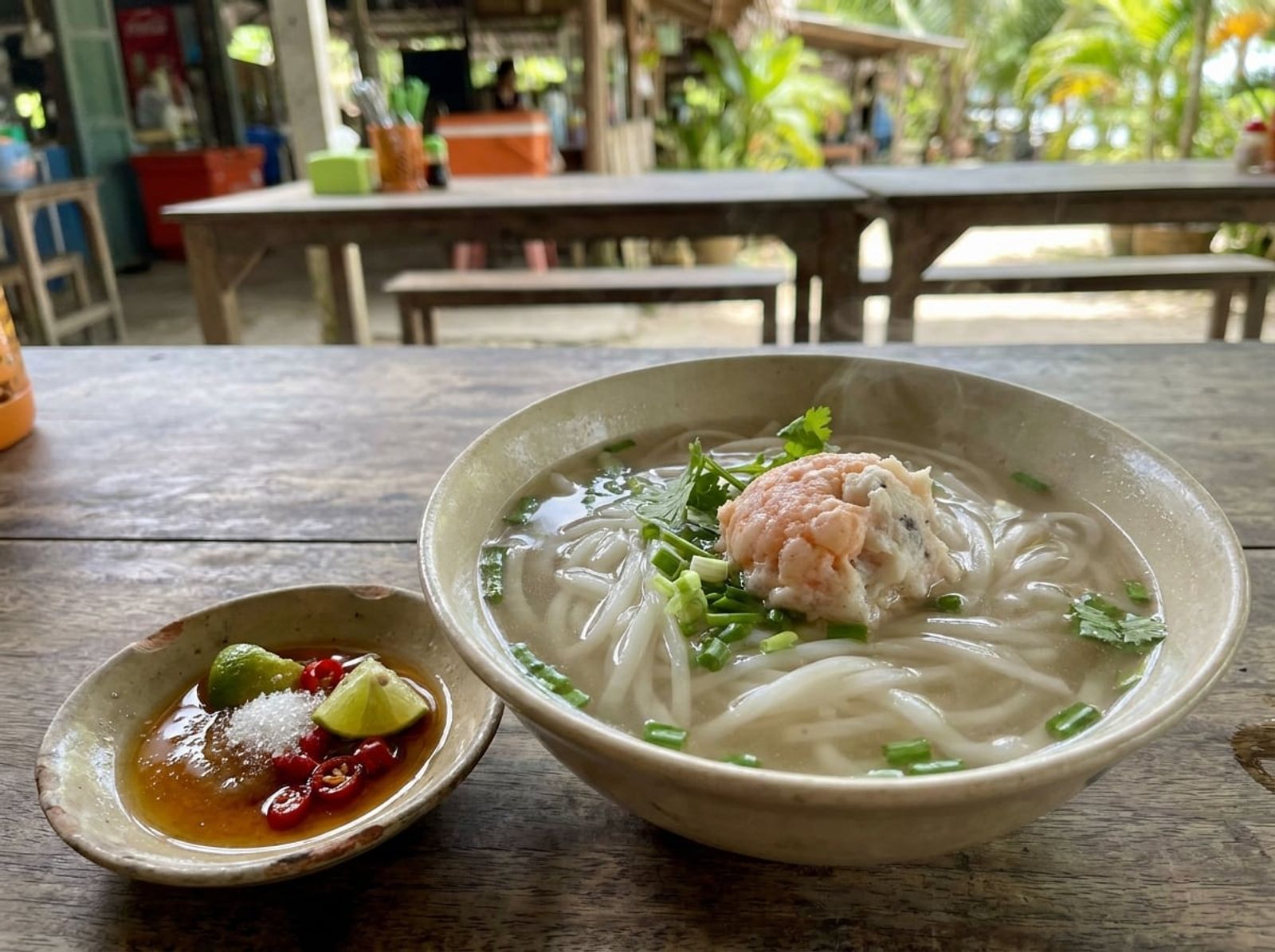
The noodles in bún quậy are not boiled in advance. A skilled cook presses rice dough through a mould into long noodles and drops them straight into boiling water, so they come out soft with a fresh rice aroma. On top of the noodles go finely ground shrimp and fish paste, seafood such as squid, herbs and scallions. Boiling broth is poured in and the cook stirs hard, so the heat cooks the raw shrimp and fish paste as it spreads through the broth. This stirring is both the origin of the name and the heart of the dish. Most shops do this in full view of customers, so waiting for your bowl is part of the show. Made with island seafood, the broth carries the sweetness of shrimp and fish.
Mix Your Own Sauce: Balancing Four Flavors
The biggest fun of bún quậy is that you make your own dipping sauce. According to the tourism site, there are four ingredients: chili, sugar, fish sauce and citrus such as lime or kumquat. The point is to balance heat, sweetness, saltiness and sourness to your own taste. If you are not sure how to mix it, do not worry. The tourism site describes a restaurant with illustrated signs in English and Vietnamese that walk you through it. Ingredients vary by shop: VietnamPlus describes one where diners mix salt, sugar, seasoning powder, fresh chili, kumquat (quất) and pepper. Try dissolving sugar in the citrus juice first, then adding fish sauce and chili little by little. Phú Quốc is the fish sauce island, so tasting a sauce made with local nước mắm is part of the pleasure. Dip the noodles, fish cake and seafood into your sauce, and drink the broth straight from the bowl.
When and Where to Eat It
Bún quậy was originally breakfast, but many shops now serve it from daytime into the night, and the tourism site notes that locals stop by to unwind after work. Still, eating it for breakfast like the islanders is the most Phú Quốc way to do it. According to the tourism site, the island has more than ten bún quậy restaurants. The best-known ones are in Dương Đông, the main town on the west coast, easy to reach from downtown hotels, and some are popular with tourists while others draw mostly locals and Vietnamese travelers. With a group, mixing your sauces in different ratios and comparing them is part of the fun. You can now find bún quậy beyond the island, but a bowl made with Phú Quốc seafood and fish sauce tastes best right where it was born.