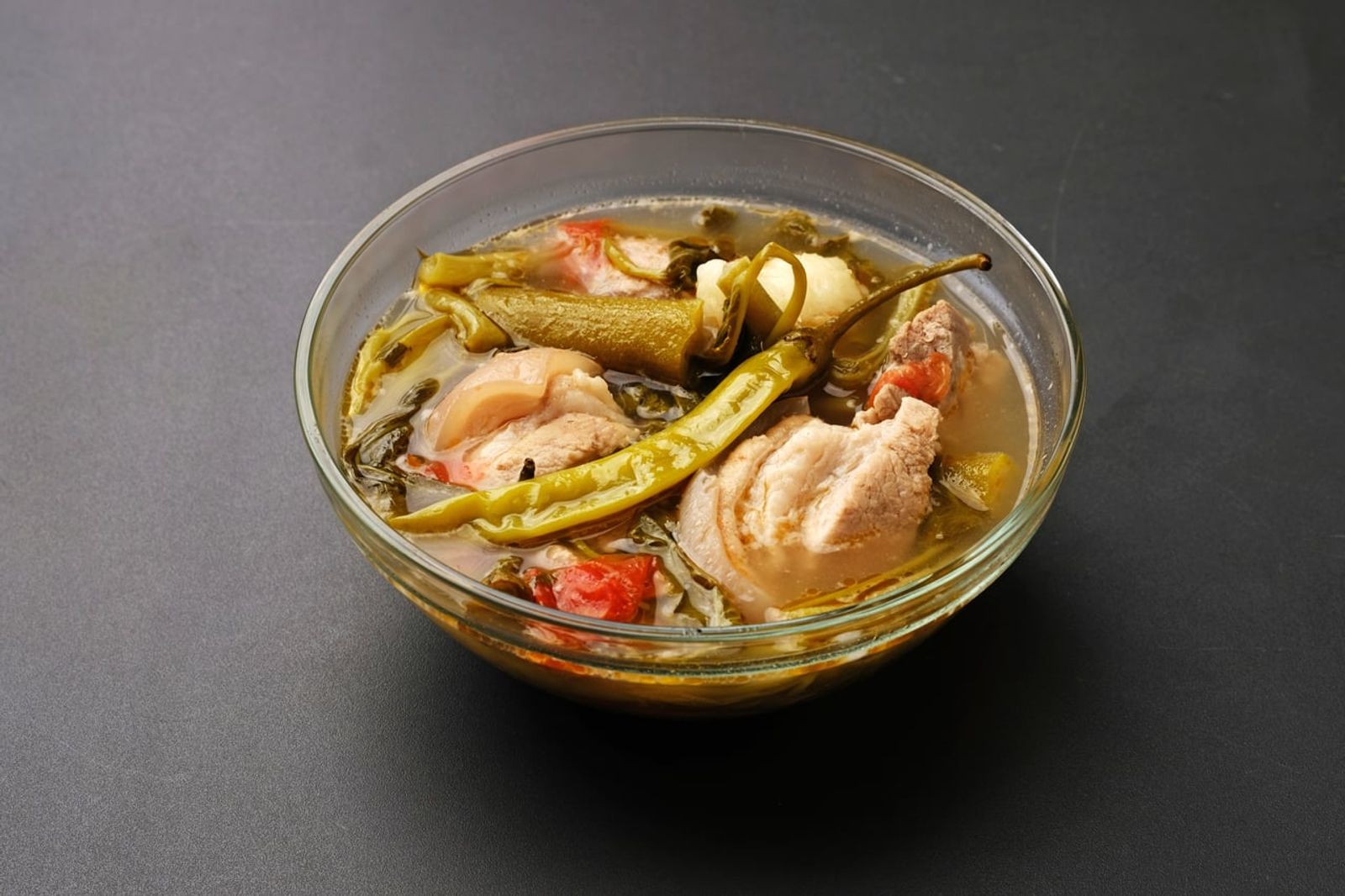
Sinigang with okra and long green chilli in tamarind broth · Photo: Joy D. Ganaden / CC BY-SA 4.0 (Wikimedia Commons)
 Philippines
Sinigang and a Love of Sour: From Tamarind Broth to Vinegar Dips
Sinigang, the tamarind-soured soup so many Filipinos call their comfort food, is a window into the country's love of sour flavours. Here are the souring agents, the meats and vegetables that go in, why sourness matters so much, and how to enjoy it with rice.
What Sinigang Is
Sinigang is a Filipino soup of meat or seafood and vegetables cooked in a broth that is both sour and savoury. The name comes from the Tagalog verb sigang, "to stew". It is said to have originally referred to any meat or seafood cooked in a sour broth. Today the most common souring agent is tamarind, sampalok in Filipino. Take a spoonful and you first get a rounded, fruity sourness quite unlike lemon, followed by the sweetness of the meat and vegetables. Columns in Philippine newspapers note that the food writer Doreen Fernandez regarded sinigang as the quintessential Filipino dish, because it appears on the tables of rich and poor alike and can be made with fish, meat or vegetables.
Not Just Tamarind
Part of sinigang's appeal is the range of souring agents. Besides tamarind, cooks use unripe mango, rice vinegar, citrus such as calamansi, kamias (bilimbi, a sour fruit shaped a little like a gherkin), santol, guava and batwan, and in some places sour leaves. At home today, many people simply use tamarind-flavoured sinigang mix or bouillon cubes. Change the souring agent and the name changes too. With guava it is sinigang sa bayabas; with miso stirred in for extra savouriness, sinigang sa miso; and there is even sinigang sa pakwan, with watermelon alongside tamarind. Each ingredient gives a different kind of sourness, so the same dish can taste quite different from region to region and home to home.
From Pork Ribs to Prawns
Almost any protein works: pork, beef, chicken, fish or prawns. The name follows the main ingredient, so pork is sinigang na baboy, beef sinigang na baka and prawns sinigang na hipon. Learn those words and ordering from a menu becomes much easier. The vegetables usually include okra, taro (gabi), white radish (labanos), water spinach (kangkong), yardlong beans (sitaw) and aubergine. The taro softens and slightly thickens the broth, and long green chillies (siling haba) are often added for gentle heat and aroma. With so many vegetables in the pot, a single bowl is surprisingly filling.
Why Filipinos Love Sour
Filipino cooking is often described as balancing sweet, salty and sour, and sour in particular is frequently singled out as a favourite. The Filipino word for it is asim. Sourness runs right across the table: not just sinigang, but paksiw, fish or meat simmered in vinegar; adobo, braised in vinegar; and dipping sauces of vinegar and onion. According to Philippine newspaper columns, Doreen Fernandez, in her essay "Why sinigang?", linked this taste for sourness to the climate, to its role in refreshing the palate and balancing rich food, and to a pragmatic acceptance of life's bittersweetness. Take a spoonful of sour broth on a hot day and you quickly understand why it is so loved.
A Soup the World Noticed, and How to Eat It
Sinigang has drawn attention abroad too. The food guide TasteAtlas named it the best soup in the world in its 2021 year-end awards, and in 2023 it appeared on the guide's list of the world's best dishes. The news was widely covered in the Philippine media, so locals may be pleased if you bring it up. Sinigang is less a soup to sip on its own and more a dish to eat with rice. Many people spoon a little broth over their rice or take a bite of the meat and vegetables with a spoonful of rice. You will find it in the soup pots at carinderias and on the menus of family-style Filipino restaurants, so if it is your first time, start with pork or prawn sinigang.