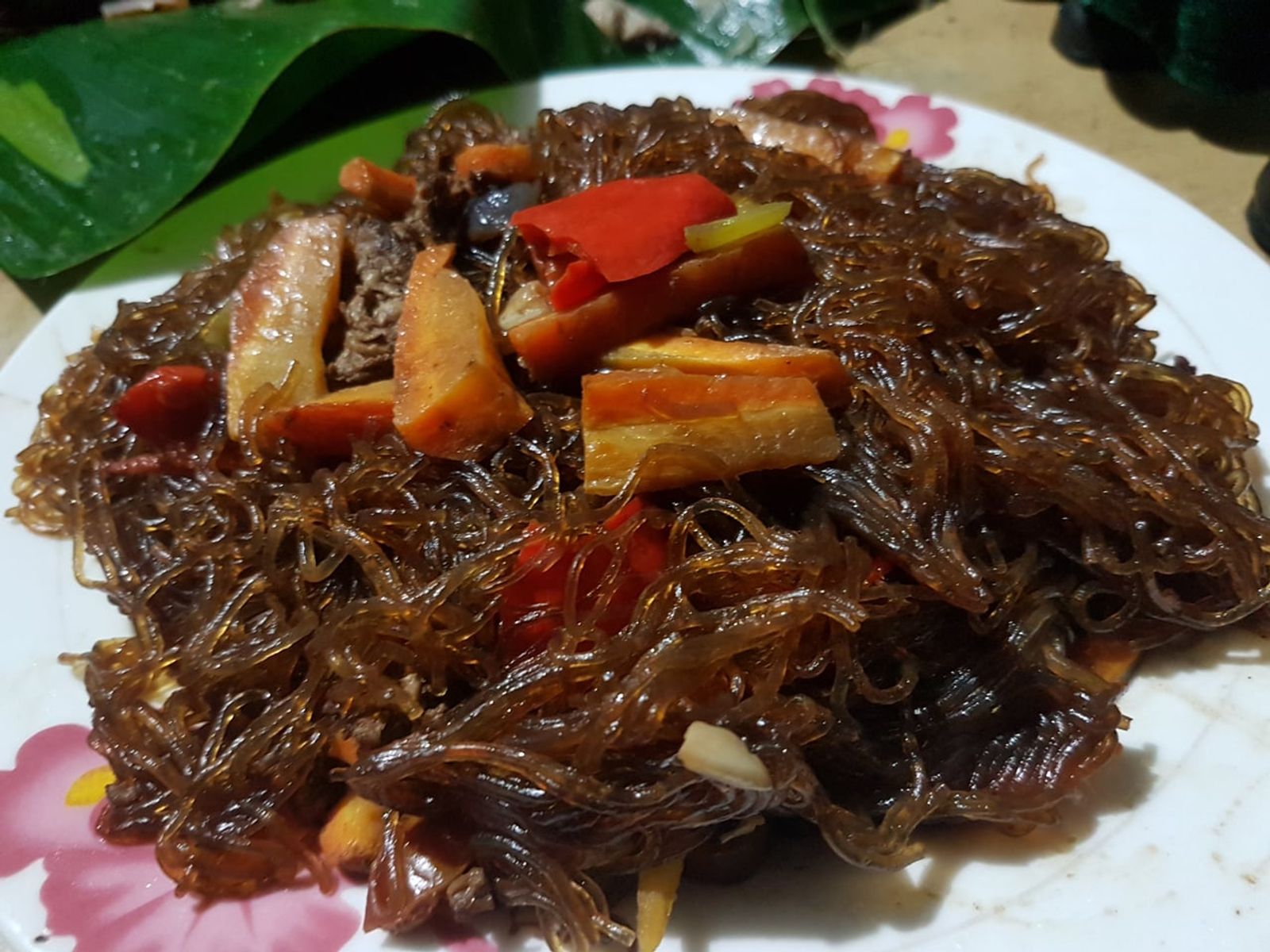
Pancit stir-fried with vegetables and meat · Photo: Obsidian Soul / CC0 (Wikimedia Commons)
 Philippines
Pancit: The Noodles That Came from China and Found Their Way to Filipino Birthdays
In the Philippines, noodles of every kind are called pancit. The name comes from Hokkien, the dish arrived with Chinese migrants, and today no birthday or celebration is complete without it. Here is where the name comes from, how the noodle types differ, the birthday-noodle custom and why there is always calamansi on the side.
Every Noodle Is Pancit
In Filipino, pancit (standard spelling pansít) is the general word for noodles. Fried or in soup, rice or egg, they are all pancit, told apart by the noodle type or a place name added after. So when you see "pancit ..." on a menu, the next word tells you the noodle or the style. The name comes from the Hokkien spoken by Chinese Filipinos. One explanation traces it to pián-si̍t (扁食), wonton noodles; another to piân-ê-si̍t (便的食), "convenient food", so sources differ a little. Either way, noodles arrived in the Philippines with Chinese migrants. Today Filipinos see pancit not as foreign food but as entirely their own.
From Chinese Import to Filipino Classic
Noodles are known to have been brought to the Philippines by Chinese migrants. Pancit then adapted to local ingredients and tastes and picked up some Spanish influence during the colonial era. The result is that regions developed their own pancit with local ingredients, to the point where many provinces have a named pancit of their own. There are even pancit dishes with no noodles at all. Thin strips of coconut meat, papaya, bamboo shoots, bean sprouts or seaweed are sometimes used instead, cut long and thin and cooked like noodles, which is why they still carry the pancit name. In the Chinatowns of cities with long-established Chinese communities, soups and fried noodles closer to the Chinese style are easy to find.
Bihon, Canton, Sotanghon: Reading the Noodles
The pancit names you see most often on menus come from the noodle type. Pancit bihon is thin rice noodles, pancit canton round egg noodles, and sotanghon clear mung bean glass noodles; many places stir-fry bihon and canton half and half. Miki is a soft yellow egg noodle, and lomi a thick egg noodle that is often served in a thick soup. Palabok is something else again: yellow cornstarch noodles under an orange shrimp-flavoured sauce, topped with boiled egg, shrimp and crunchy pork crackling. A pancit named after a place is usually that town's local version. For a first try, the safest bets are bihon or canton.
Pancit for Birthdays: Long Noodles, Long Life
Pancit is almost always on the table at a Filipino birthday party. The long strands are believed to symbolise long life, a custom that began with Chinese Filipinos and spread across the country. That is why Chinese restaurants nationwide often list a dish called "birthday noodles" on their menus. Beyond birthdays, pancit comes out on big platters at all kinds of celebrations and gatherings: it is easy to share, and its long-life meaning makes it a natural fit for a feast. If you are invited to a Filipino friend's birthday, be sure to try a plate of pancit, and remember it is a dish that carries good wishes.
A Squeeze of Calamansi
A plate of pancit usually comes with a few halved little green citrus fruits. This is calamansi (kalamansi in Filipino), which looks like a small lime about 2.5 to 3.5 cm across and is very sour. Squeeze it over just before eating and a soy-seasoned noodle dish turns noticeably fresher. Calamansi turns up all over Filipino food. Squeezed into soy sauce it becomes toyomansi, into fish sauce patismansi, and it is also served with lugaw, rice porridge. Calamansi juice, sweetened and drunk like lemonade, is common too. Eat Filipino food for a while and you will notice the habit of cutting salty or rich flavours with something sour, and that wedge of calamansi on your pancit is a perfect example.