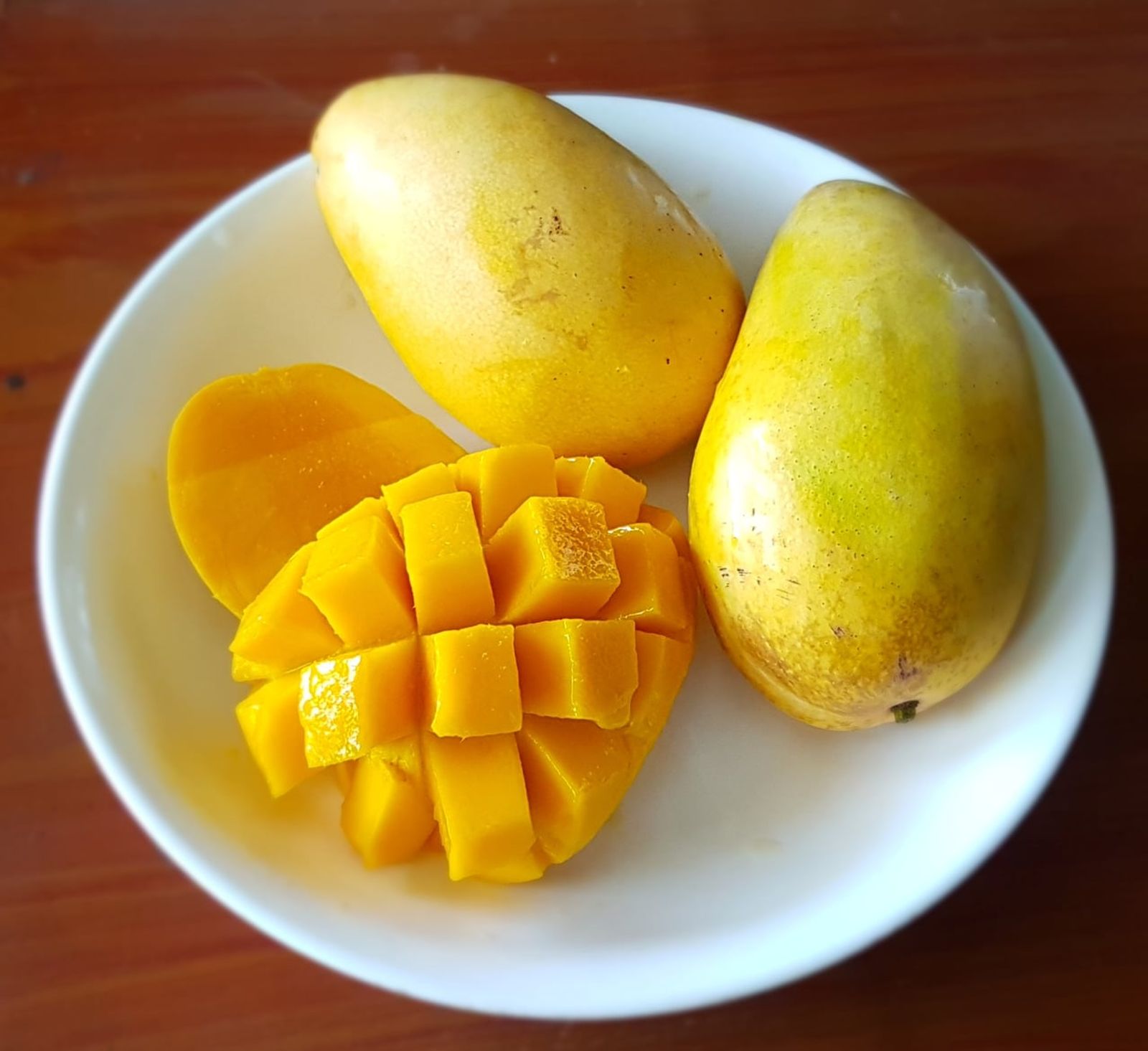
Ripe Carabao mangoes, one cut into a grid · Photo: Obsidian Soul / CC0 (Wikimedia Commons)
 Philippines
A Guide to Philippine Mangoes: Carabao Mango Season, Picking a Ripe One and Sour Green Mango
Mangoes are one of the great pleasures of a trip to the Philippines. Here is what makes the Carabao mango special, when it is in season, why you can now find mangoes almost all year, how to pick a ripe one, and the local favourite of green mango with shrimp paste.
The Carabao Mango
In the Philippines, "mango" usually means the Carabao mango, the country's signature variety, also sold abroad as the Philippine or Manila mango. When ripe its skin turns bright yellow and fragrant, and the deep yellow flesh is sweet, tender and almost melting. Unlike the red-blushed mangoes common in many markets abroad, it is elongated and ripens yellow all over. It is often introduced as the national fruit of the Philippines, but no law makes this official. A bill to designate it as the national fruit has been filed, but it has not been passed. Even so, the mango is clearly embraced as a symbol of the country, and piles of yellow mangoes in markets and supermarket fruit sections are a familiar sight for travellers.
When Is the Season, and Why Mangoes Appear All Year
The main fruiting season for Carabao mangoes is usually late May to early July, at the tail end of the dry season. On Guimaras, an island famed for its mangoes, the Manggahan (mango) Festival is held in May. Visit a market around this time and you will find freshly harvested in-season mangoes in abundance. Yet in the Philippines you can find mangoes even out of season, thanks largely to the horticulturist Ramon Barba. He developed a method of inducing mango trees to flower by spraying them with a potassium nitrate solution, work that the Crop Science Society of the Philippines named best paper in 1974. Mangoes used to be a strictly seasonal fruit, but with this method trees can be made to flower out of season and fruit several times a year. Barba was proclaimed a National Scientist of the Philippines in 2014.
Picking and Eating a Ripe Mango
A fully ripe Carabao mango turns bright yellow with no green left, and smells strongly sweet near the stem. So check the colour and smell first, then choose one that gives slightly when gently squeezed. If there is still some green, leave it at room temperature for a day or two to ripen. Fruit so soft that it has lots of dark spots or is leaking juice is best avoided. To eat it, cut the two cheeks away from the flat seed, score the flesh in a grid, then push the skin inside out and eat the cubes. If your room has no knife, ask a market vendor to cut it for you. Filipinos eat ripe mango as it is, but also pair it with suman, sticky rice cakes, or blend it into shakes.
Green Mango with Bagoong
Filipinos also love unripe green mango. It is very sour and crunchy, and the classic way to eat it is cut into strips and dipped in bagoong, a salty fermented shrimp paste. It is also dipped in salt, vinegar or soy sauce, or pickled in brine as burong mangga. Sour, salty, and the sweet-savoury depth of the bagoong all hit at once. It can feel strange at first, but many people find it hard to stop once they get the taste, and it is a snack that shows how much Filipinos enjoy sour flavours. Vendors in markets sell peeled, sliced green mango in bags or cups with a little bagoong, so try it side by side with a ripe mango.
Beyond Mangoes: Fruit at the Market
After mangoes, the fruit you will spot most often at Filipino stalls is calamansi, small and green. It looks like a little lime about 2.5 to 3.5 cm across and is used for its juice in cooking and drinks rather than eaten on its own. Calamansi juice, sweetened like lemonade, is easy to order at eateries and stalls. Bananas matter too. Saba, the banana used in halo-halo and snacks, is a cooking banana that is boiled, fried or simmered in syrup rather than eaten raw. At the market, simply ask the price by weight or by piece, and buying a little of several kinds to taste back at your room is a fun way to explore. If you are travelling during mango season, May to July, head for the market's fruit section first. Mangoes at this time of year may well be the highlight of your trip.