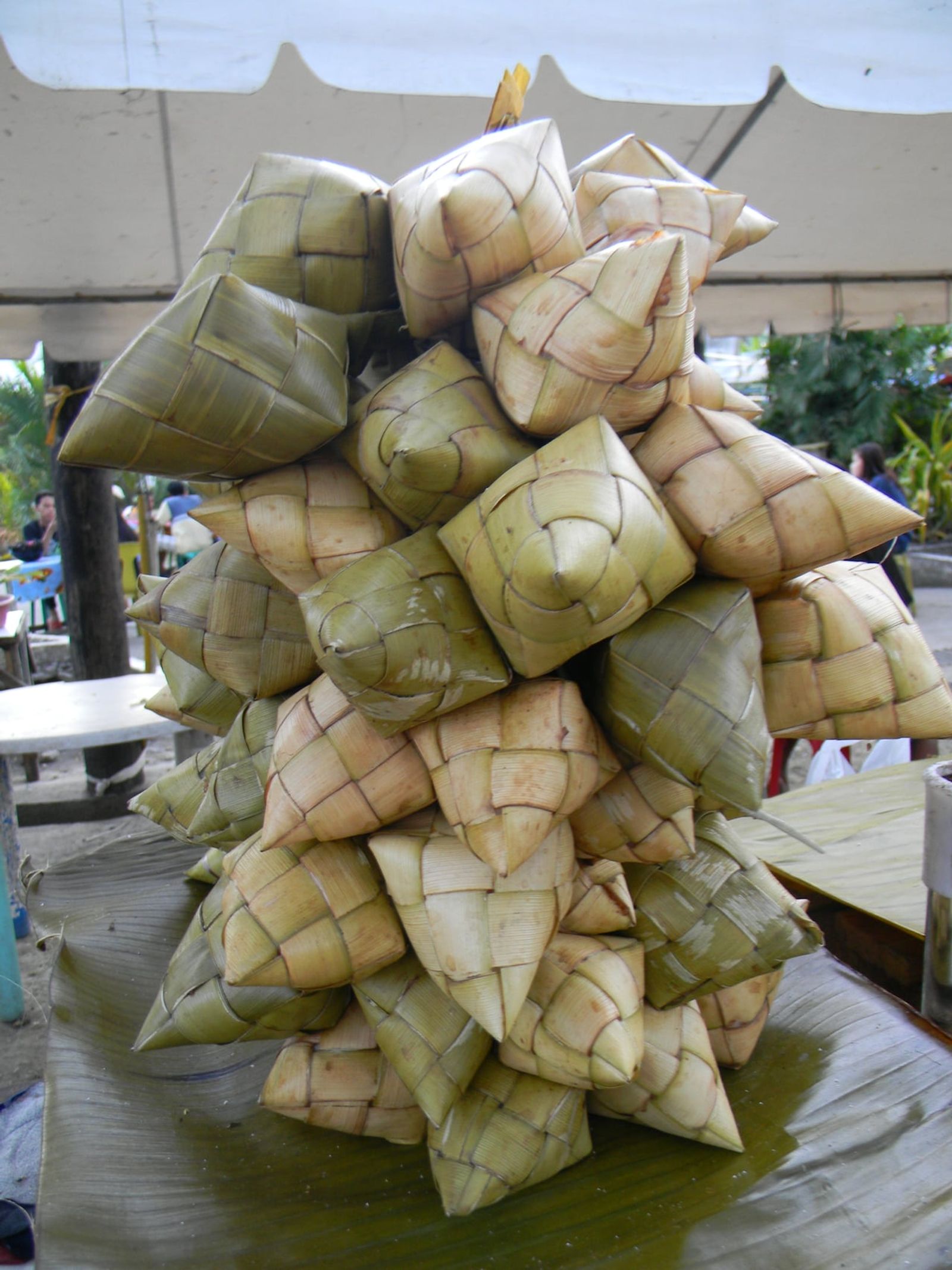
Puso hanging at a stall in Cebu City · Photo: Prussiakira / CC BY-SA 3.0 (Wikimedia Commons)
 PhilippinesCebu
Puso: Cebu's 'Hanging Rice' Woven From Coconut Leaves
In front of Cebu's street barbecue stalls hang rows of little pouches woven from coconut leaves. Inside is rice: this is puso. Here is what the name means, the rituals recorded by Spanish missionaries, and how to open and eat one.
What Puso Is: Rice in a Pouch
Puso is rice boiled inside a pouch woven from young coconut leaves. It is less a recipe than a way of packing and cooking rice. The pouch squeezes the grains tightly, so when cooked they bind into a firm, cake-like block. In Philippine English it is called hanging rice, because vendors tie the pouches by their tails and hang them up in rows. The Cebuano word puso means heart, said to come from the finished shape. Every island has its own name for it: bugnoy in Hiligaynon, spoken around Iloilo, and tamu in the Muslim south.
The Weavers: Young Coconut Leaves and the Manlalah
The pouches are usually woven from young coconut fronds that are still pale green, because they are softer and bend more easily than mature leaves. Across most of the Visayas these young leaves are called lukay, and in Cebuano a puso weaver is called a mamumuso or manlalah. Shapes vary a great deal. Octahedrons, diamonds and rectangles are the most common, but Cebu has recorded local weaves shaped like a chicken, a tooth, or named after an orchid. A Cebu newspaper column notes that in mountain villages, weaving puso is one of the first crafts children learn.
What Spanish Missionaries Recorded
The first record of rice cooked in leaves is credited to Pigafetta, chronicler of Magellan's expedition. In the early 1600s the Jesuit Mateo Sánchez, working on Leyte, listed the name poso and fourteen kinds in his dictionary, and in 1668 Father Alcina wrote that puso were offered to the spirit of the hearth. Once offered, they were never opened. Before the Spanish, Visayans used puso as offerings to the diwata spirits, and some of these rites survive in Christianised form, such as prayers for the dead and offerings at home altars. Among Muslim Filipinos in the south it is also a festive food for the holiday that ends Ramadan.
Partner to Grilled Meat: Eating It on the Street
Puso began as a way to carry rice on a journey, so it was meant to be eaten standing up, held in the hand, and it still is. In Cebu you will find puso hanging at skewer stalls, barbecue lanes and seafood grills, and the standard pairing is grilled meat or seafood on sticks, roast chicken or lechon. Opening one is simple: pull at the leaf strips by the tail, or slit the pouch lengthwise with a knife, and the firm block of rice comes out. Restaurants sometimes cut it in half and serve it on the plate in its leaves. Tear off bits by hand and dip them in the sauce from your grilled food. It is sold by the piece, so just order another when you need it.
Traveller Tips: Where to See It and How to Enjoy It
In Cebu City, roadside barbecue stalls open as the sun goes down, with bunches of puso hanging out front. You pick your skewers from the display, they are grilled on the spot, and puso is ordered separately, as many as you like. The same scene appears across the Cebuano-speaking region, not only in Cebu but also in northern Mindanao and beyond. The rice inside is usually plain white rice, but depending on the place and occasion it may be glutinous rice, or cooked with coconut milk and brown sugar as a snack. Because the rice is packed tight, puso travels well, so it also makes an easy meal on an island tour or a long ride. Toss the empty leaves in the stall's bin when you are done.