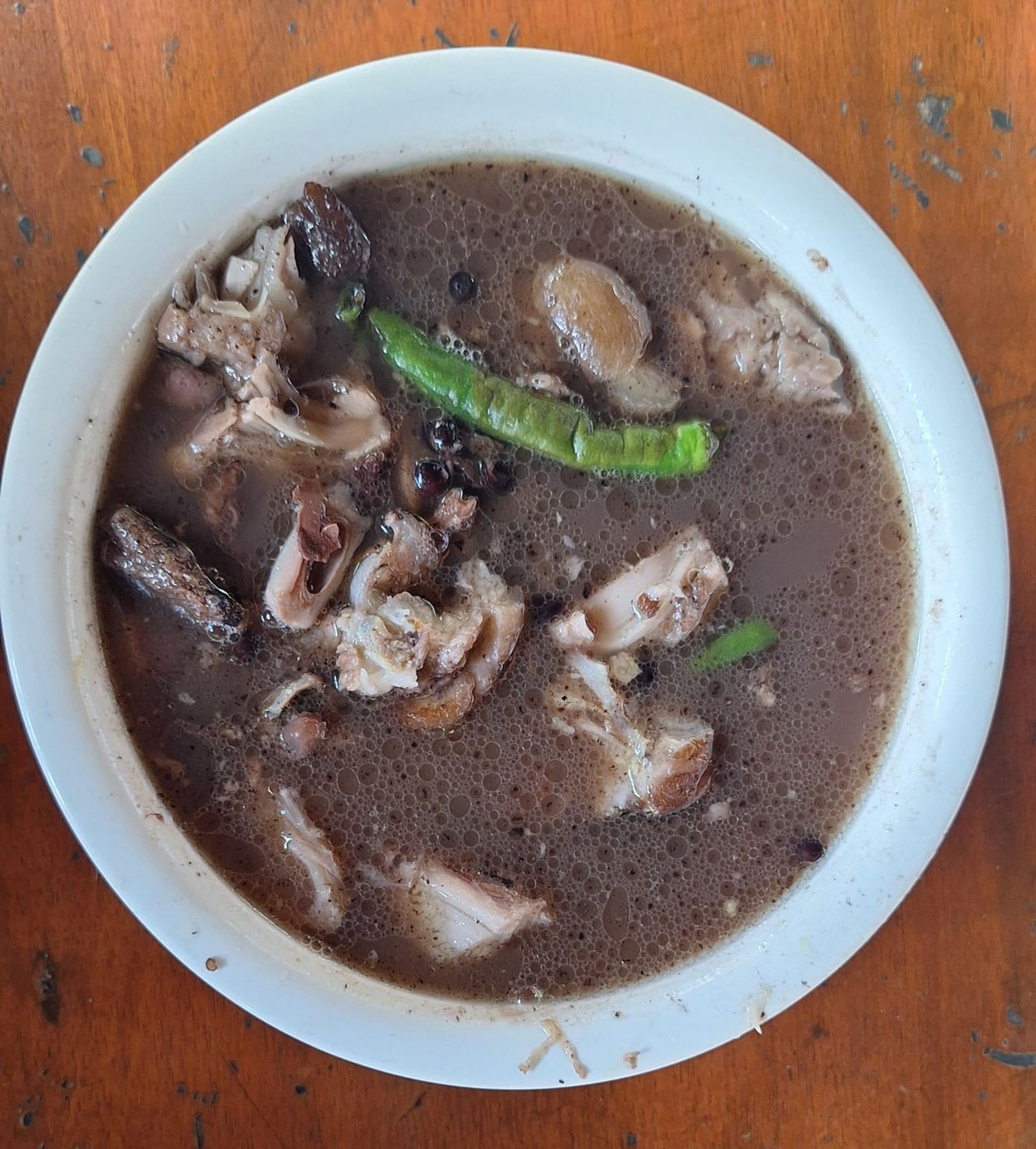
KBL in its purple broth · Photo: Mhlayson / CC BY-SA 4.0 (Wikimedia Commons)
 PhilippinesIloilo
KBL (Kadyos, Baboy, Langka): Ilonggo Comfort Food in a Purple, Sour Broth
KBL stands for kadyos (pigeon peas), baboy (pork) and langka (jackfruit). Here is what goes into this purple, sour soup flavoured with batwan, a fruit found only in Western Visayas, how to eat it, and its sister soups in Iloilo.
The Name Is the Recipe: K, B, L
KBL is a classic home-style soup of the Ilonggo, the Hiligaynon-speaking people of Iloilo and the rest of Western Visayas. Its name is its ingredient list: the initials of kadyos (pigeon peas), baboy (pork) and langka (jackfruit). In full, in Hiligaynon, it is kadyos, baboy kag langka. Its most striking feature is the colour. As the dark pigeon peas cook, they tint the broth purple. First-timers are often surprised, but the taste is pure comfort: savoury pork broth, the earthiness of the peas, the soft texture of jackfruit, and a gentle sourness tying it all together.
The Secret of the Sourness: Batwan
KBL's tang traditionally comes from a fruit called batwan (or batuan). Its scientific name is Garcinia binucao; it is endemic to the Philippines and, according to reference sources, grows only in Western Visayas, on islands such as Panay and Negros. Most of it is harvested from the wild rather than farmed, so it is known as the sour taste of Western Visayas, hard to find elsewhere. Batwan is a round green fruit. It can be eaten raw but is mainly used to sour soups: besides KBL it goes into sinigang and the beef soup kansi. Tamarind can stand in when batwan is hard to get, but Ilonggos say the real thing needs batwan's bright sourness. It is also sold as powder or paste.
Ingredients and How It's Cooked
The pork in KBL is usually the hock (pata). Simmering a cut with bone and skin for a long time gives a rich, slightly gelatinous broth. Soaked or boiled kadyos and unripe green jackfruit go in next. Unlike ripe jackfruit, it is not sweet; it has a mild, starchy texture a little like potato or bamboo shoot. Recipes vary by household, but onions and lemongrass give aroma, fish sauce seasons it, batwan sets the sourness, and long green chillies (siling haba) or leafy greens such as sweet potato leaves may be added. The key is slow cooking until the peas and pork hock are fully tender. A close cousin, kadyos, manok kag ubad, swaps the pork for chicken and the jackfruit for banana pith.
How to Eat It: With White Rice, From a Shared Pot
KBL is usually eaten with plain white rice: pour the broth over your rice, or spoon up broth and peas alongside each mouthful. Batwan's acidity cuts cleanly through the heavy, earthy peas. Picking up the hock to gnaw the chewy skin and tender meat off the bone is part of the fun. In Ilonggo homes it is often cooked in a big pot and shared at family gatherings and celebrations. So as a traveller you are more likely to meet it at home-style eateries serving Iloilo regional food, or rice-and-viand places near markets, than at upscale restaurants. Because batwan and kadyos can be hard to source, it is not always on the menu.
More Iloilo Soups to Try: Kansi and Laswa
If you enjoy KBL, look for kansi, which also uses batwan. It is a sour beef soup of slow-boiled beef shank and marrow bones with batwan, unripe jackfruit, atsuete (annatto), chillies, lemongrass and other aromatics, popular in Iloilo and on neighbouring Negros. For something lighter, there is laswa, a vegetable soup of leafy greens such as moringa with squash, eggplant, okra, chayote and long beans, scented with onion, tomato, garlic and ginger and seasoned with fish sauce or seafood stock; shrimp or clams are optional. Together with pancit Molo and La Paz batchoy, these soups show why Iloilo could well be called a city of soups.