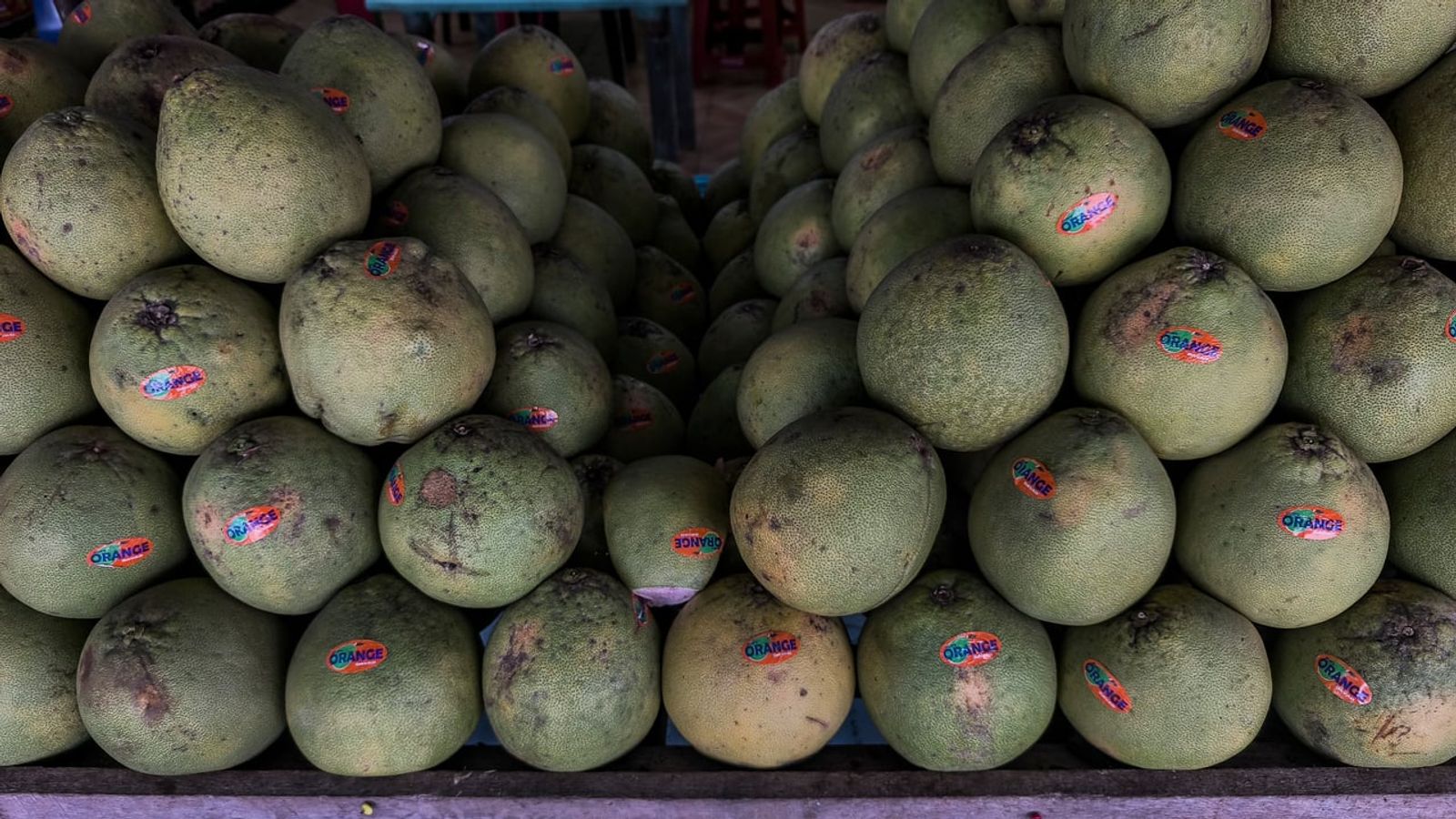
Davao pomelo stacked for sale during Kadayawan · Photo: Herbertkikoy / CC BY-SA 4.0 (Wikimedia Commons)
 PhilippinesDavao
Davao’s Kadayawan Fruit Basket: Pomelo, Mangosteen and Marang Beyond the Durian
Every August, Davao celebrates its harvest with the Kadayawan festival and the fruit stalls overflow. Here is how and when to eat Davao’s favorite gift fruit pomelo, the queen of fruits mangosteen, and marang, a gentle first step before durian.
Kadayawan, a Festival of Thanksgiving for the Harvest
Kadayawan is Davao City’s annual festival, centered on the third week of August. Its name is said to come from madayaw, a warm greeting in the Mandaya language that is also used to praise something good, precious or beautiful. It traces back to 1970, when the mayor of the day encouraged Davao’s indigenous tribes to showcase their thanksgiving rituals. It was once called Apo Duwaling, a blend of Mount Apo, durian and the waling-waling orchid, and took its current name in 1988. At its heart the festival is still a thanksgiving for the year’s harvest, especially fruit and flowers. Alongside street dancing that showcases the city’s eleven tribes, it is also when markets and stalls are at their most abundant.
Pomelo (Suha): Davao’s Classic Gift Fruit
Pomelo is a large citrus native to Southeast Asia, known in the Philippines as suha. The Davao Region is one of the country’s main pomelo growers: according to the Philippine Statistics Authority, the region produced about 15,000 tonnes in 2024, fifth among its fruit crops. Filipinos especially love the Magallanes variety for its pink, sweet flesh. Local media count Davao pomelo among the top pasalubong, or travel gifts, carried to Cebu, Manila and beyond, and there are streets in the city lined with pomelo stands. The peel goes into marmalade or is used for flavoring, while in Davao the flesh also ends up in juices and salads.
Mangosteen and Rambutan: The August–September Stars
If durian is the king of fruits, mangosteen is the queen. Davao media put its season in August and September. Inside the deep purple rind are white segments like garlic cloves, praised for their balance of sweet and tart. To eat one, score the rind all the way around the middle, lift off the top half and pull the segments out one by one. Around the same time, rambutan peaks in August. Under its hairy red skin is juicy flesh much like lychee, with what some describe as a faint floral note. In festival season the stalls also pile up baskets of lanzones next to these two, so it is easy to buy a little of each and compare.
Marang: The Mindanao Fruit to Try Before Durian
Marang is a tropical fruit related to jackfruit, its skin covered in short, soft spikes like a hedgehog. In Davao it is most plentiful in August and September. When ripe it peels open easily, revealing sticky white flesh wrapped around each seed. The flavor is often described as a mix of pear, berry and banana. It does have an aroma, but nothing like durian’s, which is why local media suggest it as a first taste for anyone nervous about durian. The seeds are not wasted either: boiled or roasted, they taste somewhere between potato and chestnut. One fruit is fairly large, so it is good for sharing, and asking the vendor to open it for you keeps your hands cleaner.
Where and When to Buy
The easiest place to see Davao’s seasonal fruit all at once is the fruit-stall strip around Magsaysay Park downtown. During the festival a tribal village is set up inside the park, and fruit such as pomelo and marang is sold there too. Timing depends on the fruit. Mangosteen, rambutan and marang center on August and September, durian on August and September (peaking in September), while pomelo’s natural season is December to February even though it is sold year-round. Local media point out that fruit in season is both cheaper and tastier because supply is high. In a poor harvest year, though, even the festival can be short on fruit, so rather than hunting for one particular fruit, pick whatever is piled highest.