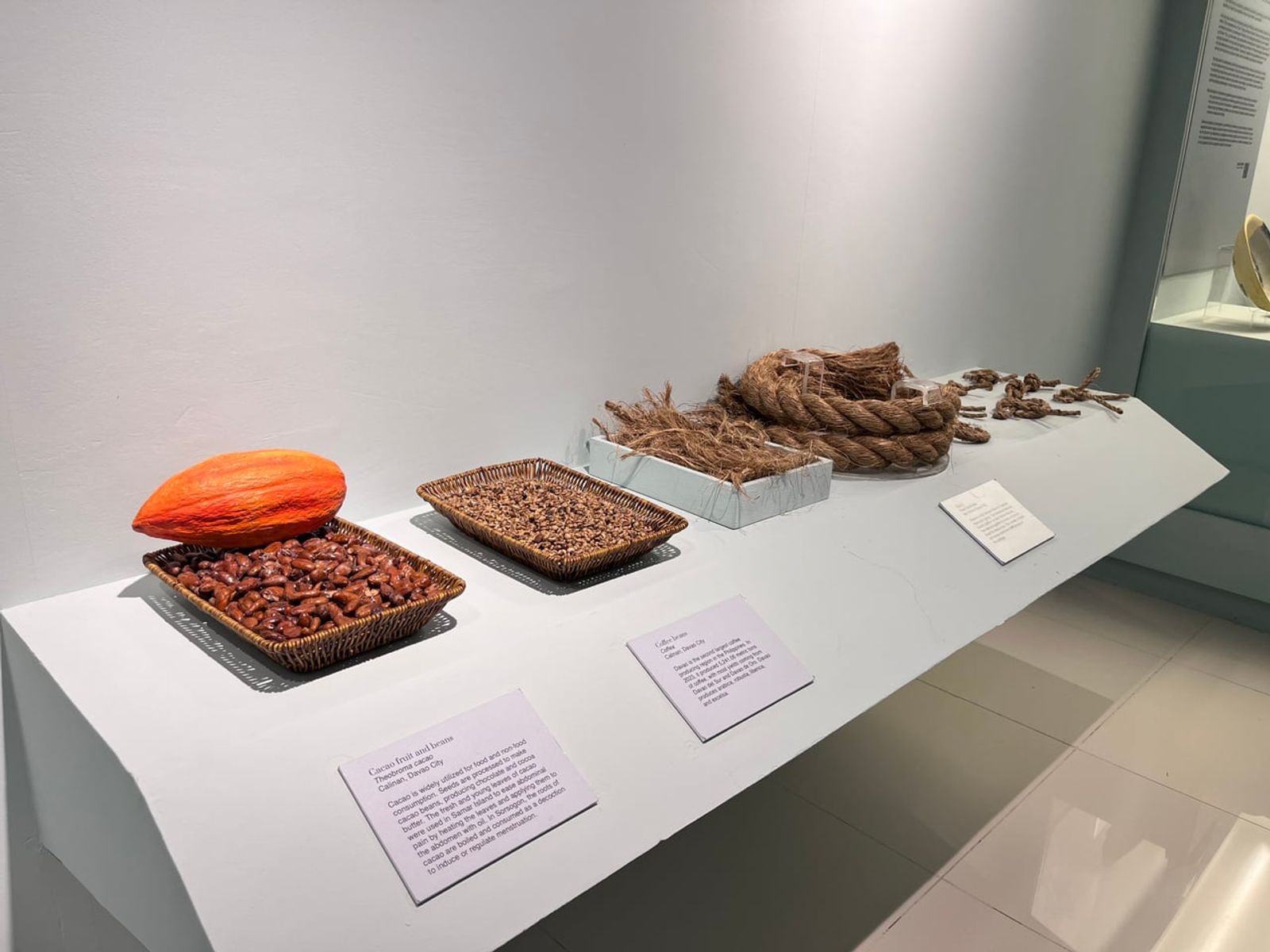
Cacao beans and tools used to make Davao chocolate, on display · Photo: MadayawDavao / CC BY-SA 4.0 (Wikimedia Commons)
 PhilippinesDavao
Davao Cacao: The Philippines’ Legal Chocolate Capital and a Cup of Tablea
Some 70 to 80 percent of Philippine cacao comes from the Davao Region, and a 2021 law made Davao City the national chocolate capital. Here is how cacao arrived, what tablea and Filipino hot chocolate are, the rise of bean-to-bar, and how travelers can enjoy it.
A Chocolate Capital by Law
Republic Act No. 11547, signed on May 27, 2021, declared Davao City the Chocolate Capital of the Philippines and the whole Davao Region (Region XI) the Cacao Capital. The senator sponsoring the bill pointed to statistics showing that most of the country’s cacao comes from Davao. The exact share depends on the year and how it is counted, so sources range from about 70 to 81 percent. The Philippine Statistics Authority, for example, put the region’s share at 71.2 percent for the second quarter (April to June) of 2023. In 2016 figures, Davao City had the largest cacao area in the region, about 6,060 hectares. It may be news to many visitors, but in the Philippines no conversation about chocolate leaves out Davao.
How Cacao Reached the Philippines
Cacao is a Latin American crop. It is generally said to have reached the Philippines during Spanish rule aboard the galleons that sailed between Manila and Acapulco in Mexico. The galleon route ran from 1565 to 1815, and many crops crossed from Mexico along it. When exactly cacao arrived varies by source. The oldest documented record is a chronicle by the Augustinian friar Gaspar de San Agustín saying a cacao plant was shipped from Acapulco in 1670, but other sources give 1663 or 1666, and some say it was mainly introduced in the 1700s. Once rooted, cacao settled into Filipino kitchens as a thick hot chocolate and a chocolate rice porridge, and today the center of its cultivation is Davao in southern Mindanao.
Tablea and Filipino Hot Chocolate
The foundation of traditional Filipino chocolate is tablea, from the Spanish tablilla, meaning small tablet. Cacao pods are dried for two or three days, then the beans are shelled, roasted and ground into a thick paste that is shaped into small discs or balls and left to set. It is pure, unsweetened cacao, so it is usually cooked into a drink rather than eaten as is. Dissolve tablea in boiling water and milk, sweeten with muscovado sugar and whisk it with a wooden frother, and you get sikwate in Visayan, or tsokolate in Tagalog. It is thick with a slightly grainy texture, and is drunk at breakfast or snack time with rice cakes or bread. Stir tablea into sticky rice porridge and you have champorado.
From Farm to Bar: Davao Chocolate Today
Davao chocolate has been drawing attention partly because of the growth of bean-to-bar making, where growing, fermenting, drying, sorting, roasting and chocolate making all happen in one place. On the outskirts of Davao City, the Calinan area has facilities that process beans, nibs and cacao liquor, and in the Baguio District at the foot of Mount Talomo there are farms that both grow cacao and make chocolate. In 2019 Davao City even hosted a dark chocolate competition. Conditions are not easy, however. In 2025 the Davao City Cacao Council told local media that cacao production in the city had dropped by 30 to 50 percent and asked the city for more support. Behind the chocolate capital title are farmers facing real challenges.
How Travelers Can Enjoy It
The easiest way to enjoy Davao cacao is to bring home tablea and chocolate bars. Melt tablea into milk at home and you can recreate the local hot chocolate exactly, and since it is light and keeps well, it makes a good gift. Checking the cacao percentage and origin on the label, down to which part of Davao the beans come from, makes choosing more fun. The Davao City Museum has displayed the beans and tools used to make Davao chocolate, a sign of how proud the city is of its cacao. In the heat, chocolate bars melt quickly, so on long journeys think about where they sit in your bag and bring an insulated pack if you can.