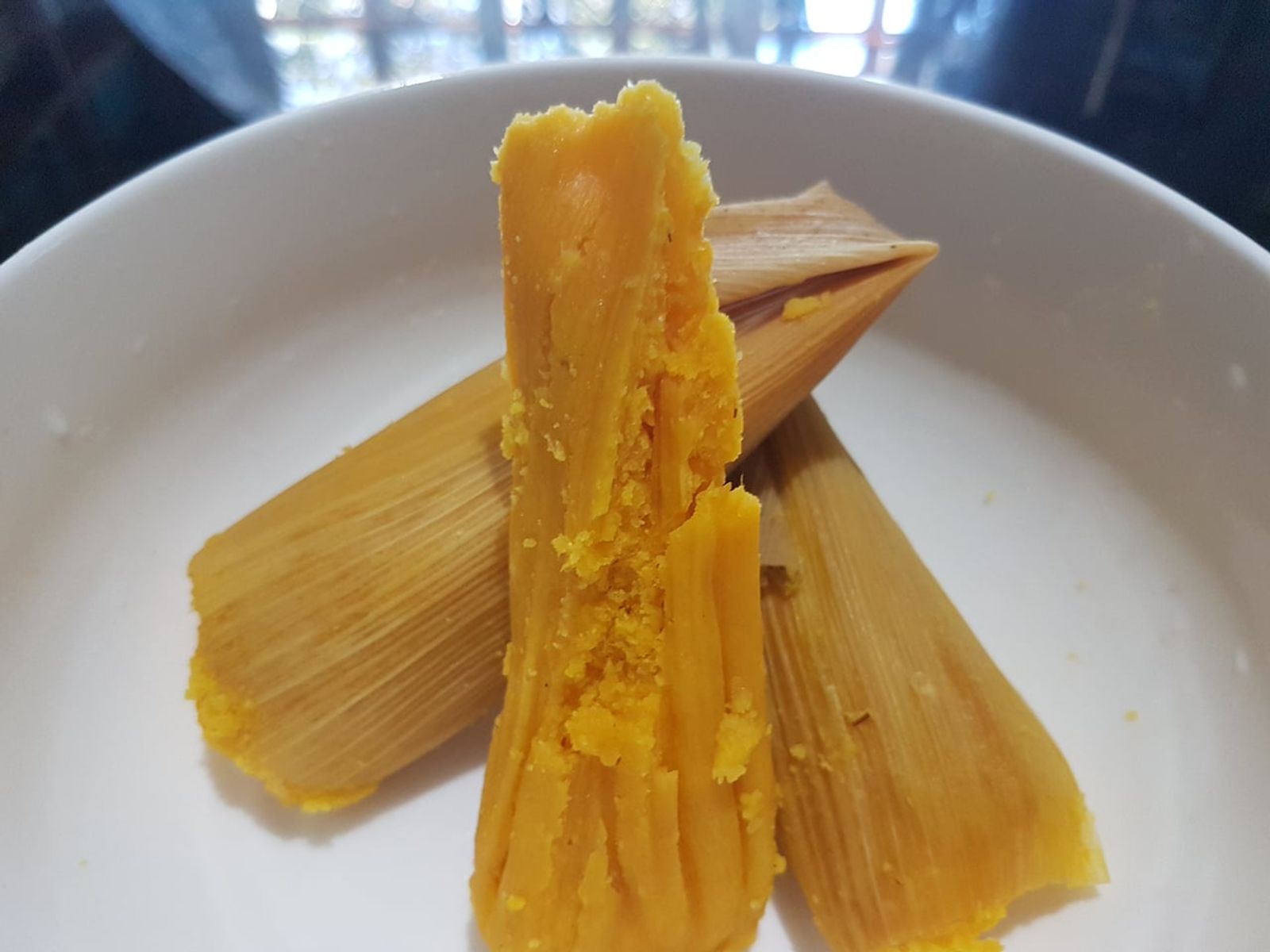
Binaki steamed in corn husks · Photo: Obsidian Soul / CC0 (Wikimedia Commons)
 PhilippinesCagayan de Oro
Binaki, Northern Mindanao’s Steamed Corn Cake: A Street Snack Named After a Frog-Shaped Pouch
Grated young corn, wrapped in husks and steamed: binaki is the signature snack and travel gift of Cagayan de Oro and Bukidnon. Here is where the name comes from, what goes into it, its Cebuano twin pintos, and tips for buying and eating it.
What Is Binaki?
Binaki is a sweet snack made from grated young corn, wrapped in corn husks and steamed. It is considered a specialty of northern Mindanao, especially Bukidnon, the inland province just south of Cagayan de Oro, and in Cagayan de Oro itself it is a common street food and native delicacy. Because it is steamed in husks, it is often introduced in English as a sweet corn tamale. Bite in and you get a dense, slightly sticky texture with the aroma of corn and gentle sweetness. A Philstar feature on Cagayan de Oro food even compared its texture to cornbread. It can be eaten warm or at room temperature, which makes it a popular snack and gift.
The Name: A Frog-Shaped Leaf Pouch
The name binaki likely comes from the Cebuano word bakibaki, a leaf pouch folded into the shape of a frog (baki). Picture the batter bundled up plump in its husk and the name makes sense. In northern Mindanao you can find binaki sold at busy roadsides and in markets, and people buy it as pasalubong, the gifts Filipinos bring home from a trip. Wikipedia notes that it is commonly sold as street food and pasalubong in northern Mindanao and parts of Cebu. In other words, it is both an everyday snack for locals and a souvenir that carries the memory of the place.
Ingredients and How It Is Made
The basic ingredients are coarse cornmeal made by grating young ears of corn, coconut milk (or regular milk), margarine or butter, white or brown sugar, and baking powder. Some cooks use condensed milk instead of coconut milk and sugar, and occasionally cheese goes in too. Spoonfuls of batter are placed on corn husks, wrapped into long parcels and steamed until firm. Because it is steamed rather than baked, the outside stays moist and the inside dense, gently scented by the husk. The baking powder makes it rise a little, but the result is closer to chewy than fluffy like bread. With so few ingredients, the freshness of the corn decides how good it is.
Close Relatives: Pintos and Biyaki
Across the sea in Bogo, northern Cebu, there is a nearly identical snack called pintos. The difference is mainly the wrapping: binaki is wrapped long and narrow, while pintos is shorter and rectangular with extra ties across it. Wikipedia says the two arose independently in Bukidnon and in Bogo. Among the Maranao of western Mindanao there is biyaki, a variant from the same tradition as binaki. It uses only a little corn and is made mostly from grated cassava, usually wrapped in banana leaves, so it is treated as a separate dish. Binaki is often compared to the Mexican tamal because it is corn batter steamed in husks, but unlike most tamales it is first and foremost a sweet snack.
Tips for Buying and Eating
Around Cagayan de Oro and Bukidnon, binaki is easy to find at markets, roadside snack stalls and souvenir shops. It is usually sold in bundles, and it tastes best warm, straight from the steamer. To eat it, unfold the husk, eat the cake inside and throw the husk away. It is handy to carry as a travel snack, but as a fresh steamed treat it is safer to eat it soon rather than keep it long in the heat. If you are taking it home as a gift, check when it was made and buy with your travel time in mind. It goes well with thick hot chocolate or coffee, so having it in the morning or mid-afternoon gives you a taste of the Filipino merienda, or snack time.