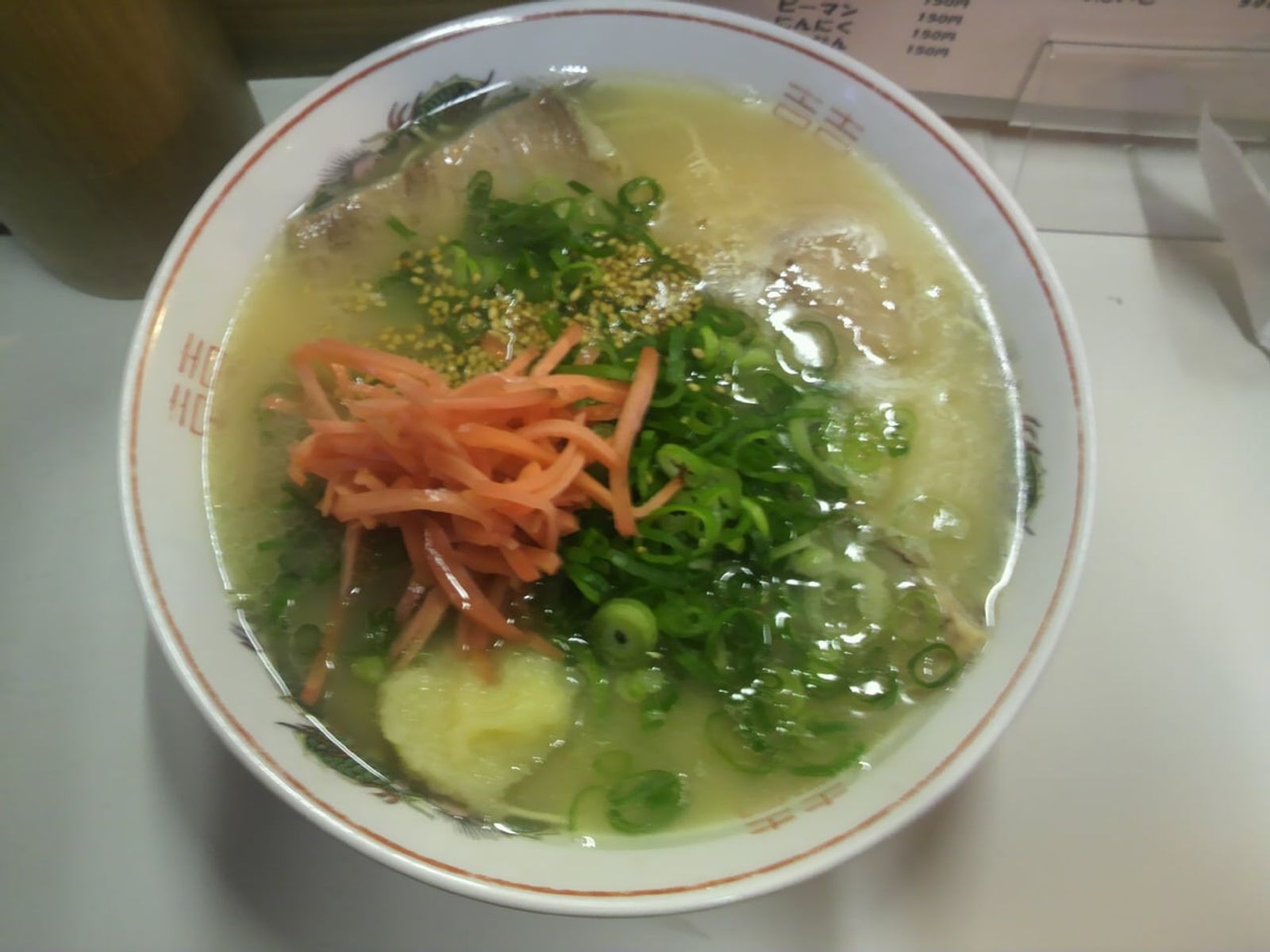
Hakata tonkotsu ramen with pickled ginger, sesame and green onion · Photo: vigorous_action / CC BY-SA 3.0 (Wikimedia Commons)
 JapanFukuoka
Hakata Tonkotsu Ramen: Why You Choose Noodle Firmness and Order a Kaedama
Sit down at a Hakata ramen counter and the first question is how you want your noodles. Here is how the milky pork-bone broth grew out of nearby Kurume, why the Nagahama fish market gave us ultra-thin noodles and the kaedama refill, and how to order without fuss.
The Milky Broth Started Next Door in Kurume
Any story of Hakata ramen begins in Kurume, in southern Fukuoka Prefecture. A food stall there served a clear pork-bone (tonkotsu) broth ramen in 1937, often cited as the start of Kyushu tonkotsu ramen. Around 1947, again in Kurume, a pot of broth reportedly boiled hard for too long and turned cloudy, which is said to have led to the milky soup we know today. Fukuoka City had its own tonkotsu stalls in Nakasu in the early 1940s, and right after the war, around 1946, stalls and ramen shops opened one after another. The name "Hakata ramen" itself may date only from the late 1970s, though that claim is not well documented. Today people often do not draw a sharp line between Kurume, Hakata and Nagahama ramen.
Ultra-Thin Noodles Born at the Nagahama Fish Market
In the 1950s Fukuoka's central fish market moved to Nagahama, near Hakata Bay, and the ramen stalls that fed market workers moved with it. That is the root of "Nagahama ramen." Traders and buyers who started work before dawn had no time to wait, so very thin, straight noodles that cook in a matter of seconds became the norm, or so the story goes. Thin noodles also cling well to a rich pork-bone broth. The catch is that they go soft quickly in hot soup, so instead of serving a large bowl from the start, shops began letting customers add a second portion of noodles only. That is the kaedama, and Nagahama is generally regarded as its birthplace. Since 2009 Fukuoka Prefecture has also been promoting a wheat variety developed specifically for ramen noodles.
How to Choose Your Noodle Firmness
At a Hakata-style shop you are expected to choose how firm you want your noodles. From softest to hardest, many shops use bari-yawa (very soft), yawa, futsu (regular), kata, barikata, harigane and kona-otoshi. Harigane means "wire," and kona-otoshi means "just shake off the flour," which is close to raw. Not every shop offers every level, so check the menu first. Locals tend to go for kata or barikata. A 2017 Nishinippon Shimbun survey found that eight out of ten customers at one shop chose kata. On your first visit, futsu or kata is a safe start. Thin noodles keep softening while you eat, so ordering one step firmer than you think soon lands you in the sweet spot.
Ordering a Kaedama: Save Your Soup
A kaedama (替え玉) is a second portion of noodles dropped into the soup you already have. When you are nearly done with the first noodles, just say "kaedama, kata" or whatever firmness you want. Some shops have you buy a ticket from a machine, and others use a card you hand over at the counter. The classic mistake is drinking your soup first. The extra noodles go into what is left, so if you plan on a refill, keep plenty of broth in the bowl. Each refill dilutes the soup a little, and some shops suggest adding a splash of the ramen tare (seasoning sauce) set on the table. Many places also offer a han-dama, a half portion, if you are not sure you can finish a full one.
Table Toppings and Where to Eat
The standard toppings are modest: green onion and a few slices of chashu pork. The fun is in what sits on the table. Red pickled ginger (beni shoga) is said to have been added to cut the porky smell, and white sesame reportedly came into use around 1958. Karashi takana, spicy pickled mustard greens, is another regular, but it can be fiery, so add a little at a time. Wood ear mushroom (kikurage) spread as a substitute for nori back when nori prices swung wildly. Ramen shops cluster around Hakata Station and in the Tenjin and Nakasu areas, and at night the food stall (yatai) streets along the Nakasu riverside and in Tenjin serve ramen too. Many travelers who want the original atmosphere also head to the area around the Nagahama market.