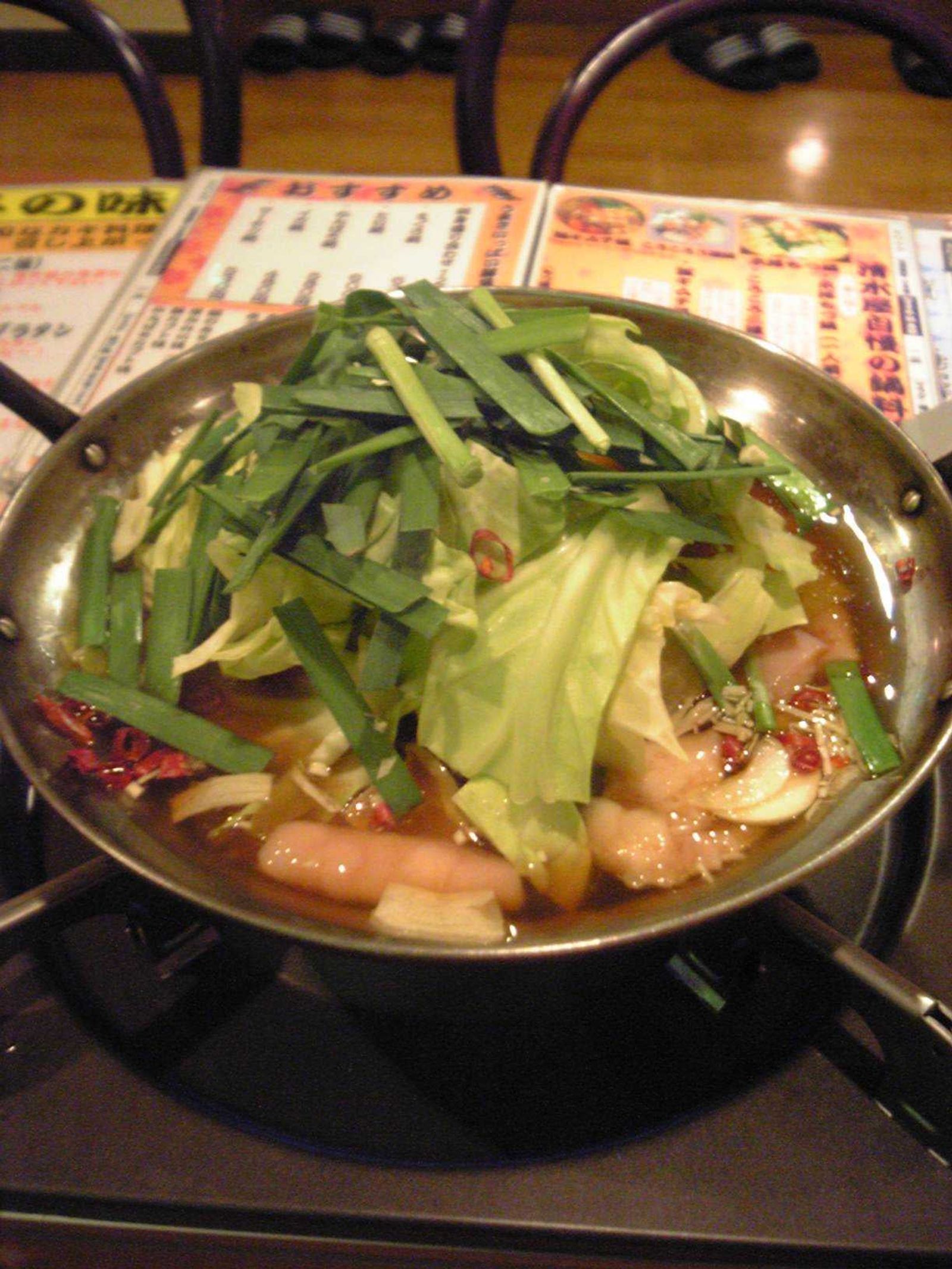
Motsunabe piled with garlic chives and cabbage · Photo: Hykw-a4 / CC BY-SA 3.0 (Wikimedia Commons)
 JapanFukuoka
Hakata Motsunabe: The Postwar Offal Hot Pot That Ends With Champon Noodles
Motsunabe, a Fukuoka night-out staple, simmers beef offal, garlic chives and cabbage in a garlicky broth. Here is its postwar origin, the 1992 Tokyo boom, how to choose between soy and miso broth, and why the meal ends with champon noodles.
What Motsunabe Is
Motsu means beef or pork offal in Japanese, and nabe means a hot pot. Hakata-style motsunabe puts offal, usually beef small intestine, into a broth made from bonito flakes, kombu or chicken stock, piles garlic chives and cabbage on top, adds garlic and chili and simmers it all. The broth is seasoned with soy sauce or miso. Korean visitors may think of gopchang jeongol, but the Hakata version has a lighter, clearer broth, and garlic and the richness of the offal fat come before spiciness. Restaurants usually serve it in a shallow stainless pan with handles and cook it at your table. Once the chives wilt and the cabbage turns soft, it is ready to eat.
Born in a Postwar Aluminum Pot
Motsunabe goes back to the years right after the Second World War. When food was scarce, people reportedly simmered cheap offal and garlic chives with soy sauce in aluminum pots, and that is said to be the start. In the 1960s there was also a style where chili was fried in sesame oil and the offal, seasonings and green onion were cooked sukiyaki-style, sometimes called "horumon nabe." The modern version, with a clear stock seasoned with soy or miso and heaps of chives and cabbage, settled in later. Elsewhere in Fukuoka Prefecture, the Tagawa area has its own "Tagawa horumon nabe," said to come from coal miners who grilled offal on paper cement bags used in place of a pan. It is a separate dish from Hakata motsunabe.
1992: The Year Motsunabe Swept Tokyo
Motsunabe was a humble Fukuoka dish until the early 1990s. In 1992 the first Hakata-style motsunabe restaurant opened in Tokyo, and the dish took off almost overnight: it was cheap, filling and great with drinks. "Motsunabe" even won a bronze prize in that year's Japanese new words and buzzwords awards. The Tokyo craze did not last. Interest faded as the fad passed, and the later BSE (mad cow disease) scare dealt another blow. In Fukuoka, though, it remains an everyday choice for group dinners, and it is still popular nationwide: a 2012 survey by a seed company ranked it eighth among Japan's favorite hot pots.
Soy or Miso? Choosing Your Broth
At a motsunabe restaurant you usually start by picking the broth. The classic is soy (shoyu): a clear soup with the aroma of garlic and chili that lets the offal's flavor come through cleanly. Miso broth is richer and nuttier, pairs well with the fat from the offal and is especially popular on cold days. Neither is the "right" answer, and each shop has its own signature, so on a first visit ordering the house specialty is a safe bet. Some places suggest dipping the cooked ingredients in ponzu (citrus soy sauce), the way you would eat mizutaki, Hakata's chicken hot pot. The usual approach is to order a base portion and add extra offal, chives or tofu, and some shops require a minimum of two servings, so check first if you are dining alone.
Finish With Champon Noodles, and Where to Go
The real finale of motsunabe is the shime, a final course cooked in the leftover broth. Udon used to be common, but from around 1990, under the influence of neighboring Nagasaki, thick champon noodles became the signature finish. The chewy noodles soak up a broth now rich with offal and vegetables, and some people say they order motsunabe just for this part. Some shops also offer rice cooked into a porridge, so look for the shime section on the menu. The trick is not to drink too much broth along the way, so there is enough left at the end. You will find many motsunabe specialists around Hakata Station and in Tenjin, Nakasu and Daimyo. Popular places fill up in the evening, so it is wise to book ahead.