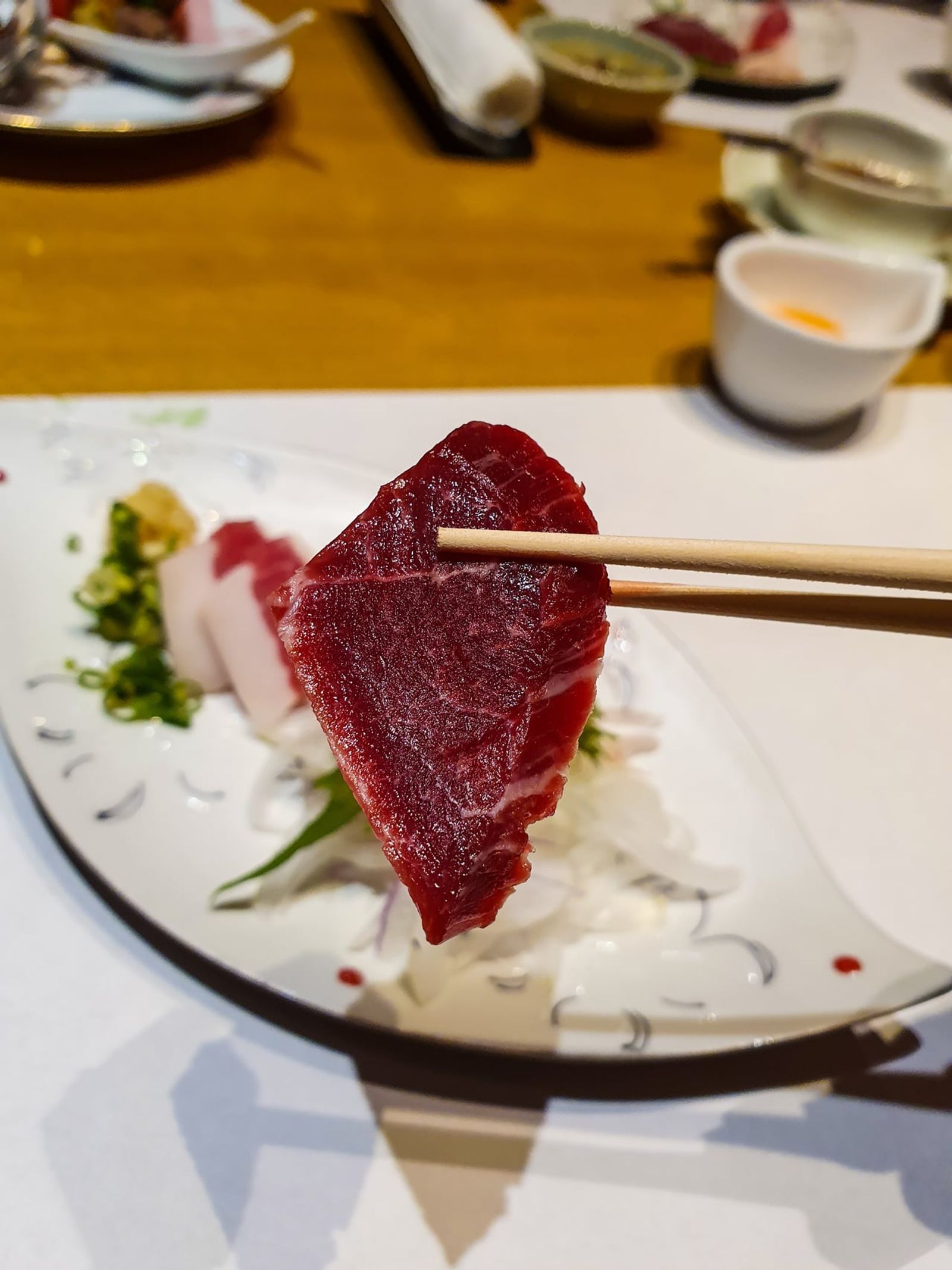
Basashi (raw horse meat) in Kumamoto · Photo: Rick888chen / CC BY-SA 4.0 (Wikimedia Commons)
 JapanKumamoto
Basashi Explained: How Kumamoto Became Japan's Horse Meat Capital, and How to Eat Each Cut
Basashi is the dish everyone mentions when you visit Kumamoto. Here is why raw horse meat took root here, how lean, marbled and kōne cuts differ, and how locals eat it with ginger and garlic, plus tips for ordering.
Why Kumamoto Is Horse Meat Country
Basashi (馬刺し) is thinly sliced raw horse meat. It is eaten in Nagano, Aizu in Fukushima and Aomori too, but Kumamoto Prefecture is by far the largest producer. Statistics cited on Japanese Wikipedia show that in 2014 Kumamoto shipped 5,999 horses and about 2,396 tonnes of meat, roughly 40 percent of Japan's horse meat. A local newspaper put the figure at about 45 percent in 2015, so numbers vary by source. Not all of that comes from horses born in Kumamoto. Much of the horse meat sold for basashi in Japan is imported, or comes from live horses brought into the country and fattened there. It is more accurate to think of Kumamoto as the hub where horses are raised, finished and processed.
The Kato Kiyomasa Legend
The most widely told story links Kumamoto's horse meat to Kato Kiyomasa (1562–1611), the lord who built Kumamoto Castle. During Toyotomi Hideyoshi's invasions of Korea in the 1590s, his army is said to have run out of food and survived on horse meat, and the habit supposedly spread in Kumamoto after his return. Tourism texts from Japan's transport ministry and materials from the agriculture ministry's Kyushu office repeat the story, but the latter calls it only the "common account" and adds that nobody knows exactly when basashi began. It is best read as local lore rather than documented history. Horse meat is also called sakura niku, "cherry blossom meat"; one explanation is that the red meat turns cherry pink when exposed to air.
Know Your Cuts: Akami, Shimofuri and Kōne
Basashi tastes quite different depending on the cut. The basic one is akami, lean red meat: low in fat, clean-tasting and gently sweet as you chew. Shimofuri is evenly marbled meat, often from the shoulder and rib area, and it melts softly on the tongue. The cut that feels most Kumamoto is kōne, the pure white fat from under the mane at the back of the neck, often described as unique to horses. It is firm, slightly crunchy and rich, and some people eat it together with lean meat. Some places also serve futaego, a chewy cut from the shoulder to the ribs where meat and fat sit in three layers, as well as raw liver and tongue. On a first visit, order a moriawase (assorted platter) to compare several cuts at once.
How Locals Eat It, and Why It Is Safe
In Kumamoto it is usually dipped in soy sauce with grated ginger or chopped garlic and sliced green onion. Kyushu soy sauce tends to be slightly sweet, which many first-timers say softens the flavour of the meat. Some places also add thin onion slices. According to a Japanese transport ministry tourism text, horse meat toughens easily when cooked, so a horse steak in Kumamoto comes rare by default. Raw meat may sound risky, but in Japan horse meat for raw consumption may only come from slaughterhouses that meet special hygiene standards. Freezing rules, such as at least 48 hours at minus 20°C, are also set to kill a parasite (Sarcocystis) that horse meat can carry. Eaten at a proper restaurant or shop, it is nothing to worry about.
Where to Eat It and How to Order
You will find basashi all over the prefecture: in izakaya around the Shimotori and Kamitori shopping arcades in central Kumamoto City, near Kumamoto Station and at roadside restaurants in the Aso area. Look for 馬刺し on the menu; some places sell each cut separately, others only a platter. Because supply is limited, it costs more than beef sashimi, so check the price before ordering. Locals sometimes call basashi one of Kumamoto's three great specialities, together with karashi renkon (mustard lotus root) and ikinari dango. There are also cooked or creative versions such as horse meat croquettes, menchi-katsu and basashi sushi, which are good for anyone unsure about raw meat. Souvenir shops and the airport sell frozen packs, but most countries restrict bringing meat home, so it is best enjoyed on the spot.