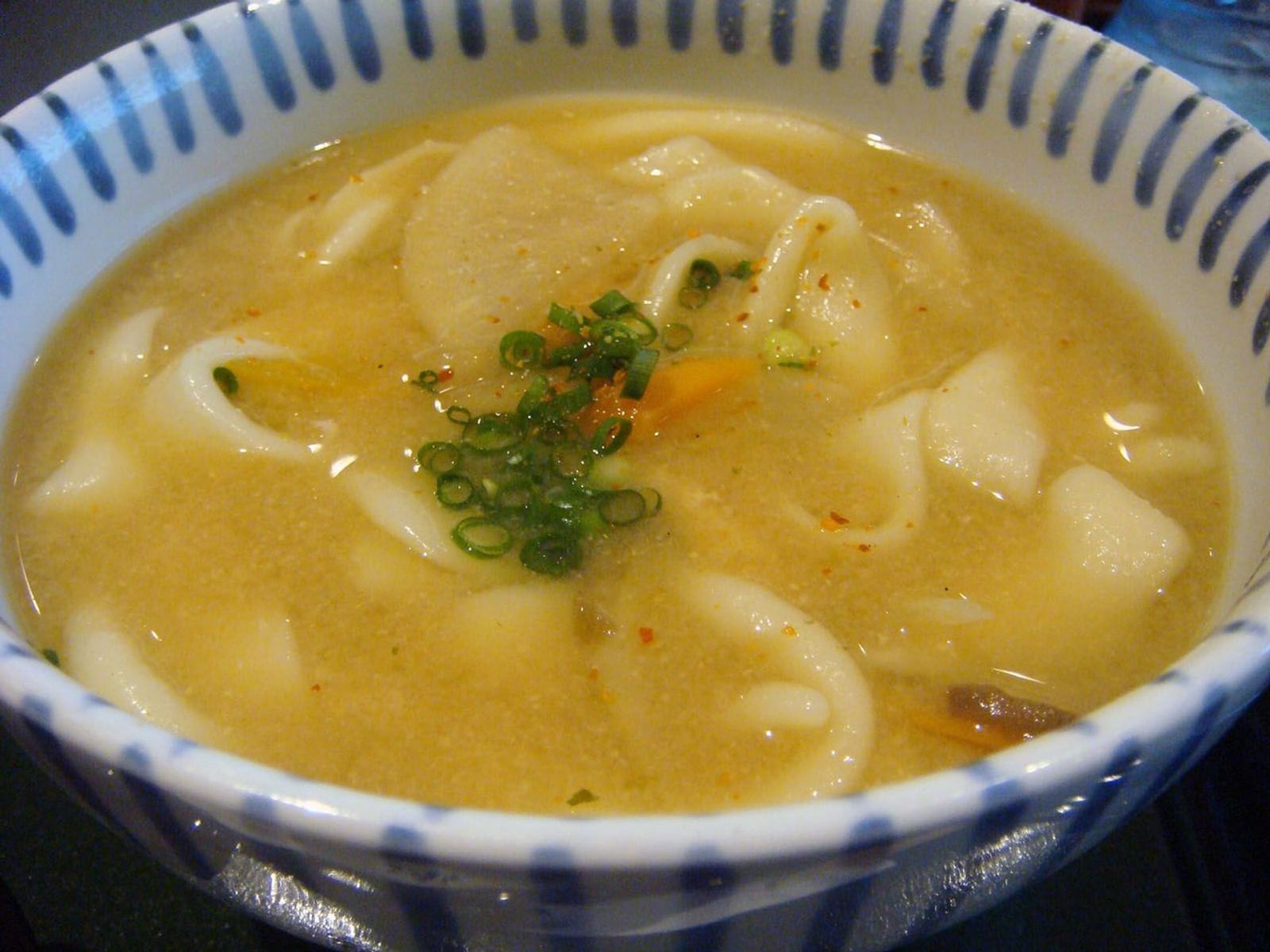
Dango-jiru from Oita · Photo: OitaKiseichu / CC BY-SA 3.0 (Wikimedia Commons)
 JapanYufuin
Dango-jiru: Oita’s Miso Soup With Hand-Stretched Flat Noodles
The name means “dumpling soup,” but what you actually find inside is flat noodles stretched by hand. Here is how dango-jiru grew out of Oita’s wheat-based food culture, what goes into it, and how to enjoy it in Yufuin.
Called Dumpling Soup, Filled With Flat Noodles
Dango-jiru (だんご汁) is a home-style dish eaten all over Oita Prefecture. The name suggests round dumplings, but in Oita the dango is usually wheat dough stretched by hand into long, flat strips. If you have never had it, think of it as miso soup with noodles. The broth is seasoned with barley miso and packed with burdock root, carrot, mushrooms and pork, so it looks a lot like tonjiru, Japan’s pork and miso soup. Similar soups called dago-jiru exist elsewhere in Kyushu, including Fukuoka, Saga, Nagasaki, Kumamoto and Miyazaki, but depending on the area the dough may be shaped into round dumplings, and the ingredients and miso vary.
Wheat Food From a Land Short on Rice
Geography explains why dango-jiru took root in Oita. The prefecture is mountainous with little flat land, so rice was hard to grow in quantity, while barley and wheat thrived. Kneading wheat flour and simmering it in soup became an everyday meal for ordinary people. Dango-jiru was not festival food but something eaten on ordinary days, what Japanese call ke no hi. No record survives of who first made it or when. The barley miso fits the same story. In Oita and other parts of northern Kyushu and the western Seto Inland Sea, miso made with barley koji rather than rice koji is common. When the Ministry of Agriculture chose its 100 local dishes of Japan’s farming, mountain and fishing villages in 2007, dango-jiru was among Oita’s picks.
The Craft of Stretching the Dough
The noodles make the dish. Wheat flour is kneaded with salted water and rested, then pulled off in thumb-sized pieces and stretched between both hands into long, flat strips. Because they are pulled rather than cut, the thickness is uneven, which is said to give a better chew and help the broth cling. The strips usually go straight into the pot of simmering vegetables and meat without being boiled first. Ingredients vary by household, but burdock, carrot, shiitake or shimeji mushrooms and pork are common, often with taro, daikon and green onion. The broth is made from iriko, dried sardines, with barley miso stirred in. In Oita the same stretched dough is also coated in roasted soybean flour and sugar to make a snack called yaseuma, so one dough becomes both a meal and a sweet.
When and How to Eat It
Dango-jiru is eaten all year, but it is especially good in the cooler months. Yufuin sits in a basin where temperatures drop sharply in the morning and evening, and from autumn into winter the valley floor is known for frequent morning mist. A hot bowl after a walk in the chilly morning air suits the village perfectly. Start with a sip of broth to taste the gentle sweetness of the barley miso. The noodles are long and wide, so it is easier to lift them a little at a time with chopsticks rather than all at once. A pinch of shichimi seven-spice pepper or a dab of yuzu kosho sharpens the flavor, and some people squeeze in kabosu, Oita’s local citrus. The thick broth stays hot for a long time, so be careful not to burn your tongue.
Trying It in Yufuin and Taking Some Home
In Yufuin you can find dango-jiru at restaurants serving local dishes, set-meal diners and in some ryokan meals. The Yunotsubo street area between Yufuin Station and Lake Kinrin is mostly snack shops, so if you want a proper meal, look for a restaurant with だんご汁 on the menu. To make it at home, souvenir shops and local product corners sell dried or fresh dango-jiru noodles, sometimes in sets with barley miso. Yaseuma, the sweet made from the same dough, is sold all over Oita too. Have dango-jiru for your meal and yaseuma for dessert and you will taste the whole of Oita’s wheat food culture at once. It is not a flashy dish, but it is a bowl that carries the life of these mountains and this basin.