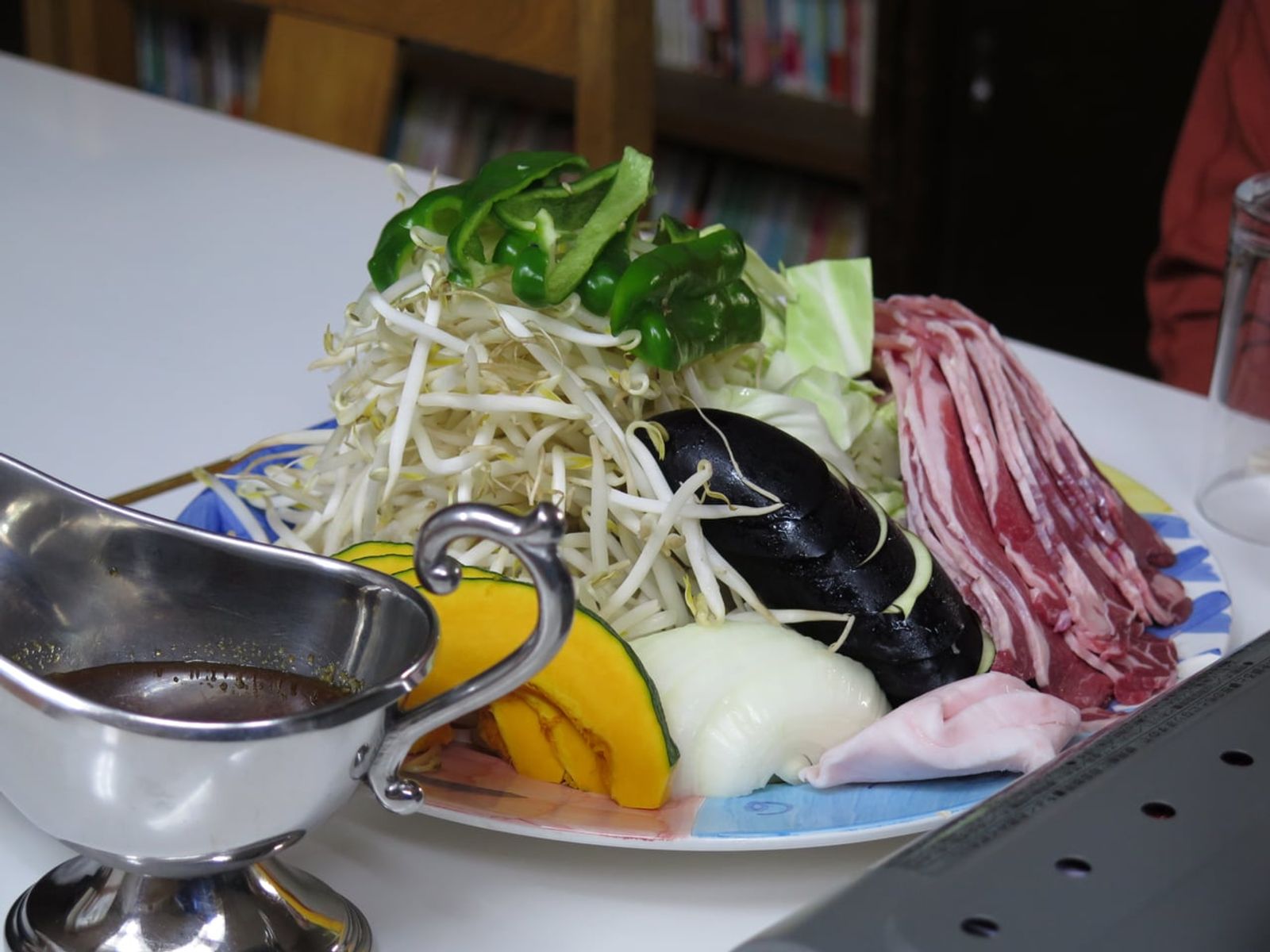
Mutton and vegetables for jingisukan · Photo: Douglas Perkins / CC0 (Wikimedia Commons)
 JapanSapporo
Jingisukan: How Sheep Raised for Wool Became Hokkaido's Soul Food
Grilling lamb on a domed iron pan is a must on any Sapporo trip. Here is where the name comes from (it has little to do with Genghis Khan), why Hokkaido had so many sheep, the difference between marinated and dipped styles, and how to grill it well.
Named After Genghis Khan, but Not Mongolian
Jingisukan is a Japanese dish of lamb or mutton grilled on an iron pan. A popular tale says Genghis Khan had his soldiers cook it in the field, but that is folklore, and the dish is far removed from actual Mongolian cooking. It is thought to have developed from kao yangrou, Chinese grilled mutton, and been adapted to Japanese tastes. The name has several origin stories. One links it to the legend that the samurai Minamoto no Yoshitsune escaped to Mongolia and became Genghis Khan. Another credits an official with ties to Manchuria, but that account rests on hearsay. The written form 成吉斯汗鍋 first appears in a book from 1926.
Sheep That Were Raised for Wool
There is a reason Hokkaido became jingisukan country. A sheep farm was set up at Makomanai in Sapporo in 1876, and in 1918 Japan drew up a plan to raise a million sheep so it could produce its own wool, including for uniforms. The plan also aimed to get people eating the mutton left over. By 1924, Hokkaido kept 42.7 percent of all the sheep in Japan, more than anywhere else. The first jingisukan restaurant in Hokkaido opened in Sapporo in 1946, and the dish only became common in homes after World War II. Outdoor "jingisukan parties" at cherry-blossom viewings and school sports days spread the habit, and today it is the go-to food whenever people in Hokkaido gather.
The Secret of the Domed Pan
The image everyone has of jingisukan is the cast-iron pan with a helmet-like dome in the middle. Its surface is grooved: meat goes on the raised centre, vegetables around the rim, and the juices from the meat run down the grooves to season the vegetables below. Common vegetables include onion, bean sprouts, garlic chives and cabbage. Dipping sauces often include grated apple or onion to soften the smell of the lamb. When the name "jingisukan nabe" first appeared, it actually referred to grilling on a wire grill in place of a brazier, not today's pan. The dish is closer to teppan grilling, but it is sometimes classed as a hot-pot dish because of that pan.
Marinate First, or Dip After?
There are two main styles. In ajitsuke, the meat is marinated before grilling. This style spread from around Takikawa in central Hokkaido into the north. In atozuke, unseasoned meat is grilled and then dipped in sauce, the norm in Hakodate and Kushiro. Sapporo and Obihiro do both, so in Sapporo you will find restaurants that grill fresh meat for dipping alongside ones that serve it pre-marinated. The bags of marinated jingisukan in Hokkaido supermarkets come from the ajitsuke tradition. The dish was named a Hokkaido Heritage in 2004 and one of Japan's 100 best rural local dishes in 2007.
Lamb vs Mutton, and How to Grill It Well
Menus usually split lamb (ramu) from mutton (maton). Generally, lamb comes from sheep under a year old and mutton from older animals. Lamb is tender and mild, while mutton is chewier with a deeper flavour. If you are new to sheep meat, lamb is the safe start. Grilling order matters. Spread vegetables around the rim first, then put the meat on the dome. Lamb toughens if overcooked, so eat it as soon as the colour changes. Smoke and smell cling to clothes, which is why many restaurants hand out plastic bags for coats or aprons. In Sapporo, the Susukino area has a particularly dense cluster of jingisukan restaurants.