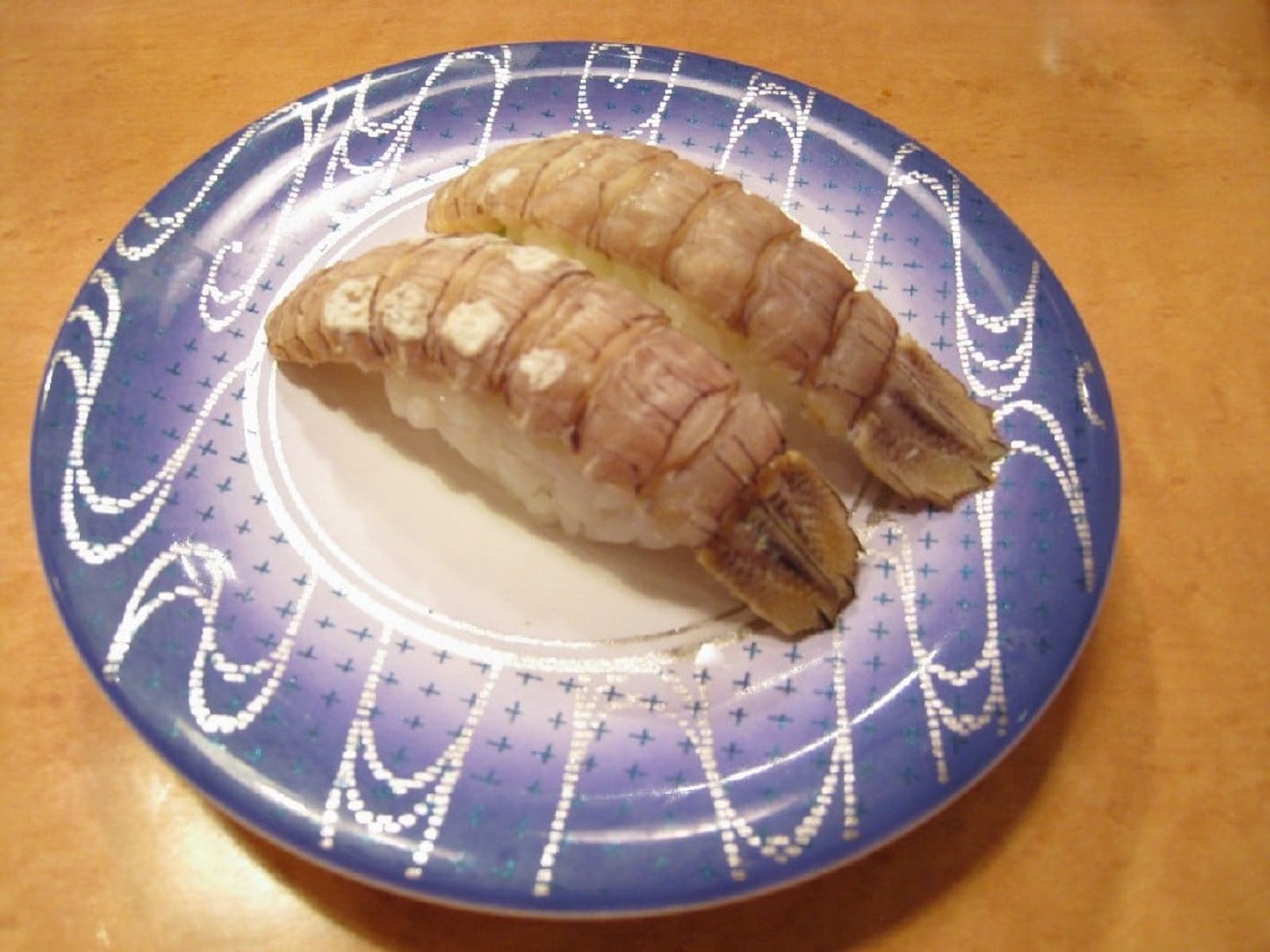
Shako (mantis shrimp) nigiri sushi · Photo: Lombroso / Public domain (Wikimedia Commons)
 JapanOtaru
Otaru Shako: Giant Mantis Shrimp Big Enough for Two Pieces of Sushi
For Otaru locals, shako (mantis shrimp) is one of the tastes of the season. Those from Ishikari Bay are larger than elsewhere, big enough for two pieces of sushi from a single shrimp. Here is when the spring and autumn seasons run, why roe-laden spring shako is prized, how to peel them and where to eat them.
Shako, the Mantis Shrimp That Marks Otaru's Seasons
Shako looks a bit like a shrimp, but it belongs to the mantis shrimp family. It has long been a sushi topping in Japan, and in Hokkaido, Otaru is regarded as its leading source. According to news reports, Otaru lands more shako than anywhere else in Hokkaido. What makes Otaru shako special is size. Those caught in Ishikari Bay are bigger than shako from other areas, big enough to yield two pieces of sushi from one. Locals have built a brand around this, promoting it as the biggest shako in Japan. It may be unfamiliar to many visitors, but it is one of the faces of Otaru and worth trying at least once.
Two Seasons: Spring and Autumn
Otaru's shako fishery runs twice a year. Dates vary, but in recent years the spring season has opened around late April and run into June, while the autumn season has opened around mid-October and continued into early December. News reports say Otaru is the only place in Hokkaido with an autumn shako fishery. When the autumn season opens, the first auction is held at the Otaru fishery cooperative market, and the catch is boiled in salted water in huge cauldrons right there. Fishers go as far as measuring each boiled shako one by one to grade them before shipping. For people in Otaru, steam rising from those big pots is a sign that autumn has arrived.
Roe-Filled Spring Shako, Meaty Autumn Shako
Hokkaido shako spawn in June and July, so females caught in spring are full of roe, and fishers say the crunchy texture of those eggs is what makes spring shako special. Autumn shako are enjoyed for their meat instead. The worry is that catches have been falling. A news report from autumn 2025 said the catch had roughly halved while prices had doubled, and some restaurants now buy directly from fishers to keep prices down. Now that shako is scarcer than before, tasting it in season feels all the more special.
How to Peel Boiled Shako
In Otaru, shako are often simply boiled in salted water and eaten as they are. The shell is hard with spiky edges, so scissors work better than fingers. Remove the head, snip off the tip of the tail, then cut along both sides of the body. You can then lift the back shell off in one piece. Boiled shako have a gentle sweetness on their own, though some people add a little soy sauce or mayonnaise. Sushi shops usually lay the peeled shako on rice and brush it with tsume, a sweet reduced sauce. For a first try, start with sushi, then buy boiled shako at a market and peel them yourself.
Where to Eat It, and the Shako Festival
In season, you can find shako at the market right by Otaru Station, at seafood shops around the canal and along the street lined with sushi restaurants. Some shops sell boiled shako in packs, handy for eating back at your hotel. With catches falling, availability varies by day and shop even in season, so if you spot shako on a menu, order it. Otaru has long held a Shako Festival around November, serving boiled shako and shako miso soup. It was popular enough that 35,000 shako were served over two days in 2015, but the festival was not held in 2025. Before your trip, check Otaru city or tourism association announcements to see whether it is on that year.