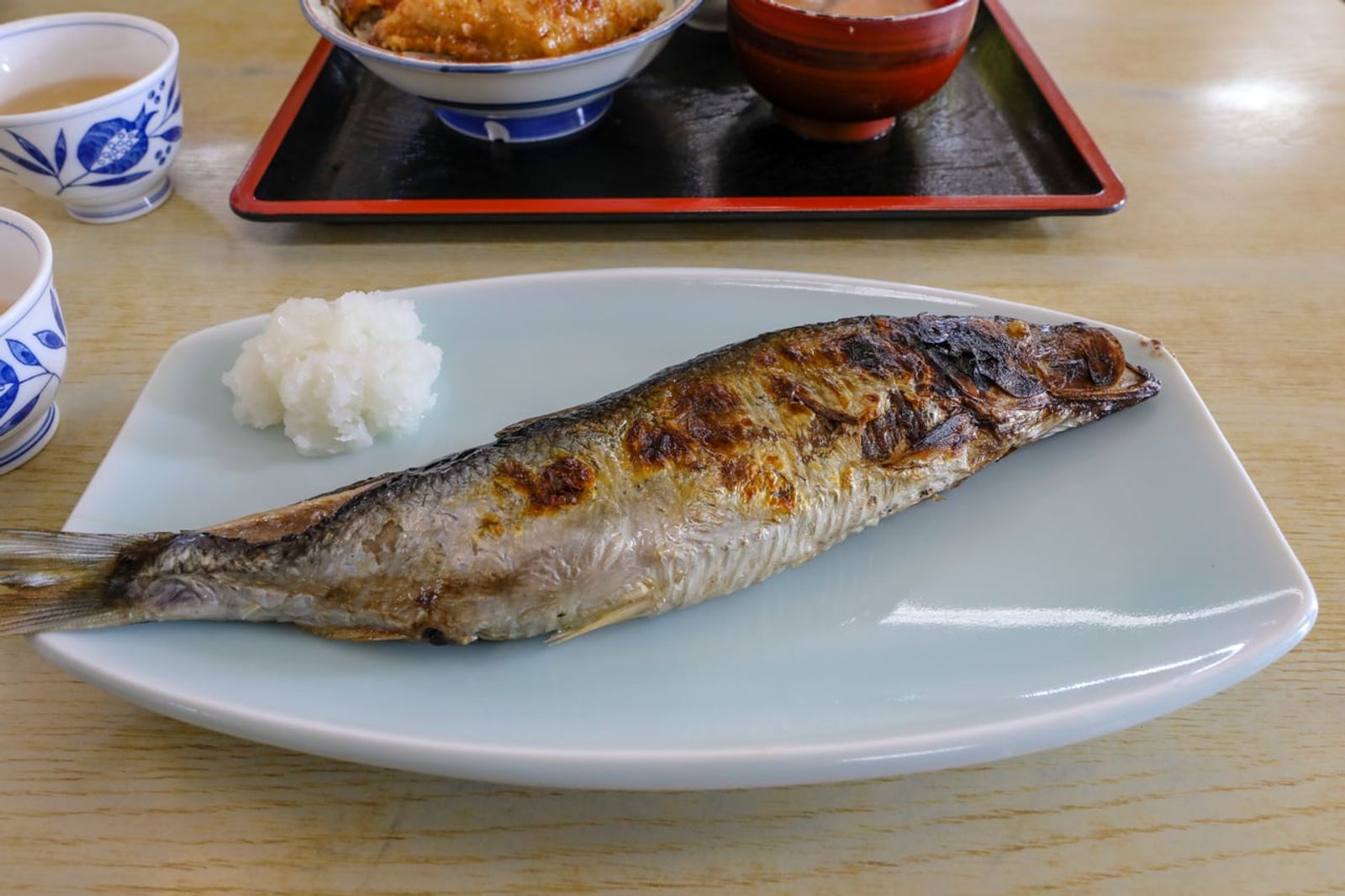
Grilled herring at a restaurant in Otaru · Photo: bryan... / CC BY-SA 2.0 (Wikimedia Commons)
 JapanOtaru
Otaru, the Town Herring Built: Herring Mansions, the "Wall Street of the North" and Herring on Today's Table
Otaru's canal and stone warehouses exist largely thanks to herring. Here is how the fish that once turned Hokkaido's coastal waters white made Otaru rich, why it suddenly vanished, and how you can still taste herring in Otaru today.
The Fish That Turned the Sea White
Each spring, herring crowd into shallow water to spawn. Females attach their eggs to seaweed, males release milt, and the sea turns milky white, a phenomenon called kuki. From the mid-Edo period, herring fishing thrived along Hokkaido's west coast, and the area around today's Otaru had rich grounds. In the Meiji era, a type of fixed net called tate-ami sent catches soaring. The Shiribeshi region, which includes Otaru, peaked in the Meiji 30s (roughly 1897 to 1906), when it is said to have supplied 20 to 30 percent of all Hokkaido herring. In 1897, Hokkaido's herring catch hit its all-time high of about 975,000 tonnes.
More Fertiliser Than Food: Herring That Fed Japan's Fields
Surprisingly, most herring in the boom years went to fields rather than tables. The fish were boiled, pressed for oil, and the leftover cake dried into nishin-kasu, a nitrogen-rich premium fertiliser. Merchant ships known as kitamae-bune carried it to markets across Honshu, where it fed cash crops such as rapeseed, indigo and cotton. Its impact was big enough that historians say it helped spread the money economy into rural Japan. There was a darker side too: boiling herring took vast amounts of firewood, and forests near the fishing grounds were badly stripped. Otaru grew fast as the port through which herring, herring products and goods from across Hokkaido flowed.
Nishin Goten: A House Where 120 Fishermen Lived
Net owners who grew rich on herring built huge homes known as nishin goten, or herring mansions. The Otaru City Herring Mansion on the Shukutsu headland north of town was built over seven years from 1897 by a net owner from Shakotan in the village of Tomari, then moved to its current site in 1958. It is said to be the largest surviving herring mansion and is a designated Tangible Cultural Property of Hokkaido. It served as a banya, a fishing lodge shared by the owner's family and seasonal fishermen called yanshu. At its peak, around 120 men are said to have eaten and slept here (some sources say "more than 100"). Fishing gear and household tools from the era are on display inside, giving a real sense of the scale of the herring trade.
The "Wall Street of the North" and the Herring's Exit
As herring and port trade brought in money, bank branches lined Otaru's streets and it became Hokkaido's biggest financial district, nicknamed the "Wall Street of the North". In 1920 its population overtook Sapporo's, making it Hokkaido's second-largest city at the time, and the first phase of the Otaru Canal was completed in 1923. The canal, stone warehouses and old bank buildings that visitors stroll past today are the legacy of that era. But the herring did not last. Catches plunged from around 1953 and fell to about 50,000 tonnes by 1955. Theories include shifting currents, rising sea temperatures, overfishing and deforestation, but the cause has never been settled. The postwar collapse of herring was one of the reasons Otaru's wholesale trade declined.
How to Taste Herring in Otaru Today
You can still taste herring in many forms in Otaru. The easiest is a grilled whole herring set meal with rice and soup, common on seafood restaurant menus. Migaki nishin, dried herring, was a vital food carried deep into the mountains before refrigeration. Simmered sweet and salty and laid on buckwheat noodles, it becomes nishin soba, said to have been created in Meiji-era Kyoto using Hokkaido herring. Kazunoko (salted herring roe) and nishin-zuke, a pickle of dried herring and rice koji, are also tastes of Hokkaido. In spring, Shukutsu sometimes hosts the Otaru Shukutsu Herring and Scallop Festival, with grilled herring and scallops. Taste a herring after visiting the herring mansion, and Otaru's streets will look different.