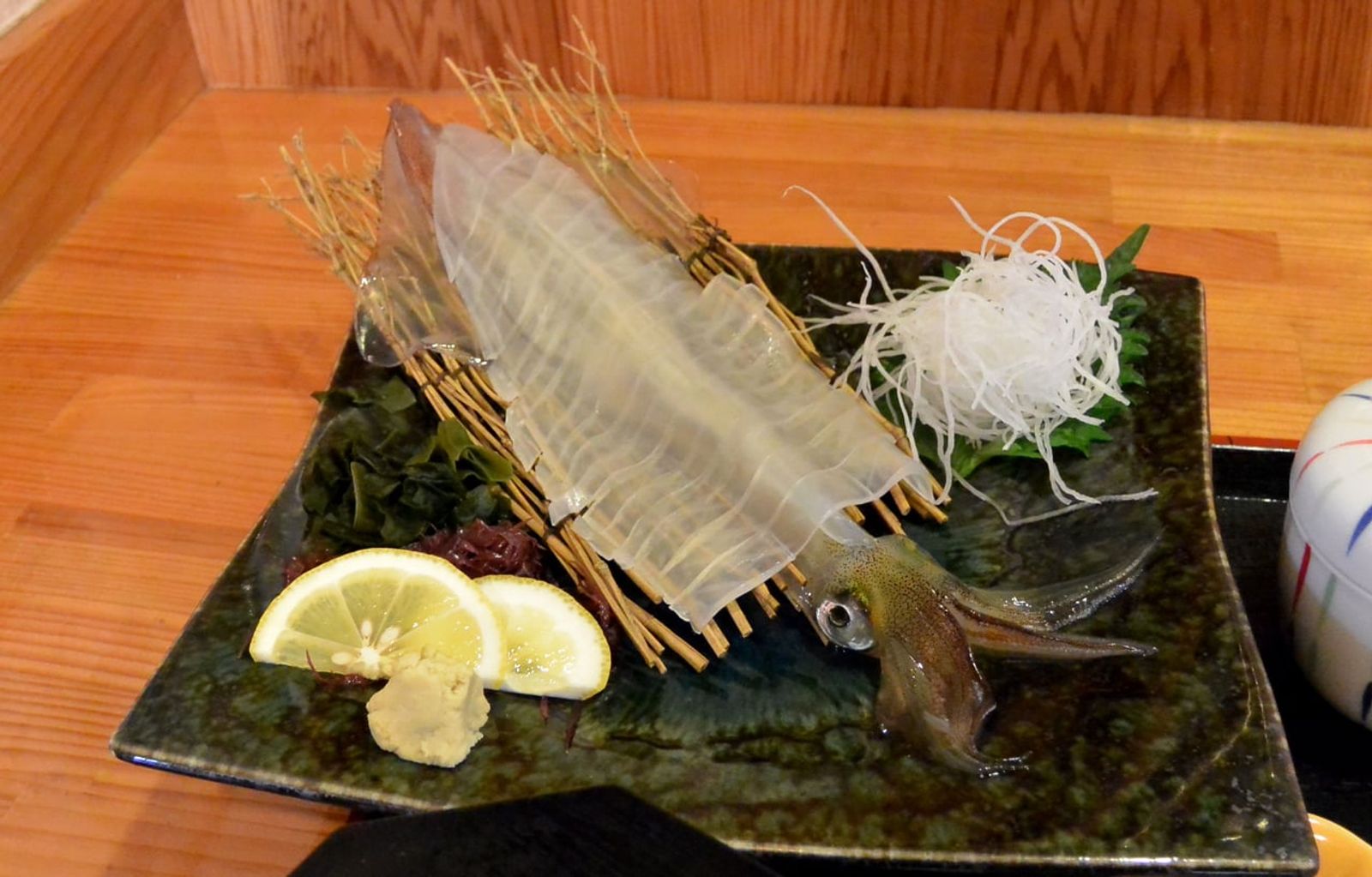
Glass-clear live squid sashimi (ikasashi) · Photo: Miya.m / CC BY-SA 3.0 (Wikimedia Commons)
 JapanHakodate
Hakodate, Squid City: From Glass-Clear Live Squid Sashimi to Mori's Ikameshi
Hakodate's official city fish is the squid. From glass-clear sashimi cut from live squid to a festival dance the whole city performs and the ikameshi lunchbox born at nearby Mori Station, here is Hakodate's deep bond with squid, the recent drop in catches and how to taste it.
A City Whose Official Fish Is the Squid
Hakodate calls itself a "squid town" (ika no machi), and its official city fish is the squid, specifically the Japanese flying squid (surume-ika), the species most commonly eaten in Japan. The Tsugaru Strait off Hakodate has long been famous for squid fishing, and the lamps of squid boats lined up on the night sea have traditionally been part of Hakodate's night view. The love of squid shows up at festival time too. The Hakodate Port Festival began in 1935 to comfort residents after a great fire and pray for recovery, and since 1981 it has featured the ika odori, or squid dance. Dancers press their hands together above their heads to form a squid shape, and every summer crowds of residents dance it through the streets.
Ikasashi: Glass-Clear Live Squid Sashimi
The must-try in Hakodate is ikasashi, sashimi cut from squid that was alive moments before. Freshly prepared squid is as clear as glass, with a snappy bite and a gentle sweetness. It turns white as time passes, so that transparency is taken as proof of freshness. Ika somen, squid cut into thin noodle-like strips, is another common way to serve it. It is usually eaten with soy sauce and grated ginger. Many restaurants will turn the leftover tentacles (geso) into a grilled or fried dish after you finish the body. Some places let you watch a squid being taken from the tank and prepared on the spot, which is a show in itself. Live squid depends on that day's catch, though, so it is wise to check ahead.
Mori Station's Ikameshi: A Wartime Answer to Rice Shortages
Another squid dish you will meet on a Hakodate trip is ikameshi: squid bodies, with tentacles and innards removed, stuffed with a mix of glutinous and regular rice and simmered in a soy-based broth. It is famous as the ekiben (station lunchbox) of Mori Station, about 50 km north of Hakodate by rail. Ikameshi was created in 1941 by a lunchbox maker at Mori Station. With rice scarce under wartime food controls, it used plentiful flying squid to make a filling meal that saved rice. The glutinous rice made it satisfying. It was entered in the first national ekiben fair, held at a Tokyo department store in 1966, topped the sales ranking at the second fair, and became famous nationwide.
A Squid City Running Short of Squid
Hakodate has a worry these days: squid numbers have plunged. According to the Hokkaido Shimbun, the city's annual flying squid catch topped 30,000 tonnes in most years after 1975 but fell to 1,989 tonnes in 2021. In June 2025, the first squid auction of the season in southern Hokkaido could not be held because too few squid were caught, the first time that had happened since Hakodate's market opened in 1965. Rising sea temperatures are cited as one cause, and Hakodate is now landing more yellowtail than squid. Squid has always depended on the sea; even ikameshi makers turned to New Zealand squid during poor catches in the 1970s. All of which makes a plate of live squid in Hakodate today a rarer treat than it used to be.
How to Enjoy Squid in Hakodate
The easiest place to meet squid is the Morning Market (Asaichi) right in front of Hakodate Station. Since 2003, the market has had a squid-fishing pool where you can hook a live squid from a tank and have it cut into sashimi on the spot, a popular experience. The market's eateries also serve live squid sashimi and seafood bowls topped with squid. Ikameshi is best bought at Mori Station, but it is easy to find at stations, souvenir shops and the airport in Hakodate, making a good souvenir or train lunch. It tastes even better warmed up. The price of live squid swings with the catch and some days there is none, so look for "market price" (jika) on the menu before you order.