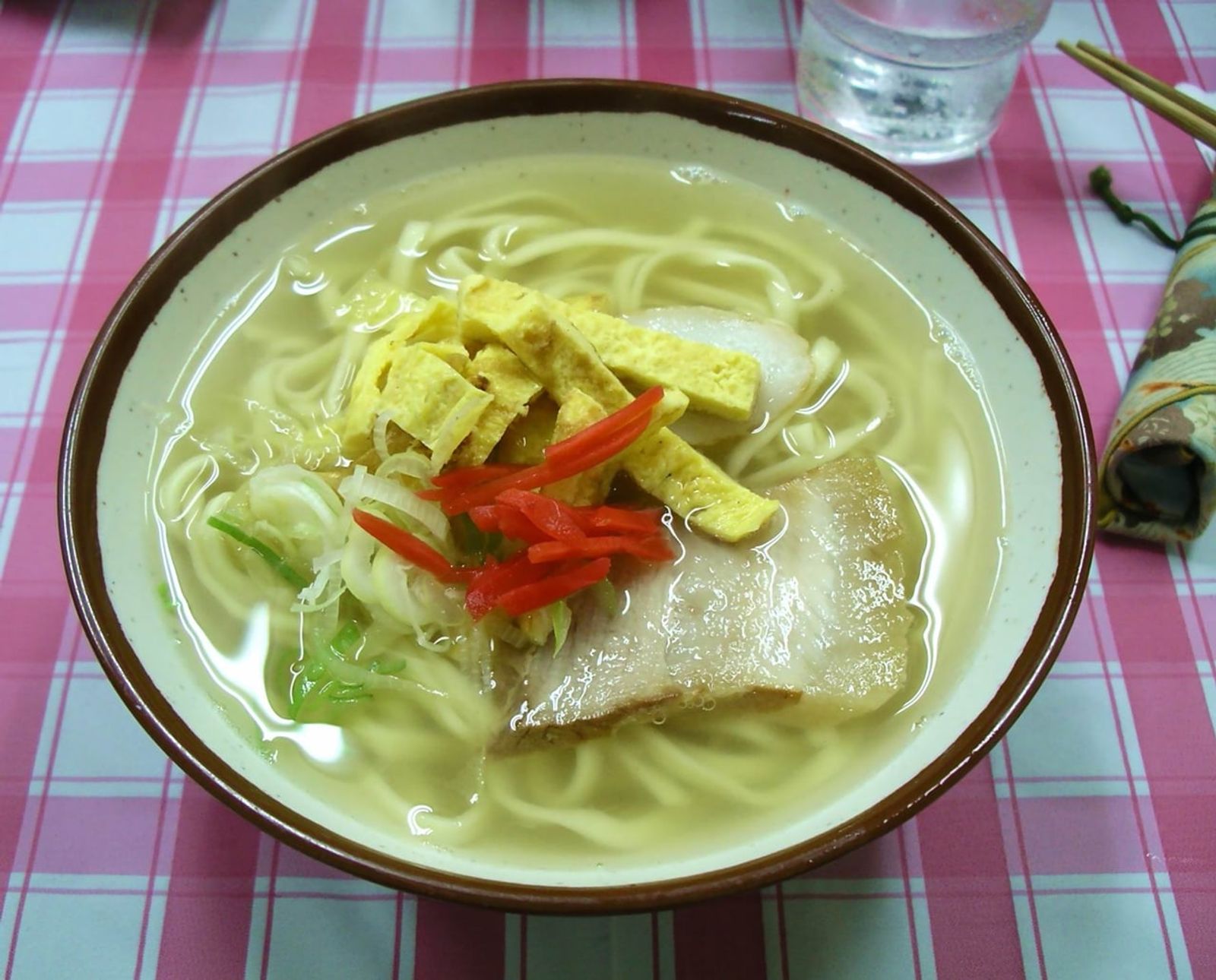
Okinawa soba · Photo: Blue Lotus / CC BY 2.0 (Wikimedia Commons)
 JapanOkinawa
Okinawa Soba: The "Soba" With No Buckwheat, and the Fight to Keep Its Name
Despite its name, Okinawa soba is a wheat noodle with no buckwheat at all. Here is how it grew from Meiji-era Chinese-style noodles into everyday postwar food, how it nearly lost the right to be called "soba" after Okinawa returned to Japan, how it differs from island to island, and how to eat it.
What Is a "Soba" Without Buckwheat?
In mainland Japan, soba means buckwheat noodles, but Okinawa soba contains no buckwheat at all. It is made from wheat flour with kansui (alkaline water) and salt, giving it a springy bite closer to ramen noodles. Okinawans simply call it soba, or suba in the local language. The broth is often made from both pork bones and katsuobushi (dried bonito), combining the richness of pork with the savoury depth of bonito. The classic toppings are sanmainiku (pork belly simmered sweet and salty), fishcake and green onion. In Okinawa it is everyday food, eaten for lunch and as a late-night finish after drinks.
From Meiji-Era Chinese Noodles to Postwar Comfort Food
The direct roots of today's Okinawa soba are thought to be Chinese-style noodle shops opened by Chinese cooks in Naha in the late Meiji era. Street soba shops multiplied in the Taisho era, at first serving a simple bowl of pork broth seasoned with soy sauce and topped only with pork and green onion. In 1915 the police urged people to call it "Ryukyu soba", but the name never caught on. The Battle of Okinawa wiped out most of the old shops, but under US administration wheat flour became plentiful, and shops reopened and new ones appeared. In the 1950s, noodle factories began selling pre-boiled noodles, making it easy to eat at home too, and Okinawa soba became food that everyone on the islands ate.
October 17: The Day the Name Was Saved
When Okinawa returned to Japan in 1972, the name "Okinawa soba" came into use to distinguish it from mainland buckwheat noodles. Then in 1976, Japan's Fair Trade Commission raised a problem: under the industry code, a noodle had to contain at least 30 percent buckwheat flour to be called soba, and Okinawa soba had none. Okinawa's noodle makers fought to keep the name. In 1977 they were first allowed to use it as a common name within the prefecture, and on October 17, 1978, "Honba Okinawa Soba" (authentic Okinawa soba) was approved as a special designation. October 17 became Okinawa Soba Day to mark it (sources differ on when the day was formally established). In 2006 the name was also registered as a regional collective trademark.
Different Noodles and Toppings on Every Island
Okinawa soba varies a lot by area. Northern Okinawa Island mostly uses wide, flat noodles, while Yaeyama soba from Ishigaki and the surrounding islands has thin, straight noodles. Miyako soba from Miyako Island uses thin, flat, uncurled noodles and is known for its distinctive toppings and way of serving. The most famous topping is soki, slow-simmered pork spare ribs. Soki soba is said to have begun in 1966 at a diner in Nago in northern Okinawa Island, which topped its soba with big pieces of pork rib. There are also bowls with tebichi (simmered pig's trotters), nakami (pork offal) and yushi-dofu (soft, fluffy tofu), so there is plenty to choose from.
How to Eat It: Koregusu and Red Ginger
Most Okinawa soba shops have a small bottle on the table. That is koregusu, island chillies steeped in awamori, Okinawa's distilled spirit. A few drops add a spicy aroma to the broth, but it is hot, so start with one or two. Many shops also offer red pickled ginger (beni shoga). A common order is to taste the broth first, enjoy the noodles and meat, then change things up halfway with koregusu. You can find Okinawa soba everywhere on the islands, from around Kokusai-dori in Naha to market eateries, old roadside soba shops and roadside rest stops. Many shops serve it as a set with juushii, rice cooked with pork and vegetables, which makes for a very Okinawan meal.