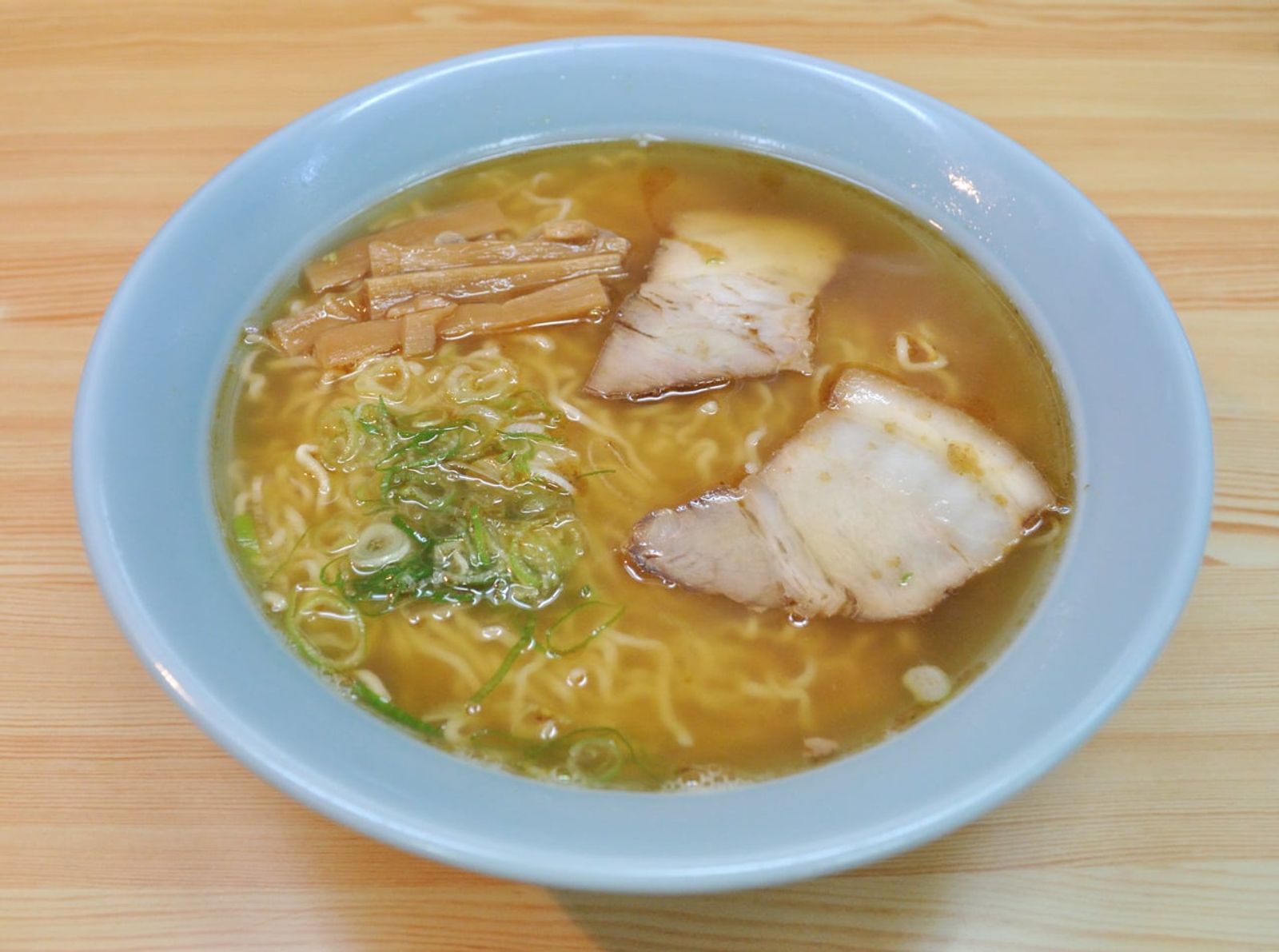
Chuka soba (Takayama ramen) in Takayama · Photo: Ocdp / CC0 (Wikimedia Commons)
 JapanTakayama
Takayama Ramen: Called "Chuka Soba" by Locals, a Clear Soy Ramen Born From a Handcart Stall
Walk the old streets of Hida-Takayama and you will see more noren curtains reading "chuka soba" than "ramen." Here is the history of Takayama ramen, said to have started from a handcart stall in 1938, its unusual method of simmering the soup and seasoning together, and tips for choosing a shop.
A Town Where It's "Chuka Soba," Not "Ramen"
Takayama, a mountain city in northern Gifu Prefecture, is famous as a "little Kyoto" with preserved Edo-period merchant streets, but ramen is just as much a part of local soul food. Outsiders call it Takayama ramen, Hida ramen or Hida-Takayama ramen, yet locals often call it "chuka soba" (中華そば) or simply "soba." Buckwheat noodles, meanwhile, get distinguished as "nihon soba" (Japanese soba). Many shops hang noren curtains reading "chuka soba" rather than "Takayama ramen," and Gifu's tourism guide advises looking for that name when hunting for a shop. The name "Takayama ramen" is said to have spread further as visitor numbers grew, helped by the region's connection to the anime film Your Name.
1938: It Began With a Handcart Stall
Takayama ramen is said to have its roots in "Hida chuka soba," a food-stall favorite in the early Showa era. According to Gifu's tourism guide and travel guides, it is generally traced to 1938 (Showa 13), when one shop began selling chuka soba from a stall pulled on a handcart. The founder is said to have been a cook at a high-end ryotei who, while training in Shibaura, Tokyo, watched Chinese cooks making noodles, learned how to make Chinese-style noodles and then set up his stall. This anecdote comes from travel media, though, and the details vary a little between sources. Shops multiplied over the years, and as of around 2015 about 30 places in Takayama served ramen, a sizable number for a small city.
An Unusual Method: Soup and Seasoning Simmered Together
Takayama ramen is defined by a clear, light soy broth based on chicken bones and very thin, curly noodles. What is most unusual is how it is made. Ordinary ramen keeps the stock and the soy seasoning (tare) separate and combines them in the bowl, but the traditional Takayama method is known for mixing the stock and seasoning together from the start and simmering them as one. As a result, the soy aroma runs evenly through the whole broth. Today, of course, shops vary widely. Some make their stock with seafood, vegetables or shiitake as well as chicken; one is known for an almost black broth heavy with bonito aroma, another adds fish sauce as a hidden note to rich local soy sauce. What they share is thin, curly noodles that hold the light broth well, a clean taste at the opposite end of the spectrum from rich tonkotsu ramen.
How Locals Live With Chuka Soba
For people in Takayama, chuka soba is everyday food long before it is a tourist specialty. According to Gifu's tourism guide, many locals eat it to finish a night of drinking, and some households even eat chuka soba instead of buckwheat soba as their toshikoshi noodles on New Year's Eve. Some shops keep condiments for changing the flavor. One recommends adding vinegar or chili oil, another offers four condiments including kombu vinegar, so try adding a little once you are halfway through. Some shops also offer chashu noodles, wonton noodles, and a choice of raw, boiled or marinated egg. A few older shops are cash-only or do not serve alcohol, so it helps to know that in advance.
Where to Eat and How to Choose a Shop
Chuka soba shops are concentrated in the old town within walking distance of Takayama Station, especially around the historic Sanmachi streets. It fits neatly into a day of the morning markets and old streets followed by lunch, but popular places get lines at midday and some close early when the soup runs out, so going early is safer. When choosing, look for noren reading "中華そば" rather than only signs saying "Takayama ramen." Portions are not huge and the broth is light, so many travelers pair it with street food such as Hida beef skewers or midarashi dango as they stroll. You can buy packaged "Takayama ramen" as a souvenir outside the city too, but comparing each shop's broth in person is the real pleasure.