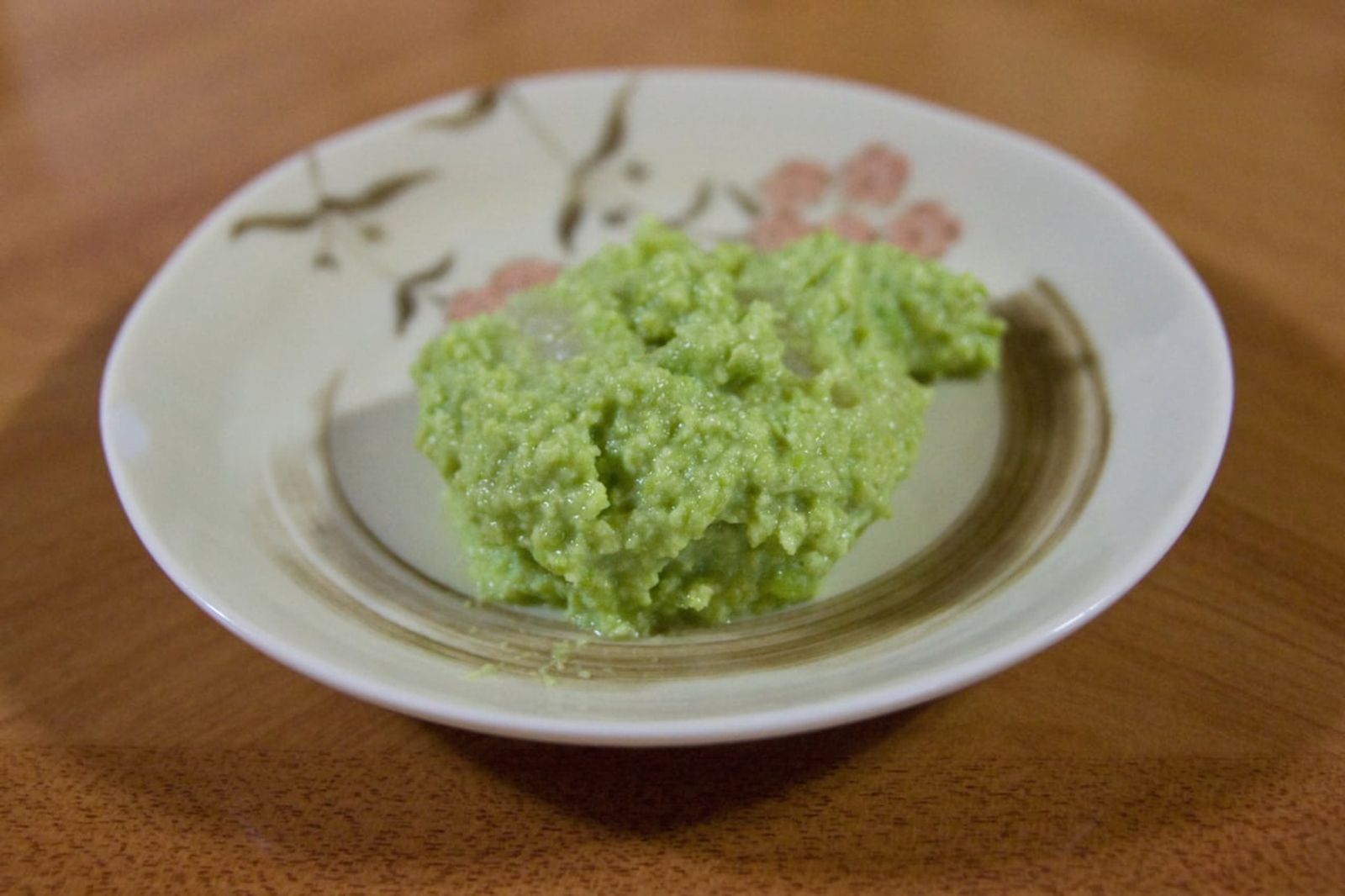
Zunda mochi from Sendai · Photo: Σ64 / CC BY 4.0 (Wikimedia Commons)
 JapanSendai
Zunda Mochi: Bright Green Edamame Rice Cakes, the Date Masamune Legend and the Real Origin of the Name
Zunda, a bright green paste of boiled and mashed edamame sweetened with sugar, piled generously on rice cakes: zunda mochi is Sendai's signature sweet. Here is the Date Masamune legend behind the name, the origin scholars favor, its regional names and the famous zunda shake.
How Zunda Is Made
Zunda is a bright green paste made from young soybeans, or edamame. The method is simple but laborious: boil the edamame, pop the beans from the pods, peel off the thin inner skin from each bean, then grind them in a suribachi mortar. For zunda mochi, sugar and a pinch of salt are added, and some shops and households add a tiny bit of miso. For savory dressings, dashi is used instead of sugar. People in Miyagi like it coarsely ground so you can still feel bits of bean, while in neighboring Yamagata it is often ground very smooth. Rather than the heavy sweetness of red bean paste, it has a gentle sweetness that keeps the fresh, green, nutty aroma of the beans.
The Name: Masamune's Sword or an Old Food Word?
There are several theories about the name zunda. The best known says it changed from "zuda" (豆打), "beating beans," for pounding boiled beans with a pestle, but despite its fame it is not considered correct. There is also a very Sendai legend. Date Masamune, founder of the Sendai domain, supposedly crushed edamame with his battle sword (陣太刀, jintachi) before going to war, and "jintachi" became "jinda" and then "zunda" in the local dialect. Another story says a farmer named Jinta offered rice cakes to Masamune, which became known as "Jinta mochi." The theory linguists and food historians find most likely, however, is that "jinda" (糂汰), an old word for preparations made with rice bran or miso, came to be used for the edamame paste. A cookbook from 1733 already mentions "jinta" in a way that suggests a sugar-sweetened green soybean paste.
The Rice Cake of Obon and Tanabata
The best way to enjoy zunda is still zunda mochi: bite-size pieces of soft rice cake generously covered in zunda, where the chewy mochi and the slightly coarse paste complement each other. Because it was originally made from fresh summer edamame, zunda mochi was a seasonal food and a favorite offering at Obon, the festival for honoring ancestors in mid-August. Even now, the period from the Sendai Tanabata Festival in early August through Obon is said to be when it sells the most. Freezing technology has since made it available any time of year; mail-order sales of frozen zunda mochi began in 1989. Today you can find it all year round at Sendai's confectioners and souvenir shops.
Different Names in Different Places: Zunda, Jinda, Nuta
Edamame paste is not unique to Sendai, but its name changes from place to place, which makes it fun. The name "zunda" is used in southern Iwate, Miyagi, Shinchi in Fukushima, and parts of Akita and Yamagata, roughly overlapping the territory of the old Sendai domain. In the Kitamurayama area of Yamagata it is "zundan," in the Okitama area "jindan," and across most of Fukushima except Aizu, southern Akita, the Tsugaru area of Aomori, the Kamiina area of Nagano and the Shonai area of Yamagata it is "jinda." In the Murayama area of Yamagata and Aizu in Fukushima it is "nuta" or "mame-nuta," and in the Suwa and Ina areas of Nagano, "nota." Just hearing the name gives you a glimpse of a region's history.
The Zunda Shake and Where to Try It
One of the most popular ways to taste zunda in Sendai today is the zunda shake, a signature drink you sip while walking. It became famous nationwide after a popular TV program featured it on June 1, 2015. On December 4 of the same year, "Zunda Komichi" (ずんだ小径), a row of zunda shops, opened inside JR Sendai Station, and many travelers now enjoy zunda mochi or a shake before boarding their train. Sendai's confectioners also make all sorts of zunda sweets beyond mochi, such as zunda-filled manju and roll cakes. In Kakuda, Miyagi Prefecture, a Kakuda Zunda Festival has been held since 2003. Freshly made zunda mochi is best eaten the same day, so for souvenirs, choose frozen products or sweets that keep at room temperature.