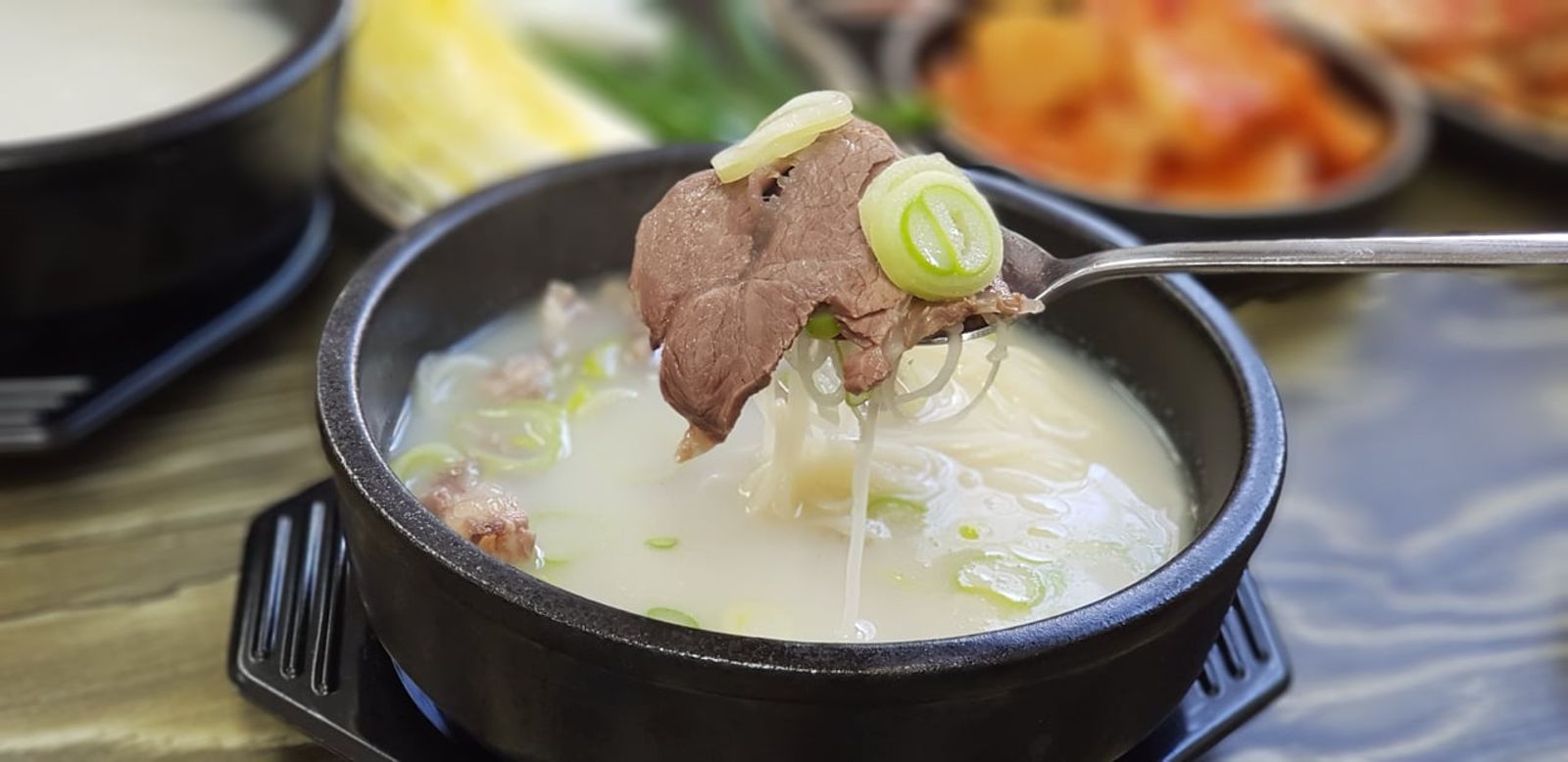
A bowl of milky seolleongtang · Photo: 이동원 / CC0 (Wikimedia Commons)
 KoreaSeoul
Seolleongtang: The Story of Seoul's Own Ox Bone Soup, From a Royal Altar to Kkakdugi Juice
Milky-white and seasoned at the table with just salt and green onion, seolleongtang is a dish born and raised in Seoul. Here is the royal-altar story behind its name, how it spread through early-1900s Seoul, and how locals eat it.
Why Seolleongtang Counts as Seoul Food
Seolleongtang is a rice soup made by simmering beef bones, meat and offal for hours until the broth turns milky white, then adding rice and thin wheat noodles. You can find it all over Korea, but the Seoul city government presents it as a native Seoul dish, and it was the first food ever named a Seoul Future Heritage. The broth comes to the table unseasoned, so each diner adjusts it with salt and chopped green onion. With no bold sauce to hide behind, it relies entirely on the depth of the broth. First-timers sometimes find it bland, but once you season it to taste and add kimchi, it becomes clear why Koreans think of it as one of the most comforting, filling meals around.
The Seonnongdan Story: A Soup the King Shared With His People
The most widely told origin story points to Seonnongdan, the altar where Joseon kings made offerings to the god of farming and ploughed a field themselves. It still stands in Jegi-dong, Dongdaemun-gu. After the rite, the story goes, an ox was slaughtered and boiled into a soup shared with everyone present. That soup, called seonnongtang, supposedly became seolnongtang and finally seolleongtang. Seoul city materials also mention a tale from King Sejong's reign in which officials stranded by heavy rain were fed an ox from the ploughing rite, boiled in plain water and seasoned with salt. Other theories exist, such as a name derived from the snow-white colour of the broth, so accounts differ from source to source. The royal rite itself continued until 1909 and was abolished under Japanese colonial rule.
1904: Becoming Seoul's Original Fast Food
According to Seoul city materials, the first record of a seolleongtang restaurant in Seoul dates to 1904, and the dish first took off around Namdaemun. The reason it spread so quickly is simple: the broth was kept simmering in a huge pot, so when an order came in, the cook only had to put rice and meat in a bowl and ladle the soup over it. For busy city dwellers, it was quite literally the fast food of its day. Seolleongtang restaurants later spread through Jongno, Jung-gu and the rest of the old city, and central Seoul still has long-running places that have simmered broth in the same spot for decades. Because the dish uses many parts of the animal, many restaurants offer a regular bowl and a larger "teuk" (special) bowl with more meat.
How to Eat It Like a Seoulite
When the bowl arrives, taste the broth first, then season it with the salt and green onion on the table. Locals tend to be generous with the green onion. If there are noodles in the bowl, Seoul city's guide suggests eating them before the rice, since they go soft if left in the hot soup. Most seolleongtang restaurants serve kkakdugi (cubed radish kimchi) and napa cabbage kimchi on the side. Pouring a little of the kkakdugi juice into the soup to make it tangy and spicy is known as the traditional Seoul way, so try it once you are halfway through. Some places serve the rice already in the soup and others on the side. If it comes separately, add it a spoonful at a time and the soup stays hot to the end.
Where to Eat It and What to See
You can find seolleongtang all over Seoul, but for long-established places, head to the old city centre: Jongno, Jung-gu, and the area around Seoul Station and Namdaemun. Many places open early in the morning, making it a good breakfast, and it is an easy dish to order on your own, so solo travellers will feel at home. If you are curious about the origin story, visit Seonnongdan in Dongdaemun-gu and the Seonnongdan History and Culture Museum beneath it. Admission is free, and the exhibits cover the royal ploughing rite and the story of the soup. There are seolleongtang restaurants near the site too, so you can pair a look at the altar with a bowl nearby.