Jeju City and Seogwipo
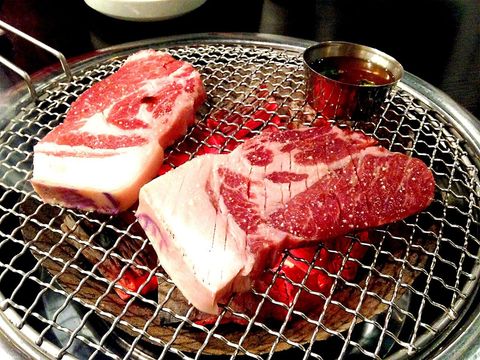
Grilled black pork
Cut thick, grilled, then dipped in fermented anchovy sauce. The sauce is salty, so dip lightly.

Written by hand, not generated. Dishes, markets, timing and prices for Jeju.
Jeju is a volcanic island with almost no rice paddies, so pork, seafood and field crops carry the cooking. Ingredients and methods differ from the mainland, so dishes with the same name taste different here — and much of the seafood comes straight from the haenyeo divers.
Start with the local defaults
Cut thick, grilled, then dipped in fermented anchovy sauce. The sauce is salty, so dip lightly.
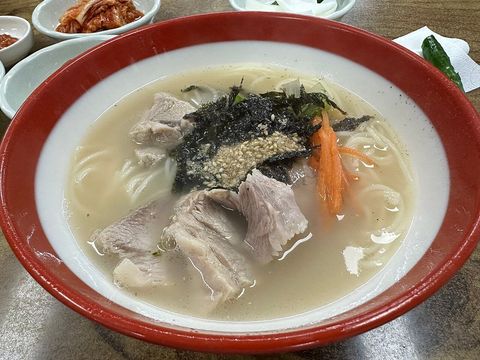
Wheat noodles in pork broth topped with boiled pork. A breakfast and hangover dish.
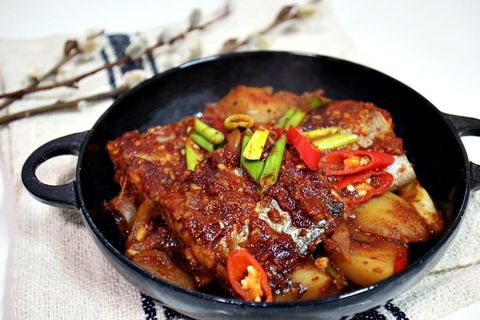
Large hairtail cooked whole, usually braised together with radish.
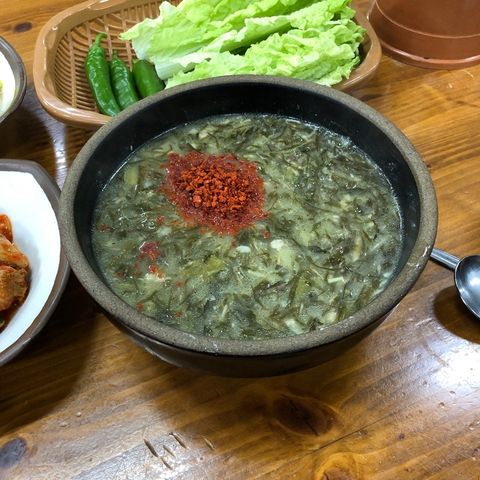
A soup of gulfweed simmered in pork broth, descended from banquet cooking.
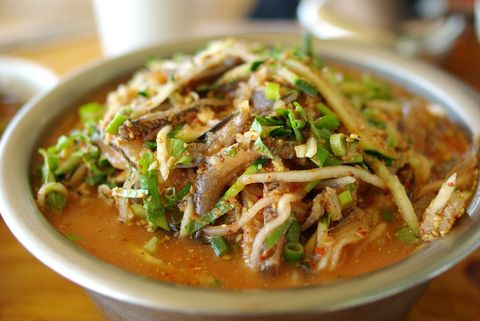
Damselfish sliced bone and all into a chilled soybean paste broth. A summer dish.
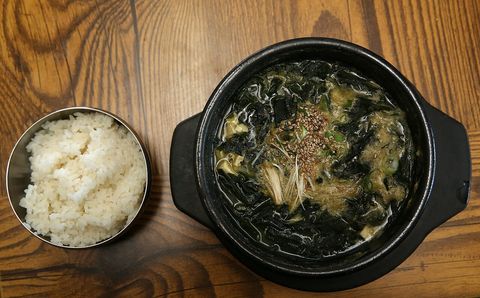
Urchin harvested by the divers, simmered with brown seaweed. In season from spring into early summer.
Markets, streets and harbours
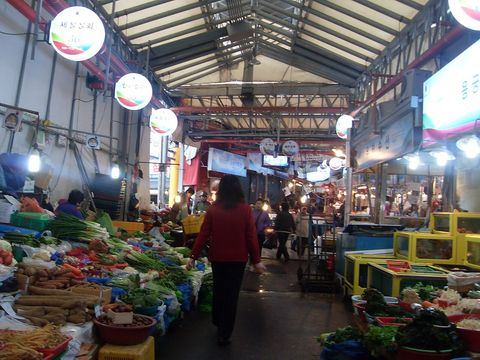
The largest traditional market on the island — raw fish, snacks and local produce together.
Restaurants nearby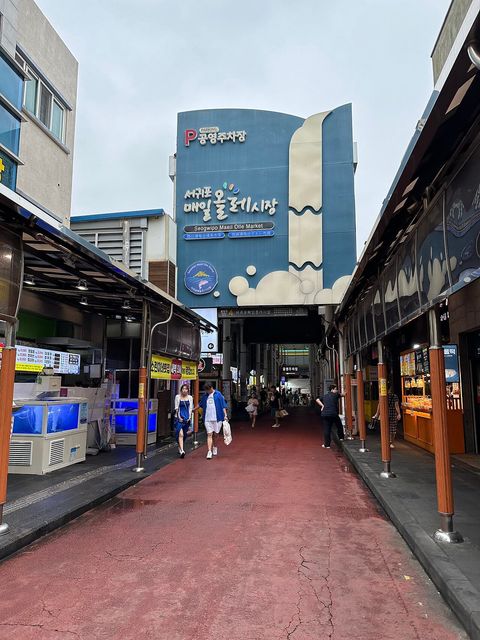
The main southern market, heavy on citrus and street food.
Restaurants nearbyA street of black pork grill restaurants.
Restaurants nearby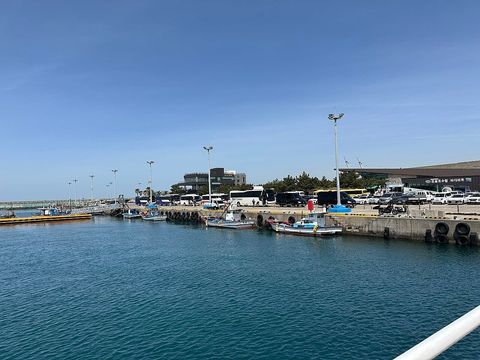
The south-western harbour working in winter yellowtail and damselfish.
Restaurants nearby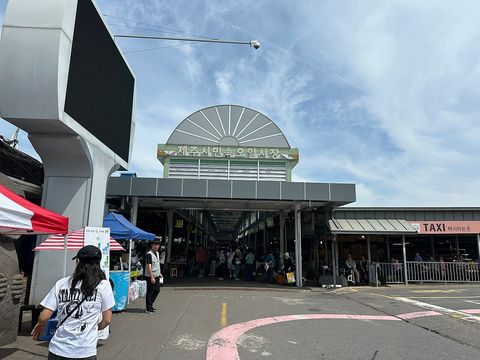
The largest five-day market on Jeju, held on dates ending in 2 and 7. On market days, noodle, pancake and sundae stalls and seasonal fruit stands fill the grounds.
Restaurants nearby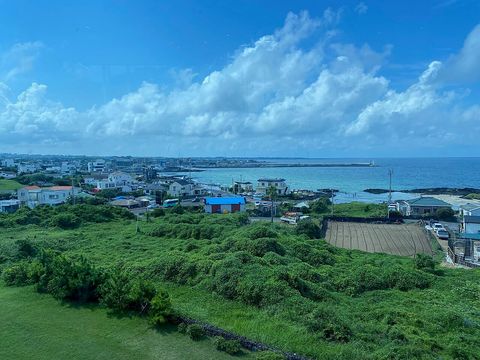
A seaside five-day market in Sehwa-ri, Gujwa-eup, on the east coast, held on dates ending in 5 and 0. Seafood from the haenyeo divers and Jeju snacks like buckwheat rolls are eaten right by the water.
Restaurants nearbyBlack pork runs KRW 20,000-25,000 per person, pork noodle soup KRW 9,000-10,000, and braised hairtail around KRW 50,000 for two.
Jeju
Real visits shared by TastyLog foodies